


Hello readers…
Welcome to our new home. Last week we packed the boxes and moved Mr. Thread to Substack, and it feels right. That surprises me, because putting myself out there has never come easy. I’ve never wanted to be on TV, and I don’t chase interviews. Being a media voice holds zero appeal. Yet every Thursday I hit send on my opinions, and my stomach drops for a second. Then I remember I’m just a guy behind a monitor with no shoes on, and the feeling passes. Substack suits me.
I’m not a fan of the idiocy that drives short-form social media. I hate posting for self-promotion, and I’m not comfortable enough to be good at it (that’s a conversation for my therapist). For years, though, I watched the big content creators with a little bit of envy: the reach, the creative output, the networking. But a long-form journal gets me all of that without having to take a single selfie or beg people to “like and subscribe!”
Through Mr. Thread, I’ve already met people I had no other way to find: like a couple of hungry new founders who reached out last week. They’re running a genius new tech startup that is going to dramatically change the furniture, textile, and wallpaper industries. I’ll tell you about it in a future issue. And a young entrepreneur who’s building a Warren Buffett-style holding company in the high-end design space. And the lunch I had in Venice with a mill owner from Connecticut trying to make manufacturing cool again and return the pride to “Made in the USA.” The hits just keep coming, and I am so grateful for it. This newsletter has already made me a 10x better entrepreneur.
It’s funny to think that the idea for this journal came to me because I couldn’t find the trend data one of my brands needed. I solved my own problem, and thousands of you showed up. But…a warning if you’re a designer thinking about starting your own newsletter: the best interior design writing on the internet is on Substack right now, direct from the artists, and the bar is high. A newsletter will eat hours you don’t have. You better learn to love it, or there is no way it will succeed.
It’s uncomfortable to put yourself out there, over and over, until the right people notice. That’s what this week’s issue is about. A client is out there right now asking her friends for a recommendation. Give her a way to find you.
See you next week.
Mr. Thread
P.S. Don’t just read—play. We’ve woven a new mystery into this issue in our PLAYTIME segment. 5 Correct Guesses Last Week. Let’s see who has the “eye” to claim the win this time and secure a spot for our grand prize draw. Scroll to the bottom to join the fun.
Have a story you want to share?
Industry

Don’t be a gatekeeper.
I’m new to Country Life magazine, but my British editor tells me it’s been in print since 1897. They just asked the UK’s best interior designers, architects, and country house experts to name the greatest craftspeople in Britain. Included are master carver Clunie Fretton (the Houses of Parliament, the V&A), shell artist Linda Fenwick, master mason Matthias Garn, and dozens more. A designer’s value lives in their sources: the perfect brass door handle, or an enviable handmade tile.
Most designers guard those names like state secrets, and for your own firm, that’s rational—shorter lead times, no clients going around you, and sources are hard-won intellectual property. But what’s good business for you is bad business for the industry. Your maker going out of business is a nightmare. So share the name; the craft survives, and the referral comes back around. One of my brands has never formally advertised in a century—it’s all based on word of mouth. Call it karma.
And a word for the makers reading this. A list like Country Life’s is the greatest free marketing a small workshop will ever get, and they won’t come knocking on your door. You have to put yourself out there. Ask your designer clients the uncomfortable question: “Do you know another designer who would love my work?” Then email that person and tell them who sent you. Your best ambassadors already buy from you—recruit them.
“When we were building the new Tapestry Drawing Room at Castle Howard in North Yorkshire, we were nearing the opening date and needed someone to carve the head of Pluto at speed. The amazing Clunie Fretton managed to carve the piece in the required timeframe and, now installed, it looks convincingly like a piece of genuine Baroque sculpture.”
— Francis Terry, architect, via Country Life
Picasso didn’t bill by the hour.
AD PRO opened its Grow Your Business special feature by asking which billing strategy is best for your firm—flat fee, hourly, or cost-plus—and their dozens of experts landed on “hybrid” as the new industry standard. After 30 years of working with interior designers, I can tell you that there is no perfect model. Each one has its own limits for either you or your clients. Hourly caps your income; you’re selling your time like a slave. Square footage invites the client with seven revisions. Markup turns you into a wholesaler with financial incentives misaligned with your clients. For sure, hybrid can help protect both sides, but then you get into complicated billing that becomes a painful time suck on its own.
I wish our industry could just price our work as the true artists that we are. Andy Warhol didn’t price his famous Polaroid portraits by the hours they took—he priced the art, the prestige, and the desire. Some designers have definitely reached this level, like Michael Smith or Axel Vervoordt. But breathing that rareified air is something that takes decades, and we all have to start somewhere.
The real work is finding a model you can sell with confidence in your market ($500 an hour works in New York and dies in Charlotte), then wrapping it in an airtight contract.
“Ninety percent of the time we charge a flat design fee when we start a job, which is worked out according to budget and the scale. Then we charge 35% commission on the wholesale price on all products.”
— Vicente Wolf, designer, via Architectural Digest
How does your firm bill? Let’s argue in the comments!
Out of the building.
Schumacher is at it again, and there seems to be no limit on its hold as the top dog in the high-end textiles space (at least from a growth perspective 😉).
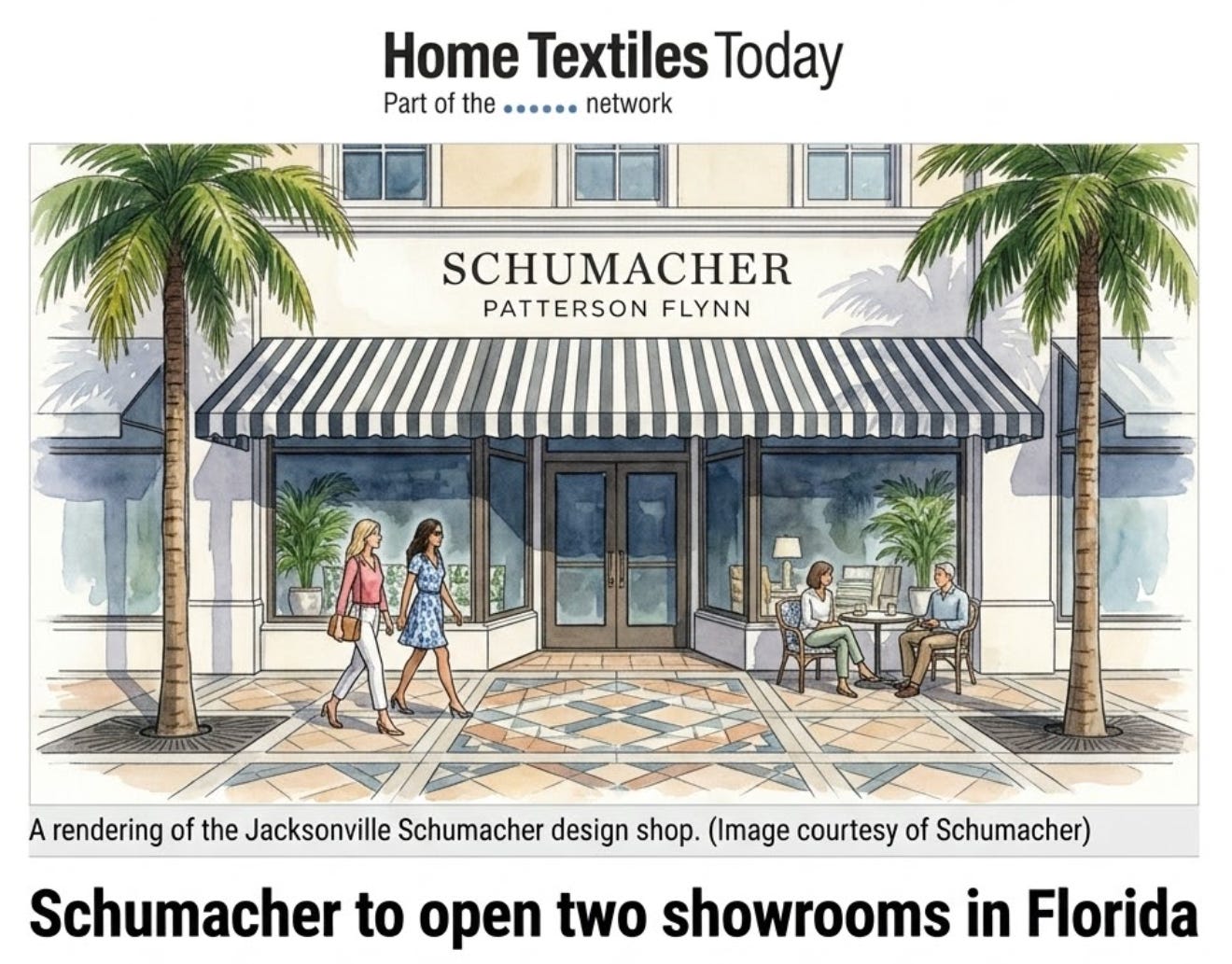
According to Home Textiles Today, Schumacher will open two showrooms and design shops in Florida this September—3,000 square feet in Jacksonville by local designer Stephanie Jarvis, 6,000 in West Palm Beach by Palm Beach native Celerie Kemble—each carrying 7,000-plus fabrics, wallpapers, and trims, plus a serious Patterson Flynn rug presence. A fabric house going standalone brick-and-mortar is very, very brave, and I’m rooting hard for it. If Schumacher kicks ass with this model, it cracks open our design-center problem—maybe there is life outside the D&D Building after all. The brand has history in the state, too: Madonna’s Miami sitting room was dressed in creamy Schumacher damasks back in 1994.
“Florida is one of the largest centers of design in the country, and both Jacksonville and West Palm Beach have their own distinct identities, with a clear sense of who they are and how they live. We’ve designed each location to honor that, intending to bring the breadth of what Schumacher, Patterson Flynn, Tillett, Backdrop, and our broader family of brands have to offer in a way that feels tailored and genuinely relevant to each market. Florida is one of a kind, and it deserves design resources that treat it as such.”
— Emily Romero, Schumacher North America president, via Home Textiles Today
Japan’s best-kept secret.
Business of Fashion just mapped how Japanese mills won over global fashion: $6.2 billion in textile exports last year, denim for Levi’s, silk brocade for Chanel, Dior, and Gucci. The showstopper is Hosoo (I’m obsessed with it), founded in Kyoto in 1688 with roots in the city’s sixth-century silk trade and run today by the 12th generation of the same family.
You almost never hear about Japanese textiles in the D&D Building, and I can’t fully explain why—the distance, maybe, the language barrier, or a cult following that keeps it niche.
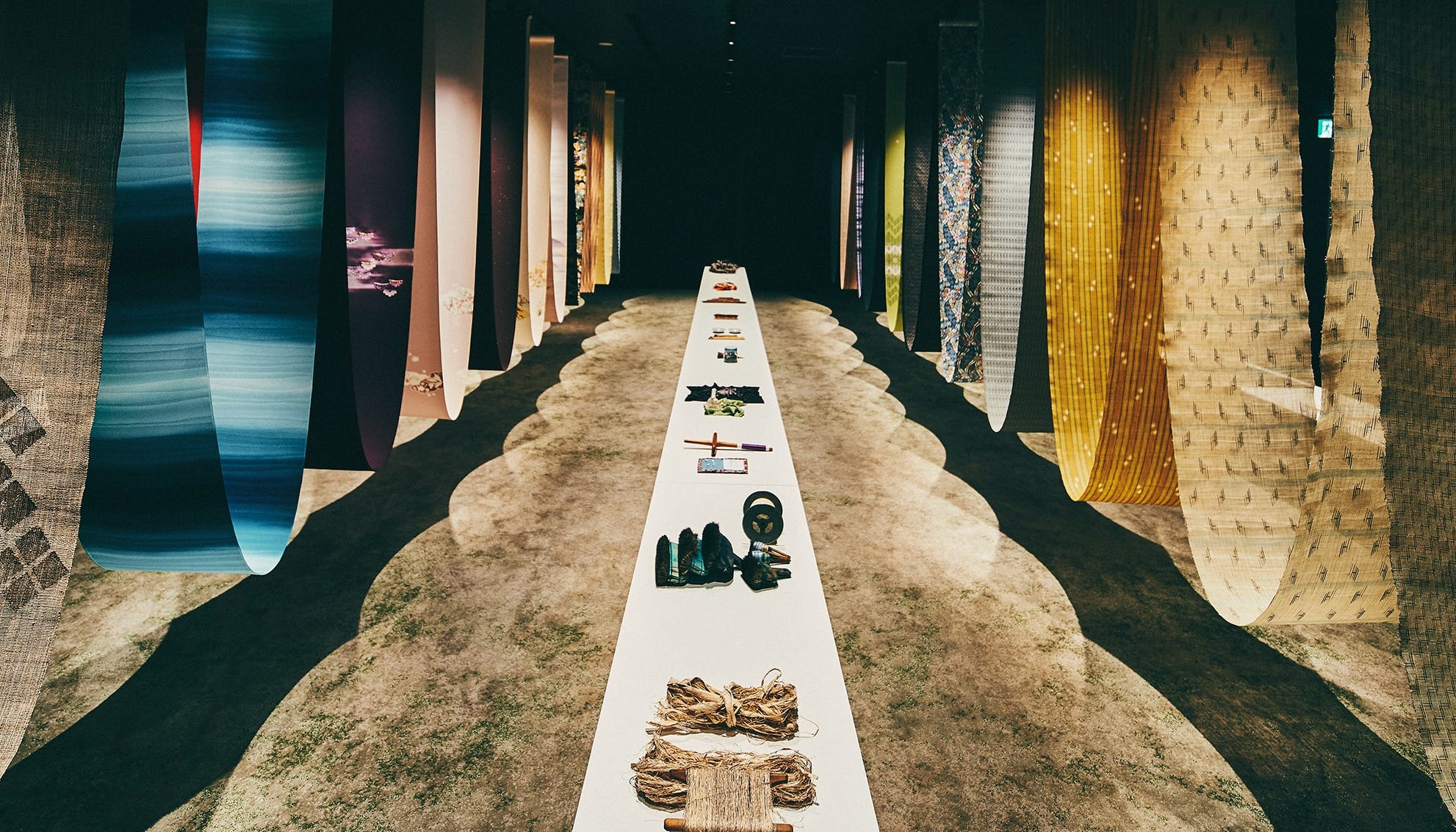
Our industry is starving for new stories, and this one has been building since the sixth century.
“One of Japan’s greatest strengths is its ability to connect tradition, industrial precision and material innovation. [They] embody a very particular relationship with time, craftsmanship, touch, material and mastered imperfection.”
— Ariane Bigot, associate fashion director, Première Vision, via The Business of Fashion
Opportunities

The room is the spa.
JW Marriott Tokyo just debuted Mindful Rooms, a pilot by Yabu Pushelberg that builds wellness into the architecture itself—circadian lighting tuned to the local time zone, furniture angled toward natural light, and acoustic mapping calibrated to quiet the nervous system. The spa is no longer down the hall; the room is the spa.
Pay attention, because hotel rooms are how trends enter your clients’ homes—they sleep in one once, then call you wanting something just like it. Add AD PRO’s Longevity Home report and the analog-room movement, and the Overton window on wellness design is wide open. This is a service you can start selling today, and the designers and brands who learn the science first will own the niche.
“The truth is, we didn’t start out saying, ‘Let’s design a wellness hotel.’ That was never a checklist item. The starting point was much more human. We’ve both traveled for decades—long flights, jet lag, disorientation, that strange feeling of arriving somewhere before your body has adjusted. You become aware of what helps and comforts you and what doesn’t.”
— Glenn Pushelberg, cofounder, Yabu Pushelberg, via Surface
Higher education.
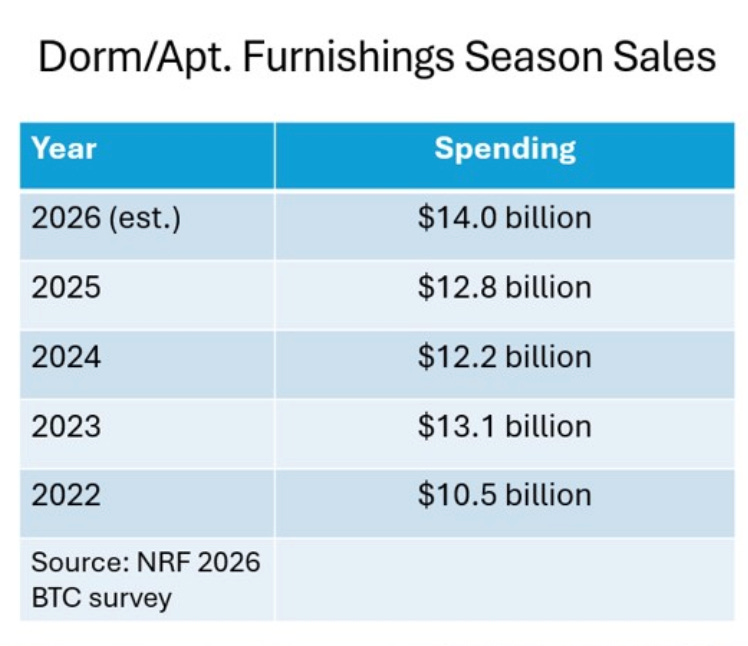
I was astonished to read in Home Accents Today that college families will blow past $100 billion in Back-to-campus spending for the first time—$103.5 billion, up 16.6%—according to the National Retail Federation. Dorm and apartment furnishings are the second-biggest category at $14.0 billion, up from $12.8 billion last year, with 67% of families buying. Wow. I’ve seen the appetite firsthand: every kid in my orbit who leaves for college asks me for pillows from one of my brands, in fun colors. And dorm design is already a real business. Mary Margaret Designs in Madison, Mississippi, does full-service dorm design and installation—soup to nuts—and has been featured everywhere from the Today show to People. A $14 billion market deserves more than a Pottery Barn run.
“The rise in college spending is being driven by increased purchasing plans across multiple categories. The percentage of consumers planning to purchase electronics has increased significantly this year, while several other categories are also attracting more shoppers than previous years.”
— Phil Rist, EVP of strategy, Prosper Insights, via Home Accents Today
Economy

Mobile homes, upwardly mobile.
The 21st Century ROAD to Housing Act just became law without the president’s signature—the first genuine federal effort to build more housing in over 30 years. It cuts red tape for developers and bars large investors from snapping up single-family homes.
But the buried provision that matters most to us: manufactured homes no longer have to sit on a steel chassis, or pretend to be mobile. That one rule kept modular housing looking like trailers for decades. Now factory-built homes can have second stories and real architecture at a fraction of stick-built cost. This business should explode.
Somebody is going to draw a beautiful mid-century modular plan for folks to drop on a plot in Malibu, and get very rich. Now imagine these homes being delivered decorated and furnished. The opportunities are immense for all sides of our industry. This is GREAT NEWS!
“Manufactured homes are generally faster and cheaper to build than stick-built homes. But they have never been widely adopted because to meet federal standards, they have to be built on a steel chassis, which is expensive and also limits the size and style of home you can build (you’re basically limited to what looks a lot like a trailer). But under the new bill, they won’t need to have that steel chassis. And that change will allow other kinds of factory-built, modular homes to meet federal standards. They could have second stories, for example. They won’t need to pretend to be mobile.”
— Ronda Kaysen, housing reporter, via The New York Times
The fun tax.
CNBC reports “funflation” has followed Americans indoors. Xbox and Apple raised device prices in late June, Nintendo hiked the Switch 2 by 11%, and streaming and gaming subscriptions have surged 53% since 2019—while electricity is up 45%. That’s not a typo—electricity is up 45%. PNC’s card data shows Gen Z and millennial consumers cut home-entertainment transactions about 4% in June. When going out costs a fortune and staying in does too, the home has to earn its keep. Quietly, that’s the best argument going for the analog room, because billiards tables, libraries, and record players never send a price-hike email.
“The ability to play games and get out of my own life for a second was a major way for me to have some sort of happiness. Now, the overall economy is getting worse, and I don’t have any distractions from it.”
— Alyx Green, graduate student and gamer,
Green shoots, with an asterisk.
The CNBC/NRF Retail Monitor clocked June as the ninth straight month of retail growth, with core sales up 10.08% year over year. Furniture and home furnishings stores rose 4.92%—with an asterisk, because last June was depressed by tariff whiplash and the comparison flatters everybody. Still: after the parade of ugly reports and uglier stocks we’ve covered this year, I’ll take it. We’ll take every tiny flash of light and hope it turns into something strong. It’s early. Watch July.
“The summer shopping season got off to a strong start in June. Consumers took advantage of summer sales events, and many got an early jump on back-to-school shopping.”
— Matthew Shay, NRF president and CEO, via Home Accents Today
Luxury finds its pulse.
Well, this is definitely some welcome news for those of us selling to the luxury client. Richemont’s quarterly sales jumped 20% at constant exchange rates to €6.33 billion ($7.2 billion)—analysts expected half that. The US, luxury’s growth engine, ran up 27%, and Bernstein said the report “smashes expectations.”
Before anyone declares the luxury winter over: Cartier and Van Cleef & Arpels are jewelry houses, and jewelry kept its scarcity while Gucci and even Hermès diluted theirs by putting their handbags absolutely everywhere you look. Richemont protected its brands from oversaturation, and it’s being paid for that discipline now. LVMH, Kering, and Hermès report at the end of the month, and I’ll get my popcorn ready to settle in and read them. If the strength turns out to be macro, celebrate—luxury buyers who are buying again eventually spend fortunes on interiors.
TECH

Low country, high demand.
The Financial Times just dug into how Charleston became a magnet for creative entrepreneurs: the county’s population grew 5% from 2021 to 2025, downtown’s median home price has jumped 191% since 2019 to $2.5 million, and office space runs $32.54 per square foot against Manhattan’s $66.82. No surprise here.
My company counts some of its greatest clients in Charleston, and the late, great Dave Dawson saw it early—he left California to build Urban Electric there. Last week I told you to find your niche and go where you’re needed. Charleston is what that looks like when it works. If you visit, eat at Poogan’s Porch (the shrimp and grits). Thank me later.
While I’m on the topic of award-winning food, why isn’t there a Michelin Guide for the interior design industry?
“Nobody is going to a dinner party talking about how late they worked. It’s not that they’re not working hard, they just value the other aspects of life equally.”
— Stefanie Brechbuehler, cofounder, Workstead, via the Financial Times
Millions for a shack.
News just in: Nantucket leads the nation in pricey vacation homes—55% of the island’s housing stock, the highest share of any US market, per Realtor.com. The luxury tier starts at $14.1 million, the steepest threshold in the country; the median listing hit $4,925,000 in June, more than double a decade ago; and $1 million to $2 million buys a median 1,011 square feet. Half the island is conservation land, so nobody is making more of it. It’s charming and untouched, like storybook pictures, and super exclusive.

For designers, enclaves like this are where budgets lose gravity. The clients are already there, waiting on a ferry with a checkbook. Go prospect the little islands.
“Many times people come here with a budget and criteria, and sometimes they find that. Regardless of increasing their budget by 20% to 50%, it still doesn’t give them what they want. There’s very limited supply, huge amount of demand.”
— Bernadette Meyer, broker, Maury People Sotheby’s International Realty, via Realtor.com
TRENDS

Flatpack futures.
The Wall Street Journal reports Gen Z and millennial collectors have turned vintage IKEA into investment pieces. The 1971 Impala lounge chair—about $354 in today’s dollars when new—is listed for over $12,000 on 1stDibs. The average IKEA item on Chairish now runs nearly $1,000, and a Verner Panton IKEA chair bought for $350 lists for $2,900. It’s baseball-card collecting for furniture.
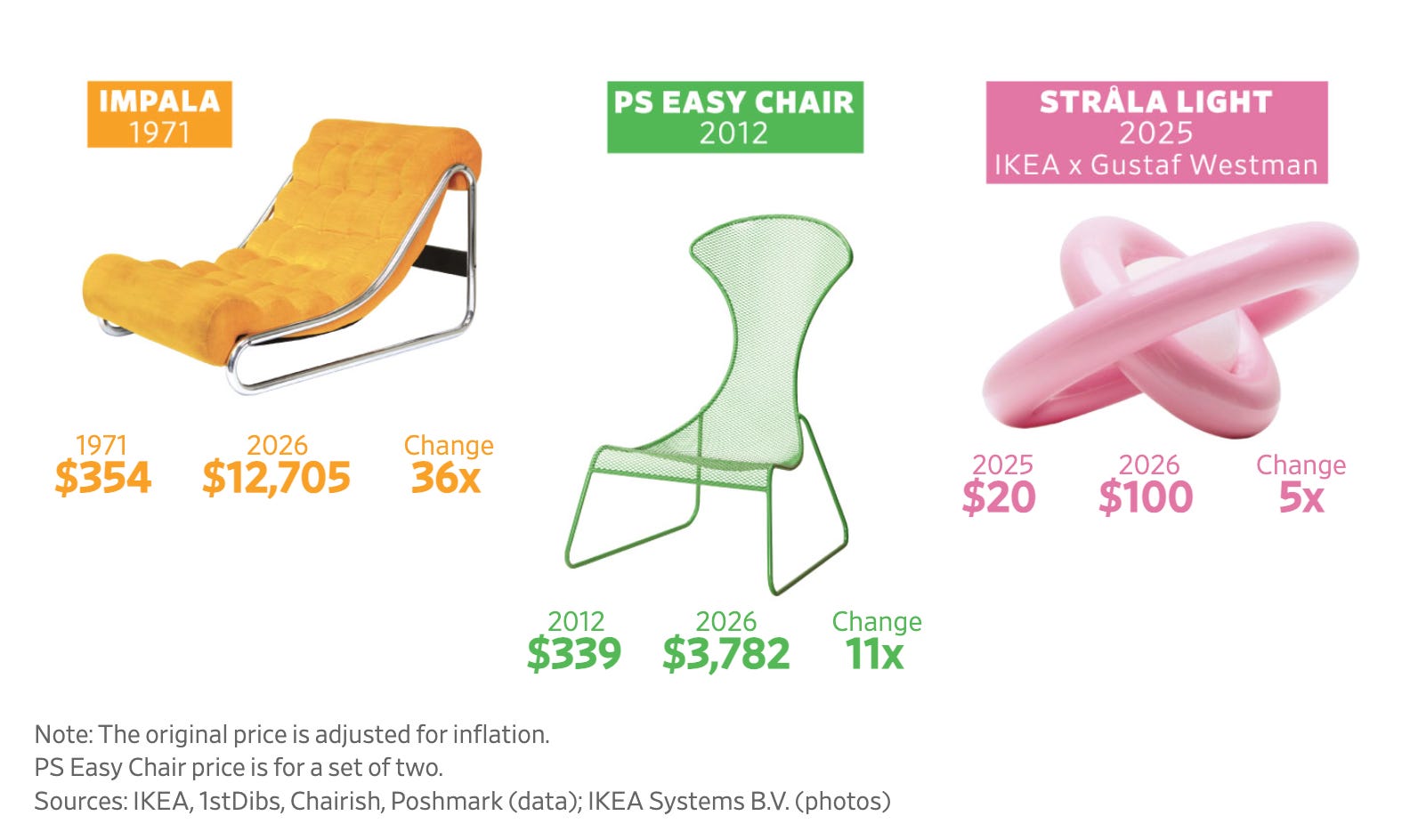
The irony is thick: the company that democratized design has spawned a collectors’ market most people can’t afford. The lesson travels to every brand—discontinued special collections in durable materials become collectibles. Check your garage.
This could also be an incredibly lucrative side hustle for a designer—who has a better eye for spotting the pieces that’ll make a killing on the secondary market?
“I really appreciate that there’s a limited number of them. I definitely see it as an investment piece and a piece of art, but I wouldn’t sell it.”
— Gina Fuchs, collector, via The Wall Street Journal
Furniture with commitment issues.

IKEA’s new Kompishäng collection hits US stores July 31. There are 11 pieces, zero assembly, designed to move “with your body alone,” including nesting stools, a foldable desk with a built-in handle, and a jute bag that doubles as a planter. IKEA developed it with London twentysomethings who move every year and own no car, and the logistics make sense when people buy their first homes later than ever.
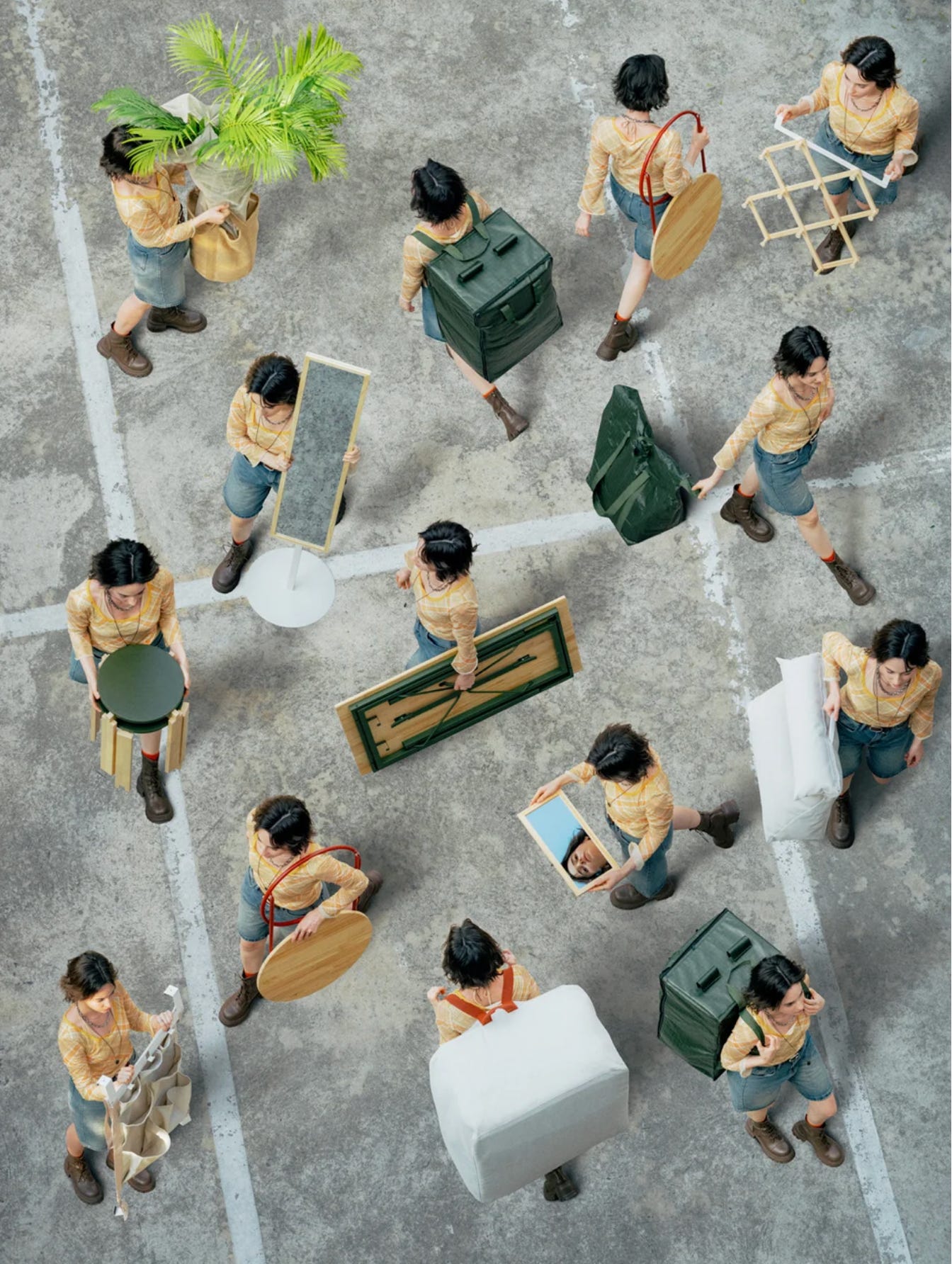
But the spirit is what I love. This is furniture made to leave the house—carried to the park, set down on a sidewalk for an impromptu café, or hauled to a friend’s for cards. Very Gen Z, and gloriously anti-algorithm. Good week for IKEA.

“This table isn’t just a temporary solution. It’s designed to accompany life’s transitions—equally at home in a first apartment, a family house, or even a retirement space.”
— David Wahl, IKEA designer, via Dwell
Grandma’s revenge.
House Beautiful is calling it: grandma’s floral sofa is back. It’s the micro-trend inside the maximalism macro we’ve tracked all year—pattern finally landing on the biggest object in the room. At my brands, we watched people spend a decade too scared to put our boldest patterns on a sofa; too much gold, too much color. Those same patterns are flying onto sofas again, and I love it. The sofa has been hiding in witness-protection neutrals for years, and rooms felt like it.
One warning from a fabric man: choose the wrong pattern on the biggest object in the room and it’s a fucking disaster. Curate hard.
“We primarily use florals on sofas because sofas are one of the largest pieces of furniture in a room, and they can feel so heavy. Florals give them a little visual movement and make the space feel lighter.”
— Lucy O’Brien, principal and owner, Tartan & Toile, via House Beautiful
Loose Threads
Former fashion designer Matthew Ames has opened Walker Street Market in the Berkshires—70-plus makers of handmade furniture, ceramics, and textiles in one restored Lenox storefront. This is what craft retail should look like.
A 3,000-year-old Egyptian painter’s palette still holds its original pigments—colors that have outlasted every trend since the pharaohs. Makes me proud to be Egyptian.
Designer Max Sinsteden drenched his Rhode Island cottage in Schumacher’s Stars and Stripes collection—we’re staying in the American spirit one week longer.
The Home Textiles Sourcing show makes its West Coast debut in Los Angeles July 21–23. I think it’s the Dunder Mifflin of textile shows, with some of the wackiest fabrics you will ever see. If you’re attending, reply with a field report and take some pictures for us.
If you’re attending, send us your LA show photos & reports by clicking the button below.
Playtime
Tough crowd, threaders: 5 correct guesses last week. Hats off to Jeffrey W., Tullia P., Victoria & Son Team, Jan W., and Ericka S. for identifying the cloth known to every gambler: BAIZE!
We’re down to our last 2 games before the big raffle on July 29th! Every single guess stacks up your points, so don’t sit this one out. Threaders, it’s playtime!
The Clue: Photographers and self-promoters are obsessed with it, you can get arrested for it, and it can even kill you.
Piece together the mystery word based on the clue provided above.
Click the button below then type your answer in the subject field and hit send!
The Stakes
Every correct guess earns you points that accumulate for our upcoming raffle. The more you play, the higher your chances of winning. We’ll be holding the grand draw on July 29th! Our lucky winner gets:
A featured spotlight for you/your firm in an upcoming issue of Mr. Thread.
Another special mystery gift from yours truly, Mr. Needle.
Stay sharp,
Mr. Needle
This Week’s Art

Obviously this week’s art is inspired by putting yourself out there. In my search for racy paintings, I discovered the nudes of Amedeo Modigliani.
Amedeo Modigliani died broke at age 35. A century later his nude portraits sell for nine figures plus.
He never waited to be validated. He sketched strangers in Montparnasse cafés and traded the drawings for meals. He painted everyone in his orbit. His only solo show got shut down by police on opening day, and he kept working anyway.
We chose his art this week because it’s a reminder that visibility comes before validation, not after. Modigliani put his work in front of people relentlessly, long before the market cared. The world can’t buy what it never sees so put yourself out there!
Don’t be selfish. Share this post to your circle’s group chat.
