


Hello readers…
How is it August already? Across Europe many of the factories send their staff on a month’s long vacation. My phone is quiet enough that I can hear myself think. This is my time for obsessing and planning.
Two weeks ago we published our exclusive on how Chinese factories are reverse-engineering the RH catalog. It is still the most-read thing we have ever put out, and the number keeps climbing. We’re still getting mail about it.
Mehnaz R. called the investigation “Equally exciting and scary,” and Freddy V. sent this: “Terrifying issue. Huge disinflationary force, but I think/hope, more so for large companies producing at scale. Scale = some degree of commoditization. Unique skill sets and craftsmanship may help smaller, more nimble brands have some kind of moat… but I may be smoking my own supply.”
Imagine this: You fly to Foshan, China, for two or three weeks. You hire a local agent who knows the lay of the land. You get introduced to owners, walk the factories, you take notes, and you come home with a source book of the 20 best ones. You hire a digital marketer. You build one simple sales funnel. And the most you spend is a couple thousand dollars on some airline tickets.
Your customer is every American who needs a new sofa or armchair, but is getting crushed by inflation and can’t stomach the prices at the big box stores. She visits RH, or Arhaus, or wherever, and sits on the sofas until she finds the one she wants. She photographs the fabric tag, and sends it to you. You order it direct from a factory in Foshan that builds it to the same spec, at half the price, and ships it direct to the customer via sea freight. You keep 20 to 30 points in the middle and everybody in the chain is happy.
Think about it. Every RH, West Elm, Crate & Barrel, and Arhaus in the country is your showroom. The entire sales script is: wherever you live, there’s a furniture store on Main Street. Go sit on the sofa you like, take the fabric sample, send me a photo, and I’ll take care of the rest. Now add the dining table, eight chairs, a second sofa, and six armchairs, and you’re talking real money.
The Wall Street Journal ran a piece on the rise of the million-dollar company with one employee. I’ve written more about it below in Opportunities. This is one of those companies. There is no such thing as building an easy business. But I swear to you, this is as close to a business in a box as there is.
Of course, I’m conflicted. I’ve spent 30 years defending the people who make things, and this is a business that exists entirely because someone else built the gallery, hired the salesperson, paid the designer, and printed the catalog. But as we found out in the original piece, nothing about it is illegal. But is it ethical? Post a comment below, we would love to hear from you.
In the meantime, keep reading to find out which color is the new summer trend, and why the pyramids are making a comeback.
See you next week!
Mr. Thread
P.S. I’m late to this, but I love to play Housle! We’re working on a new game that might be a bit like this.
🏭 INDUSTRY

Perigold and the Spotify problem
Wayfair absolutely crushed their Q2 earnings and their stock is soaring this week (up over 25%). Here’s why: they have brilliantly executed on their high-end strategy with Perigold. The K-shaped economy strikes again.
Wayfair’s CEO Niraj Shah told investors this week that Perigold, its luxury side hustle, now clears $400 million a year (you should read his opening remarks—eye opening). That’s only 3.6% of Wayfair’s US revenue, but it’s grown double digits every year since it launched in 2017, including more than 20% in both 2024 and 2025. Well-heeled customers are spending nearly three times what a Wayfair.com shopper spends on disposable furniture.
Perigold targets 15 million high-income American households, carries nearly 3.5 million SKUs from 1,500 brands, and relaunched its trade program earlier this year with deeper discounts for designers. Every year they ask one of my companies to list and we keep saying no, because our secret sauce is our people who sell the product. We don’t want to sell on Wayfair. It’s tempting though to join the platform where everyone else is. But you know? Ask any musician how Spotify worked out.
Wayfair’s logistics network is unmatchable. And because of their scale, they can sell at better prices and deliver other people’s products faster. They also have search, personalization, and a checkout that rocks—none of us could copy this, even if we had decades to do it. Remember, Perigold doesn’t own a stick of what it sells. It’s just a marketplace. So what is actually being built here is the backbone of our industry, and whoever owns the backbone is the gatekeeper.
But it’s a trap. If you list your fabric there it becomes just another red swatch in a sea of a thousand red swatches, ranked by an algorithm. And you just handed over the designer relationship that is your entire business. And if you stay away, one day you’ll find all the demand has been aggregated over there and you’re invisible. Musicians never chose Spotify. They got strong-armed onto it, and now there’s a wall between them and their fans, and the algorithm only feeds the big acts. Either way, you’re renting space and paying a tax on your own sales to a multi-billion-dollar tech company sitting in the middle.
There is another version of this, where the independents band together and take the economics of consolidation on our own terms, without handing anyone a controlling interest in our businesses. That one requires us to move first. But organization has never been our strong point.
“Prior to Perigold, the wealthy customer had no real digital destination that matched the way she actually wants to shop. The best design brands in the world were locked behind exclusive showrooms available to the trade only or scattered across single-style, single-category competitors.”
— Niraj Shah, CEO, co-founder of Wayfair.
Free fodder for Foshan
RH gave WWD a sneak peek at its 496-page 2026 RH Modern sourcebook on Monday. It includes the Pietrasanta sofa collection by Amsterdam-based Jan te Lintelo, Pleated Crystal lighting by Alison Berger, the Montaigne collection from Thomas Bina and São Paulo’s Ronald Sasson, and the Latitude oak collection Bina designed with Edward Robinson. It follows June’s first RH Estates book. RH posted $3.44 billion in net revenues for fiscal 2025. We stayed neutral on our own RH exclusive two weeks ago because the reporting deserved to speak for itself.
But now when I look at this catalog, I just imagine it pasted on the wall in Foshan factories, while the workers race to copy it. Gary Friedman keeps commissioning the world’s best designers, and you know what they say, imitation is the sincerest form of flattery.
“The Sourcebook presents the largest curated and fully integrated assortment of modern furnishings, lighting and décor under one brand in the world.”
— RH, via WWD
💰OPPORTUNITIES

Party of one
Stripe took a look at all its customers, and noticed a lot of solo operators on its platform pulling in more than $1 million a year. In fact their ranks doubled between 2023 and 2025. The number crossing $10 million nearly tripled in the same stretch. The Wall Street Journal found Ben Broca, 40, who launched an AI tools company from his living room in Sausalito last December, added 10,000 paying customers, and is on track for $10 million this year with nobody else on payroll. He’s employee of the month, every month.
Claire Vo coded an app while working full-time as a tech executive, listed it at $1 a month, and now has 100,000 users and is on track for seven figures of profit. New business applications in the information sector are up nearly 45% in a year, according to Bank of America Institute figures cited by the WSJ. The middleman business I described up top is this same arithmetic pointed at furniture. I run Mr. Thread with the support of three freelancers, and I keep telling the team, we’re aiming at $10 million.
There is no better time than now to build the business of your dreams. AI has made things so much faster and cheaper to get off the ground. Let’s go out and do it!
“I think people over-index on how easy AI is and under-index on how much I did to get to this point.”
— Claire Vo, founder, via The Wall Street Journal
The great wealth transfer hits UK property
London buying agent Jo Eccles wrote in the Financial Times about two entrepreneurs who built and sold an AI company in nine months and went looking for London property with £5 million ($6.7 million) each. One estate agent assumed they wanted a one-bedroom rental, because they were 20 and wearing jeans and trainers.
I was in London last week, where the Sunday Times 40 under 40 Rich List features 34 entirely self-made captains of industry. On that side of the pond, an estimated £5.5 trillion ($7.4 trillion) will pass between generations by 2050. Every client Eccles has represented who spent £20 million ($26.9 million) or more in the past five years has been in their thirties or forties. The great transfer of wealth has started. I’ve been writing about it here for a while, as regular readers will know. I believe there’s a massive boom coming to our industry, and the ones who are prepared will benefit from it!
“Clearly, agents who assume that ample funds and traditional trappings of wealth still go hand in hand are missing a trick. And in my experience, many young, wealthy buyers are keen to build new relationships on their own terms, often preferring to appoint their own advisers rather than rely on existing family relationships, keen to demonstrate they can stand on their own two feet and make decisions independently of their parents.”
— Jo Eccles, founder and managing director of Eccord, via the Financial Times
📊 ECONOMY

A vote of no confidence
The Fed held short-term rates steady on July 29. The 30-year Treasury yield rose 0.11 percentage points to 5.20%, its biggest one-day move since March and its highest level since 2007. The 30-year breakeven rate, the market’s read on inflation three decades out, had its largest one-day jump since the day after the 2024 election. If these numbers mean nothing to you, and you’re the sort of person who changes the channel when they start talking about this on TV, let me tell you, this flows straight through to us. The Mortgage Bankers Association put the 30-year fixed at 6.81% for the week ending July 31, and purchase applications fell 4% on the week and 3% on the year. People aren’t buying houses, which means they’re not refurbishing houses.
Trouble at Etsy
Etsy is cutting 220 jobs, about 12% of its staff, most of them in product and engineering. The company insists this is not cost-cutting and not AI, and the quarter backs that up. Sales came in at $668.3 million against a $649.1 million estimate. It also sold Depop to eBay for $1.4 billion, five years after paying $1.6 billion for it. Ouch. The number worth your attention sits further down the release. Etsy now has 5.7 million sellers, up 5.9%, and 87 million active buyers, down 0.4%. Supply is growing and demand is not. The shares fell about 7%. The writing is on the wall.
“You’ve heard me say that our first priority was to get the business growing again. Our ultimate goal, though, has always been to take Etsy to the next level of growth so we can fully deliver on our mission and our potential. We are now at the point where we need to make that shift — to build the team, culture, and organization that will make that possible.”
— Kruti Patel Goyal, CEO of Etsy, in a memo to staff, via CNBC
Keeping the American dream alive
JPMorganChase says it will pump $750 billion into housing through 2035 under its American Dream Initiative, more than $200 billion above what it put in over the previous decade and close to a 40% increase. It wants to build or preserve 1 million affordable units, help 500,000 homebuyers ( including 200,000 first-timer buyers), and hire 850 new home-lending advisors. In San Francisco it has committed $200 million to a single 342-unit building. I think it’s interesting that a commercial bank is now underwriting national housing supply—something the federal government should be doing itself.
“An affordable and resilient housing market is essential to driving economic growth and increasing opportunity. We’re focused on helping more people access quality housing they can afford—and we’re working across the real estate community, local governments, and nonprofits to scale housing solutions throughout the U.S.”
— Michelle Herrick, head of commercial real estate for J.P. Morgan
──────────────────────────────────────
SITDOWN WITH MR. THREAD
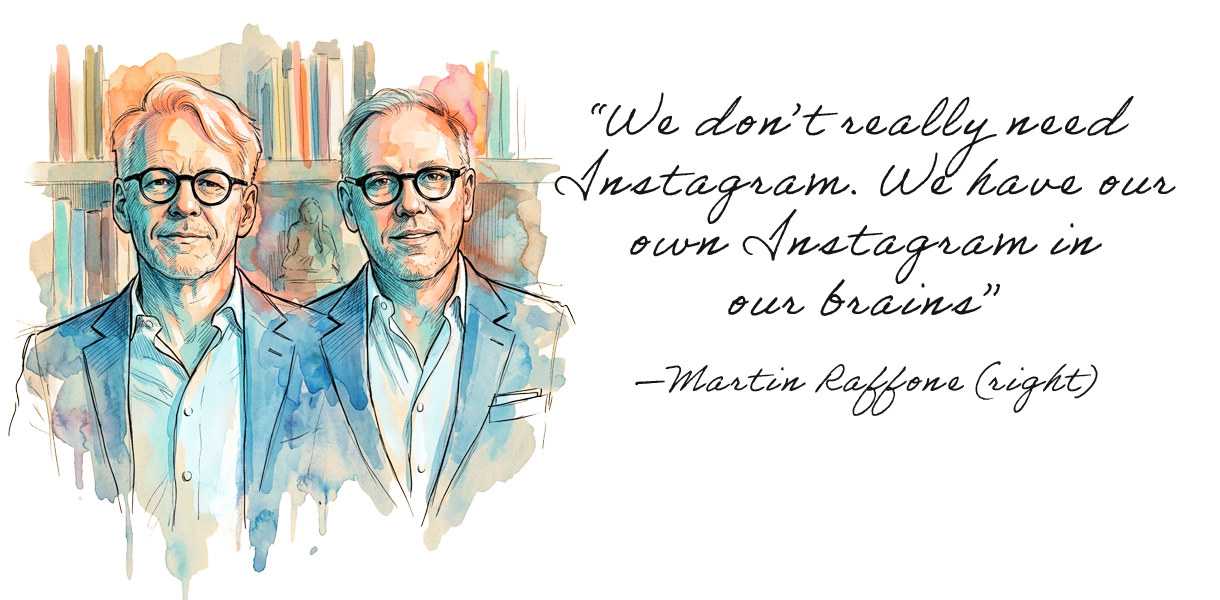
Bill McIntosh and Martin Raffone on becoming their own worst clients.
William McIntosh Design is the New York firm behind highly polished, livable interiors in some of Manhattan’s most desirable addresses — 432 Park Avenue, the Plaza, the Puck Building, Herzog & de Meuron’s 160 Leroy Street — plus projects in Miami, Palm Beach, San Francisco, London, and retreats including St. Barths and Morocco. Bill McIntosh and Martin Raffone run it together and are married to each other. Bill takes the architecture, Martin takes the textiles and furnishings. Between them they have been featured by Architectural Digest, Elle Decor, Departures, and 1stDibs Introspective. We caught them at their house in Litchfield County, Connecticut, where a 1980s bathroom is currently in pieces on the floor.
Hello guys. What are you excited about right now?
Martin: Our renovation on our house. We have a 200-year-old house that currently has a 1980s single bathroom, and we are ripping that out and turning it into two bathrooms. The contractor just removed the old floor, and we got to see the structure of the house, which is amazing. How they built houses 200 years ago. It’s all post and beam and old timbers. It is sort of exciting, not only from a historic point, but having to design spaces for ourselves is sort of a treat.
How is the process different when you’re designing for yourselves rather than a client?
Martin: It’s insane.
Bill: It’s sort of the classic story. When you’re doing it for yourself, suddenly you become a total idiot. You’re the worst client. Never wish it upon yourself. Decision-making is prolonged, and the things we do so instinctively, almost without overthinking—is just belabored.
Martin: My favorite little anecdote to this: we went to Waterworks to look for tile for our bathrooms, of which we need four. We go there all the time and we can select tile for client projects in literally minutes. She started pulling out the sample boards, and I turned to her and I said, “How the hell do you work this thing?” And she turned to me and she said, every single designer that comes in here who’s doing their own project has the same reaction. They just have no idea what they want.
Bill: It’s like 40 years of experience out the window.
How does your design partnership work when it’s your own home?
Martin: We’re really in alignment when we’re working on client projects. Bill has a very particular component to the work, which is very architectural, and I sort of do more of the textiles and furnishing, so we mesh together incredibly well.
Bill: We get the big picture lined up, and then you always know what to go back to when you’re making decisions throughout the process.
Martin: But when you’re doing your own project, it’s harder to have the big picture. The house is 200 years old. It’s very simply designed on the interior, and that’s sort of the storyline—which, if this was for clients, we would refer to constantly. When we’re doing it on our own it’s hard to reference. And suddenly we become very budget conscious.
Do you still check all the boxes—the mood board, the scope of work—or are you winging it?
Martin: We’re winging it. But we did have lots of inspiration images. We knew we wanted a walk-in shower with beautiful little tile. We’ve been planning this for years, so we knew that. But when it comes to the point of actually jumping off the bridge, that becomes more stressful. Do we really want to spend that much money on this beautiful tile?
I just got the West Elm catalog in the mail. Every page is brown. What’s going on?
Martin: We did get that catalog. It all looks like Pierre Yovanovitch. I think these companies are quite clever. It’s like fast fashion—they are quickly absorbing the zeitgeist of design, and they are able to produce and pump it out there so quickly. We both looked at it and we remarked that it was pretty amazing. It really is knockoffs of Pierre Yovanovitch furniture and of his whole mood.
Bill: When West Elm first came on the scene it had a freshness to it. This isn’t necessarily fresh, but maybe it’s fresh for them, because they went really down in the toilet, I think, for several years. So it seemed a return to at least design.
Martin: It’s pretty, but it doesn’t interest me, because I can clearly see where they’re deriving all of this from, and I think it’s incredibly trendy. Pierre’s work is beautiful, but I’m sort of tired of it. You need Pierre’s architecture, the chateau in Provence. Put that furniture on Third Avenue in a little co-op and you’re not quite getting it.
Why do you think the big retailers are looking backwards? I’m thinking about RH and Michael Taylor.
Bill: Security. It’s a financial sure bet. If everybody’s just following the trend, the beige, soft, curvy furniture styles, you’re going to pump out as much beige, soft stuff. But try and determine where the trend came from, because certainly some corporate design team didn’t come up with this look.
Martin: They’re sucking it all off Instagram. They need to bring something to market, and then they blanket everything in cream bouclé, because you know that it’s easy to live with. RH recently changed their whole tune about custom color. Before that, you couldn’t get anything on their upholstery except beige fabric. And they’re looking back because that’s sort of the trend. We’ve been cycling through trends. We started with mid-century modern, which just was exhausted, and then we moved into the ’60s, and now we’re up to the ’80s. Michael Taylor.
“We don’t really need Instagram because we have our own Instagram in our brain. It’s like, remember that door we saw in Paris 20 years ago, and it was shiny and it was purple.”
— Martin Raffone, William McIntosh Design
You say “trend” like it’s a naughty word. When you’re working for clients, how do you create designs that have longevity?
Martin: We try never to make them trendy.
Bill: The people who come to us are not trend followers, and maybe it’s because they’re not necessarily young. They’re more established in their lives and financially. We’re not dealing with 20-year-olds or even 30-year-olds. When somebody looks at our work they see things that are just not trendy. So they’re not coming to us for that. I don’t think anybody’s of such strong fiber that you’re not going to be tempted by a trend here or there, and maybe it keeps things kind of youthful and present.
Martin: We’re not immune to it, and trends often come from good places. Pierre Yovanovitch is doing intelligent, beautiful work with gorgeous colors and fabulous textures, and of course that’s going to enter into the work. We’ve been to his showroom, we’ve used some of the furniture he’s producing. But trying to recreate somebody else’s design because it’s trendy—no one has ever asked us to do that, and we wouldn’t want to. It wouldn’t be interesting.
What else has your eye at the moment?
Martin: Speaking of RH. It’s interesting that Gary is going back to traditional brown furniture. I don’t know if you could call that a trend, but it seems like people are starting to talk about antiques again, which I think is a nice idea. Anything not ’60s or ’70s. Real old brown furniture. I like to mix things that are historic, and we really go deep dive into references. We’re currently working on a beach house where the client went and stayed at a hotel in Puglia, and that’s been the genesis of the design of their house. Not that we’re trying to create a Pugliese retreat on the ocean, but all of those textures and colors—and then we expand the story to include all of Italy. Because we don’t really have a signature look, each project brings its own story.
Bill: At the other end of the spectrum, we just wrapped up a little renovation of an ’80s beach house in the Hamptons. All angles and curves. It was so much fun. We knocked it out in less than a year, 10 months, and it was simple, easy. It looked like what it was supposed to look like, which totally tuned in with the clients’ vibe. That was a total joy.
Last one, for both of you. Favorite city?
Martin and Bill [In chorus]: I think it’s Paris.
Editor’s note: This interview has been lightly condensed for clarity.
Find out more at: williammcintoshdesign.com
🤖 TECH
Christmas is already in the cart
Attentive surveyed 600 US consumers and found 71% plan to start their holiday shopping before Black Friday, and 46% before November even begins. Two-thirds (67%) have used Gemini, Perplexity, or ChatGPT to manage a purchase in the last three months. Among Gen Z that number is 80%. Of those shoppers, 58% ask AI about a specific product, 51% compare brands and features, 45% want a recommendation, and 43% hunt for a deal. Setting discounts aside, free shipping is the top motivator, at 68%. It’s the first week of August and here’s where we’re at: customers are using LLMs to make their December decisions. If your descriptions, dimensions, materials, and lead times are not designed to attract artificial intelligence, you’re on the naughty list already.
“Consumers are discovering products, comparing options, and deciding which brands they trust long before the holiday rush. The retailers that win this holiday season will be the ones using AI to understand and deliver on individual customer preferences, serve timely, personalized experiences across every channel, and strengthen relationships well before promotions begin.”
— Jema Birkmeyer, vice president of strategic sales at Attentive, via Retail Dive
📈TRENDS

The rise of grandma hobbies
The New York Times spent two days at Green Door Folk School, a farmstead school in northern Michigan that teaches basketry, spoon carving, quilting, felting, and natural dyeing. As you can imagine, Millennials and Gen Z are the majority of its students. John C. Campbell Folk School in North Carolina, the oldest still operating in the country, now runs a waiting list for a teen program. It’s the same at Ely Folk School in Minnesota. More than 100 folk schools operate across the US, and Pinterest searches for beginner sewing projects have quadrupled in a year, driven by users under 34.
Every one of those hobbies runs on what we already make. Soft goods, fabrics, thread, batting, trim. Knitting, sewing, crochet, quilting — the crossover between the home textile world and the grandma hobby world is enormous, and the quilting industry on its own is massive and growing faster than anything in our category. One of my brands is researching a niche ancillary line into it right now. Two things are pushing this. People have more time on their hands because of AI, or work from home, or whatever you want to call it, and they want off their screens.
Underneath that is anxiety. You make something beautiful with your hands and it does something for you that feels so much healthier than doom-scrolling. We talk constantly at one of my brands about beauty and suffering, about how it helps the human condition to make something beautiful while you are hurting. Then you look at the finished thing—a puzzle, a plate, a little cushion you crocheted—and you made that. Wonderful.
Some people are already doing it. Jacob Long has spent more than a decade making American wool manufacturing cool again, and he’s high on my list to interview. The Urban Electric Co. made a hand-built lighting factory in Charleston. And look at Hellman-Chang’s marketing: Eric Chang carving furniture in a Canali suit and a silk tie. Making things with your hands is finally being sold as glamour. It’s only taken this business 30 years to work that out.
Anyway, the quilting business is enormous and growing fast, and I’m testing a way to get into it with my company. The kids are now paying real money for the privilege of doing badly, by hand, something a machine could do in 1910.
“Grandma hobbies reconnect us to ourselves. These activities are hard, in that they require time and concentration to master. But they also offer clear and fulfilling rewards.”
— Cal Newport, professor of computer science at Georgetown University, via The New York Times
The summer report
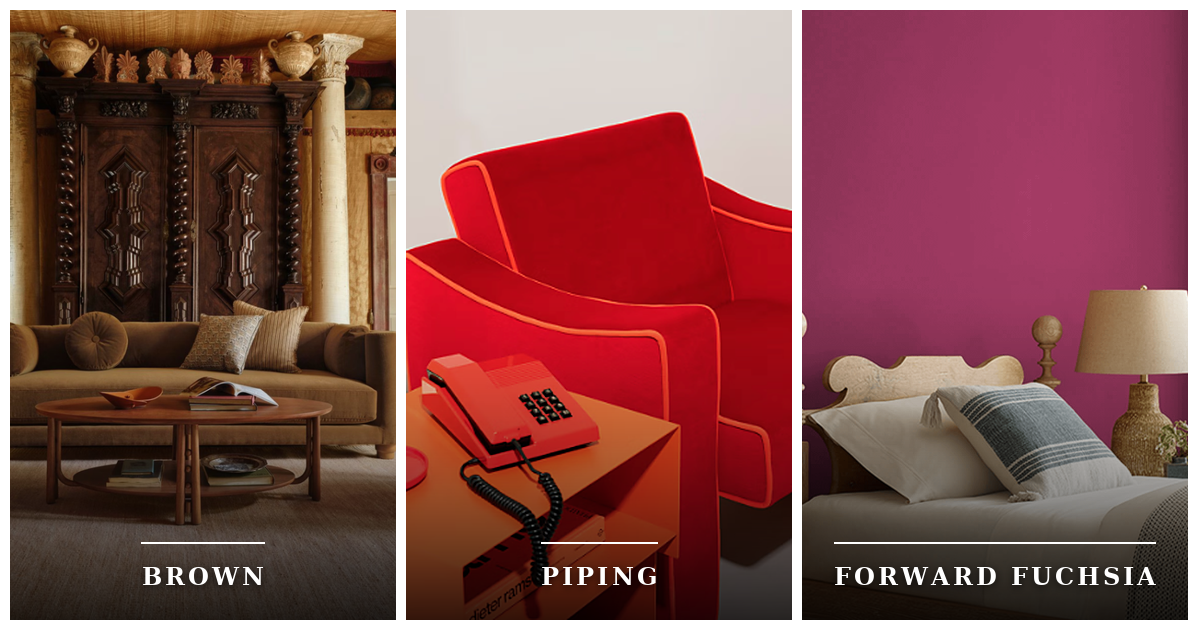
Sherwin-Williams published its Colormix 2027 forecast, 1stDibs pulled together the year’s best indoor-outdoor rooms, and Elle Decoration named contrast piping the furniture detail of the season. And a West Elm catalog landed in our editor’s mailbox this week drenched in one earthy color—can you guess what it is? The whole summer report is in Mr. Thread Insider, below.
🧵LOOSE THREADS
• Jisu Yoon has invented a collapsible hand-woven a sofa out of shape-memory alloy.
• ArchDaily has rounded up six houses shaped like pyramids, which has pleased this Egyptian.
• UNESCO has added 13 buildings and ensembles by Aino, Elissa and Alvar Aalto to the World Heritage list, along with 10 in Tashkent. Soviet concrete is finally cool.
• MAD spent eight years on a 2 million-square-foot culture complex on Shenzhen Bay. It is quite frankly, stunning.
• Herman Miller has pulled three Alexander Girard patterns out of its own textile archive and had Pendleton weave them into $325 blankets. I want one.
• Somebody has built a listening museum for 36 mechanical keyboards. Get ready to lose a couple of hours.
🎨 THIS WEEK’S ART

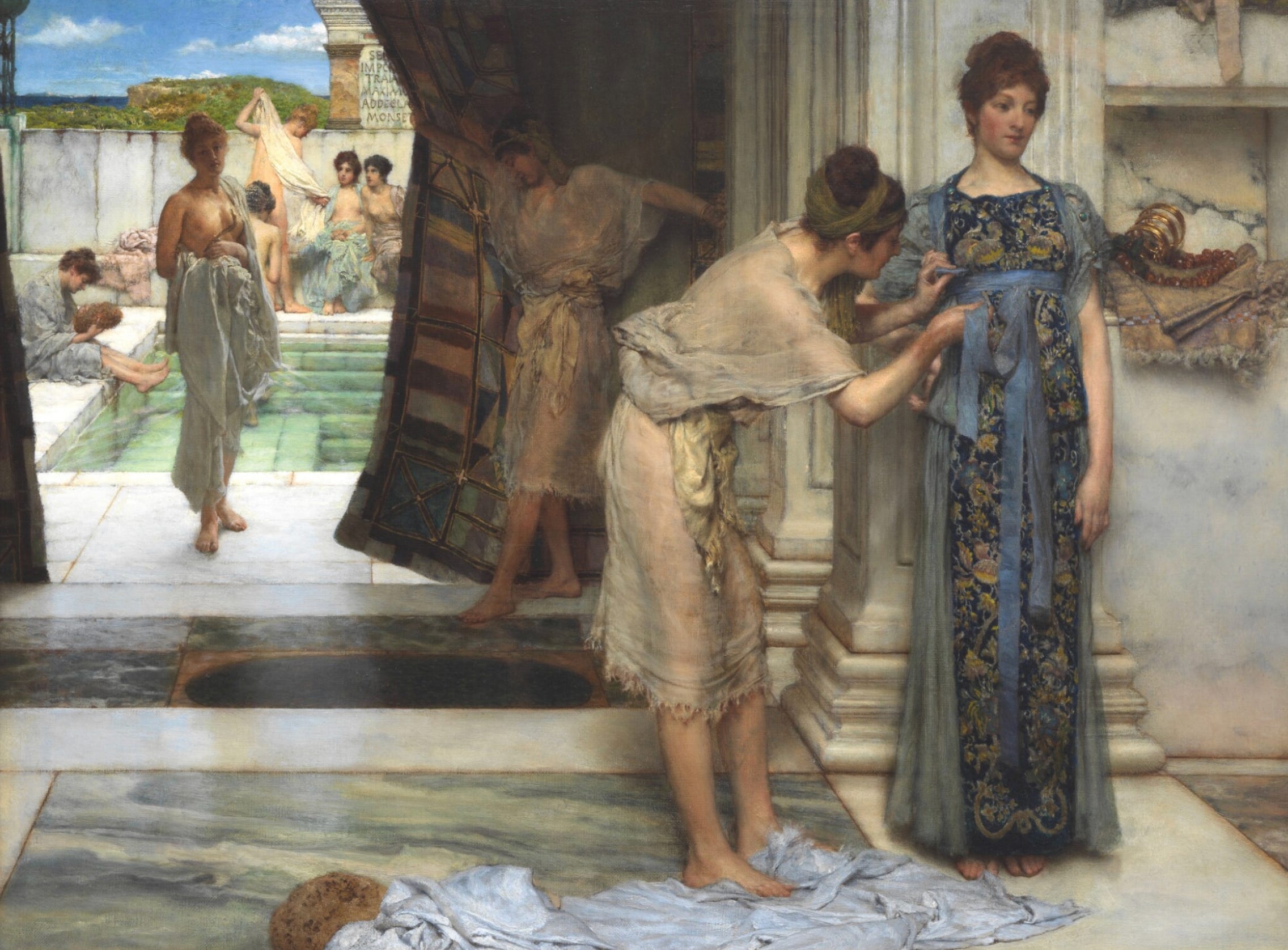
I must admit. This was a tough week for finding art. I just couldn’t find any inspiration that made sense with this week’s content. But alas, after exhaustive work searching through the archives, I found an interesting one. He is Sir Lawrence Alma-Tadema, and the critic John Ruskin is said to have called him the “Worst painter of the 19th century.” I found that kind of harsh, but I do get how his very literal paintings can come across as cheesy. Nonetheless, I loved the subject matter and the vibrancy of the brushstrokes, realism, and color that has brought this week’s journal to life!
Enjoying Mr. Thread?
How can we make this better? We read every message and genuinely want to know what you think.
🕵🏼♀️ MR. THREAD INSIDER #00005
Welcome to Mr. Thread Insider, our members-only section.
The summer trend report.
This week, we hunted through the latest batch of industry trend reports to pull out the insights that actually matter to you.
Now, I never advocate for following trends blindly. But understanding what the market is feeling is essential. It forces us out of our own bubble. It exposes new opportunities and points out any obvious blind spots. Our goal at Mr. Thread is to serve as your design sherpa, giving you the context you need on your journey to build a resilient creative business.
Here are the key takeaways from the Summer Trend reports…
