
Hello readers…
I’m in Miami. Sunny skies with a chance of shady dealings.
I just went to the supermarket with my wife. A bottle of hot sauce, some cheap bottles of Sauvignon Blanc, various sundries, and batteries at the local Publix just set me back $140. Sadly, none of this is surprising anymore.
We then had lunch at a nice Mediterranean restaurant. Hummus, which is one of my favorite things in the world, was $19. A dish that’s essentially blended chickpeas. The traffic is insane too, and as you weave between Bentleys and Ferraris, it’s like driving through the physical embodiment of this country’s K-shaped economy. You’ll see some Miami housing data below that is quite surprising, too.
My mother lives in Sunny Isles Beach, which is primarily two and a half miles of skyscrapers on the ocean. Somehow, they keep finding space to fit more in. The Armani building went up a few years ago and killed her view of the Miami skyline. The Bentley building is going up a few blocks south. Two skyscrapers down from that is the Porsche building.
The Porsche building has a car elevator. You pull your car into the garage, and an elevator takes you up in your car, where it lives in a private “sky garage.” The Bentley building makes you feel like living inside a giant Bentley motorcar.
I think developers are leveraging luxury brands like Porsche and Bentley because they know those logos tap into something primal: the urge to signal status and stand out. They’re using that to sell overpriced condos with wonky floorplans. This is luxury 101.
Honestly, it’s kinda gross how much people are spending to attract the uber-wealthy, who just keep getting wealthier. It’s often done tastelessly, without consideration of consequences, and none of this is built to last. Some of these Miami condos are being built on sinking land.
Our mission, as “the custodians of beauty in a dark world,” should be to sell to the rich, then use that money to help make the world more beautiful. I’m not talking about being a modern-day Robin Hood: I run a for-profit business. But I want to hear ideas on how we can do this before it’s too late.
In this week’s issue, I look at Kravet’s move into Pottery Barn and ask whether it’s chasing the “undecided whale.” We also have yachts, luxury paint, and designer jewelry. Miami, basically.
See you next week!
Mr. Thread
🎲 P.S. Don’t just read—play. We’ve woven a new mystery into this issue in our PLAYTIME segment. One player got closest to the price of last week’s surreal sheep. Let’s see who has the industry know-how to claim the win this time and secure a spot for our grand prize draw. Scroll to the bottom to join the fun.
🏭INDUSTRY
Kravet goes whale hunting
Kravet has launched its second collection with Pottery Barn. It includes fabric, bedding, wallpaper, outdoor furnishings, and pillows. My instinct tells me that an interior designer who sees Kravet at Pottery Barn, and then sees Kravet in the D&D Building, might feel a little unsettled. Predictably after Dunes Point Capital, a private investment firm, acquired Kravet in December of 2024, the brand has been trying to reach a new customer.
In this brilliant piece on brand strategy, Ethan Strauss defines the “undecided whale”: the huge group of possible customers a company chases after it thinks it has saturated its original market. His example is Nike, which reorganized itself to pursue a larger customer pool while taking its established base for granted. I’m not getting into politics, but critics say Nike “went woke” to attract new customers (women, who are by far the largest apparel-buying demographic in the United States) and alienated its core customer (red-blooded sports bros who don’t shop as much).
In going with Pottery Barn, is Kravet chasing their “undecided whale”? Does this threaten to damage their brand like Nike? (As of Aug. 20, Nike stock was down about 75% from its Nov. 5, 2021 all-time closing high.)
I worry about this, not only because of how much I care about Kravet, and its importance to our industry as a fifth-generation, American, family-owned business (how amazing is that?).
But it also had me thinking about my own fabric company. I could try and pivot into retail, make the brand a household name beyond just the trade, and we could sell a million pillows. But is that dangerous? Am I forgetting the history, the heritage, and the people who made it special because I’m chasing a larger market? These are tough decisions and I don’t have any easy answers.
I have so much respect for Kravet and the wonderful family behind the brand. I’m not interested in trashing them. I’m just asking myself the same question.
I would love to hear from you. What do you think?
📊ECONOMY
MillerKnoll, and the Holly Hunt problem
I had longed for a Herman Miller Aeron chair since I first had an office. I told myself I couldn’t buy one until we launched a new product, and it took three years (that’s a subject for another day). Until then I sat on a really shitty office chair that made my butt hurt, then finally ordered a custom Aeron in silver because I didn’t want black. I wonder where that chair is now.
MillerKnoll just reported quarterly revenue of just over $1 billion, up 4.4%, while orders fell 6.3%. But there was news in their report that caught my eye. The company said Holly Hunt underperformed and hurt margins. That is a most troubling sign for this iconic company, and like Kravet, once again I fear that consolidation could be taking down another iconic name in our industry.
I keep an eye on these small trade brands sitting inside publicly traded companies.
I believe that the big consolidated strategy doesn’t work in our industry. We’re niche on top of niche on top of niche. Every home is a different client, a different architect, a different taste, and the designer specifying it wants something special — she wants to know who made it, who she’s buying it from, whether the guy on the other end of the phone picks up on a Friday afternoon. Try scaling that.
In 30 years, I’ve yet to see a design company get more beautiful after the captains of industry got hold of it. Bigger doesn’t equal better.
Which is good news for the rest of us smaller fish. The thing that makes our brands impossible to consolidate is the same thing that makes them impossible to copy.
Jewelry to the rescue
Jewelry sales are saving the big luxury groups. LVMH’s watches and jewelry division grew faster than fashion and leather goods in a recent report. Kering’s jewelry houses grew 20% on a comparable basis. Richemont’s jewelry maisons grew 24% at constant exchange rates.
Jewelry is different because after you drive a handbag off the lot, it can suddenly be worth nothing. Most handbags depreciate, although a few collectible models beat retail on resale. You buy a beautiful diamond ring, and you still have gold, silver, and diamonds on your finger. There’s no guarantee that it’ll appreciate in value, but there’s something there to sell if you find yourself in a pinch.
Jewelry is also an unbelievable signifier. You can wear an incredible piece and none of it has a brand on it. That’s the flashiest quiet luxury you can ever buy.
The takeaway for us is that luxury will never go away — the rich keep spending like crazy. They’re just no longer as enamored with “brand names” that have been overexposed in the age of social media. A new group of “mini luxury” brands is rising, and I can’t wait for it.
“Fine jewelry has emerged as one of the clearest success stories in luxury over the past year.”
Official: Miami now more expensive than metro New York
I’ve already told you about my $19 hummus, but wait till you hear about the housing. The federal government’s latest regional-price figures put metropolitan Miami’s overall cost of living about 1.4% above New York’s. Housing costs were roughly 4.7% higher. Miami is officially costlier than the Big Apple. Designers have long thought of breaking Manhattan as a badge of honor, but maybe they should consider Florida instead. The weather’s nicer (At least from November to May).
The market here has very different taste than clients in NY, LA or London (I won’t take any cheap shots). But they spend big and move fast. Any serious interior design brand looking to grow needs to take Miami seriously.
“Miami’s luxury housing boom has driven the cost of living to new heights.”
📈TRENDS
Superyachts: home is where you drop anchor
I just read that wealthy owners are using superyachts as full-time homes. Gabe Newell’s 364-foot Oceanco yacht Leviathan was designed to make people spend time together. It has dining space for 54 and fewer barriers between guests and crew. The names of nearly 3,000 people who built it appear onboard.
I understand the problem. In my family, five of us shared one bathroom and shower for the first 14 years of my kids’ lives. When the kids start hitting puberty, it’s not cute anymore. Then we moved from New York to a larger house in North Carolina. We don’t have superyacht money but everybody got a room and a shower. I could watch golf without everyone complaining.
But within a couple of weeks, my wife and I realized: Oh shit — we’re all so far away from each other. Sometimes I don’t even see my kids for half the day. We don’t live in a mansion, but my son can be in the family room while I’m up in my office, and I can’t hear Scarface or whatever he’s watching.
I like the way Leviathan’s designers thought about community. The wealthy wanting to live on yachts is a huge opportunity for our industry. I know one designer who made it his whole thing to make yachts feel like home. He’s doing fine.
“They don’t actually want to buy a boat; they want to buy real estate on the water.”
Wanted. Richer customers.
Modern Retail just asked retailers how they’re handling this economy, and nearly all of them had the same answer: sell more expensive stuff to richer customers.
Wayfair is the perfect illustration: Perigold, its high-end platform, grew more than 35% in the second quarter, while Wayfair overall grew 7.5%. Perigold is putting trained designers in its stores, and brands across the industry are pushing harder into premium. Polly Bickel Wong, president of marketing agency Belardi Wong, said she was seeing “fewer people buying, but those who are buying are spending more.”
No one in our industry would turn down that scenario. We make beautiful things, and the people with money are still buying beautiful things. But you can’t wake up on Monday and become a luxury brand by Friday. Caraa cofounder Aaron Luo says a business with a $120 average order can’t suddenly charge $350 or $400. It takes several product cycles. You have to earn those filthy rich customers.
The K-shaped economy has turned every retailer into a greedy luxury retailer-in-training. Is that good for our civilization? I don’t know. I do know we should build for the customer who’s coming through the door, not only the one we wish was there.
“There have been fewer people buying, but those who are are spending more.”
— Polly Bickel Wong, Belardi Wong president, via Modern Retail
Paint the town red
The decorative-paint market is nearly $100 billion, and new luxury paint brands keep appearing, especially in Britain. They sell color, advice, and paint you can talk about.
I totally understand the difference when you have incredible paint colors. They’re transformative in any room. But bragging about the brand of paint is stupid. The dumbest thing ever… the level of insecurity is off the charts.
That said, it shows this is a huge market. And while it may have felt impenetrable years ago against giants like Benjamin Moore and Farrow & Ball, some brilliant new entrepreneurs have found a way in.
It can be done!
“To many people paint seems to have become a fashion item and they use it to emphasise either their ethical bona fides or status.”
— Patrick Baty, architectural paint historian, via The Spaces
🧵LOOSE THREADS
One of America’s tallest mass-timber office buildings is planned for Bellevue. What an amazing concept — imagine how much more beauty there could be if we made skyscrapers out of natural materials like wood. But I’m still not going back to the office.
Italian police recovered stolen Renoir, Cézanne and Matisse works worth millions. Quite frankly, stunning.
Aimee Lee brought ancient Korean hanji papermaking to Ohio. Good things still take time.
Ferrari’s disgraceful and rightfully panned, first electric car sold at auction for $40 million. What the hell is going on here?
🎲 PLAYTIME
Last week we asked you to guess on this eccentric quartet of side tables we found listed on 1st Dibs.
Congratulations to Dianne M., who came closest with a guess of $200,000 — though every guess fell well short of the listed asking price of $317,856, so this one's a mercy win.
This week’s mystery is art that perfectly exemplifies today’s Miami.
Here are some clues:
✅ Creation by Ultra Fine Money Artist TRAN$PARENT whose work is now on the moon.
✅ Dimensions: 48 in H x 63 in W
✅ Medium: Canvas, Acrylic
What is the asking price?
The person who guesses closest to its listed price wins!
Reply to this email or click the button below to submit your guess.
Honor system, please—no using Google to look up the answer! (If you do cheat, we still get the engagement, but you’ll have to live with yourself!)
The Stakes
Whoever gets the closest guess each week wins an entry into our grand prize drawing! We’ll be holding the final drawing on October 15th—the more weeks you win, the higher your chances! Our winning threader gets:
A featured spotlight for you/your firm in an upcoming issue of Mr. Thread.
Another special mystery gift from yours truly, Mr. Needle.
Stay sharp,
Mr. Needle
🎨 THIS WEEK’S ART
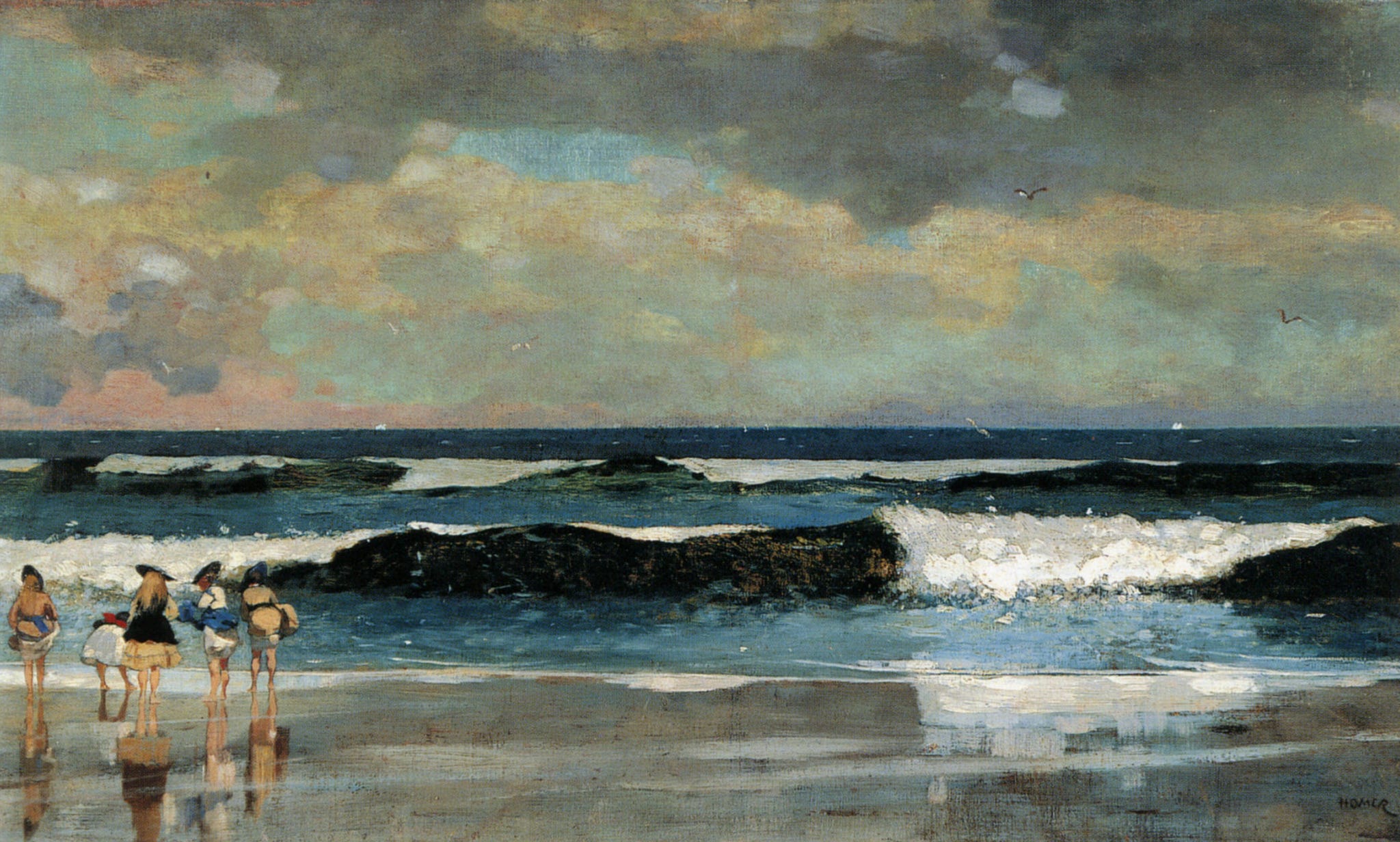
I am on the beach this week. Enjoying the last bit of summer, before the second summer begins in Charlotte this fall. I found these precious and serene paintings by Winslow Homer. One of his favorite subjects was capturing the seaside. I found something very nostalgic about his work. It just made me…. A little bit happier after viewing them. And what could be better than that!
Enjoying Mr. Thread?
How can we make this better? We read every message and genuinely want to know what you think.


💯 using our profits to invest in training the next generation of artisans is a worthy mission! 🚀
Love this one. What if we take the for profit riches of these companies and invest back into the craft. Training the tradespeople. How will all of these beautiful products continue to be made if there is no one left to make them!