

🌻 Help us get better…
Mr. Thread exists to help our creative industry build stronger businesses, and part of that job is deciding what deserves more of our time. So, I want to ask you directly:
Please click one. We want to know what will actually be valuable for you.
On to this week’s issue…
Hello readers…
Everyone in Spain went outside yesterday to stare at the eclipse. Totality lasted barely a minute, and it was a good reminder to stop working and look up once in a while.
Instead, I’ve had my head buried in a book. I finally finished From Bauhaus to Our House, Tom Wolfe’s mad little 1981 attack on modern architecture. It’s been on my list forever. Wolfe is all over the place. He’s crazy. I love his writing style. I’m a hippie at heart, so The Electric Kool-Aid Acid Test is next.
Wolfe wrote about hippies, space, architecture, New York society—he bounced everywhere. Mr. Weft tells me Wolfe once wrote a long, letter-like memo to his Esquire editor about an article he couldn’t start. They published the note, and that became his style. I thought, Okay, good. I’m allowed to be all over the place too.
Wolfe’s argument, in the simplest terms, is that socialism turned decoration, craftsmanship, and individual taste into dirty words. In the moral fight to make good design available to everyone—which, in spirit, is beautiful; who doesn’t want everyone treated fairly?—we ripped some of the soul out of art. We ripped out the color too.
Color used to be a serious luxury. To make Tyrian purple, you had to extract pigment from sea snails’ mucus glands—roughly 10,000 of them could yield just one gram. It was a color reserved for the rich. The people in the poorhouse wore beige.
It became offensive in elite architectural and academic circles to use color and ornamentation. And since these societies almost single-handedly enforced the direction of modern style, we ended up with a world of concrete and glass boxes, with clean modern interiors. They say the road to hell is paved with good intentions… this is a great, if not catastrophic, example of that in action.
The Atlantic just published a sobering piece arguing that the color recession may be permanent. We keep hearing maximalism is back, and the fall reports you’ll read about further down are full of wine red, smoky purple, and layered green. But the paint companies still sell endless shades of Swiss Coffee and “greige.” I hope this isn’t a little blip before everyone gets brainwashed back into brown.
Read on for some billion-dollar market research from Arhaus, Usher’s cringe-tastic AD home tour, and a 3D printer making buildings out of mud. Our Insider interview is with the business coach who saved my ass when COVID sent my company remote. She’s back with us again giving some fresh takes on how creative companies can survive and adapt in the new AI world.
See you next week!
Mr. Thread
P.S. Don’t just read—play. We’ve put our first Guess the Price mystery near the bottom. Honor system only… no Googling the sheep, okay?
📊ECONOMY

Free billion-dollar market research
Arhaus absolutely kicked ass in the second quarter. Net revenue hit a record $385 million, up 7.4%, and comparable written sales rose 12.5%. The top line for me is that about 90% of its 2025 sales came from clients who live within 50 miles of a showroom. If you are a furniture or interiors company thinking about your brick-and-mortar strategy, this should answer your questions.
Also, orders supported by an Arhaus interior designer carry an average value more than four times that of a standard order. Our industry continues to be the MVP of big-box retail furniture stores. Shocker!
But wait. The report reveals that Arhaus recovered $37.8 million in previously paid tariffs, and $23.8 million lowered its second-quarter cost of goods sold. We’re all paying more for furniture, and they got a very nice lift to the bottom line. D’oh! To its credit, Arhaus says it will reinvest some of the recovery in growth and use another portion against higher fuel and shipping costs.
The 1stDibs results went the other way aesthetically. Its press release looks like a high-school project, which is crazy for a design business. The actual business is doing fine: revenue rose 5% to $23.3 million and gross merchandise value climbed 7%, even as active buyers fell 10%. The business is the business is the business. 1stDibs is 1stDibs. They’re not really growing that much.
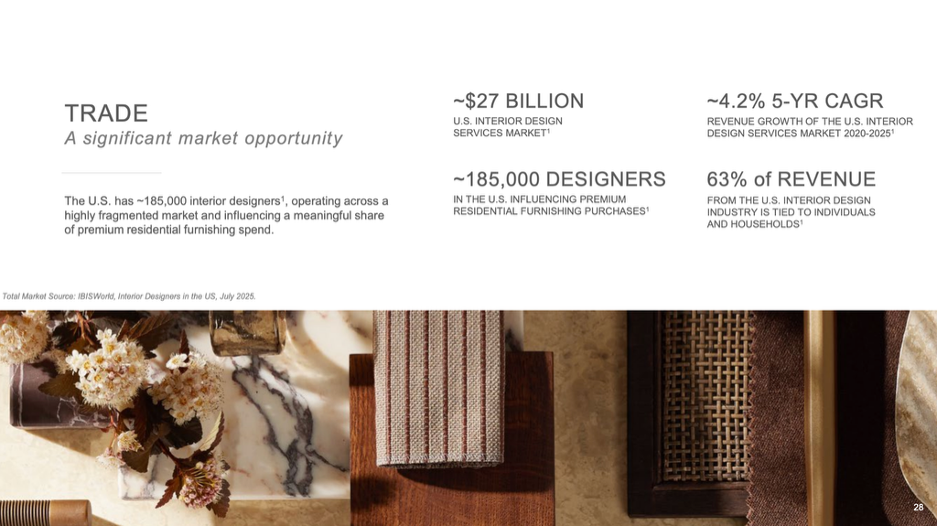
These reports are free, but no one in the business really reads them. Arhaus paid serious money for the market research sitting inside that investor deck: a $27 billion US interior-design services market, a trade channel, a showroom strategy, a supply-chain map. Guys, you can get free billion-dollar market research if you just take the time to read these things. I don’t know why I geek out on this stuff. I get my business education from it.
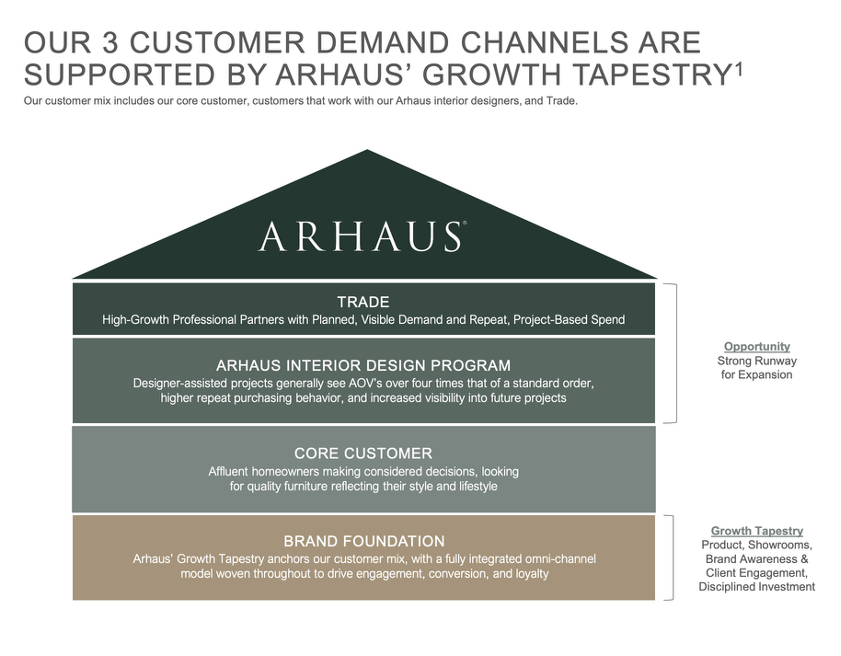
Check this out from the Arhaus document. I’ll say it again: Their customers who work with designers spend more than four times as much. That is a public company telling Wall Street, in plain English, that people need interior designers.
“GMV of $96.0 million came in above the high end of guidance, up 7%, our strongest growth rate since late 2024.”
— David Rosenblatt, CEO of 1stDibs
Falling into a K-hole
I don’t want to jinx it, but things are looking up. Inflation eased slightly in July and mortgage applications rose after a brief dip in rates. Treasury Secretary Scott Bessent declared the K-shaped economy over and said lower earners were beginning to catch up. But the housing market didn’t get the memo. In the first five months of 2026, sales below $200,000 fell 14.4%, while sales between $1 million and $2 million slipped just 0.6%.
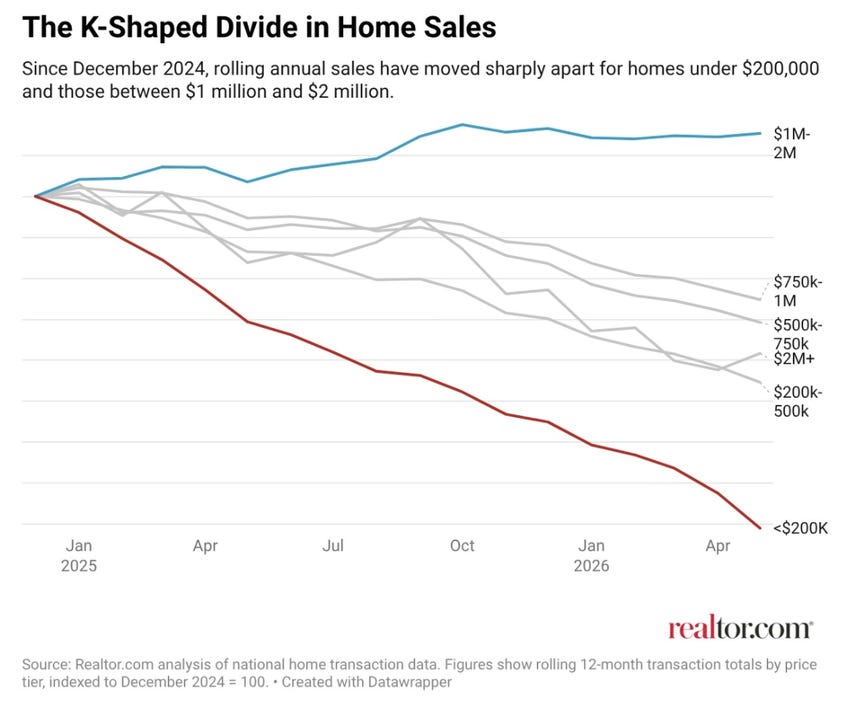
Look at the chart. Doesn’t it look exactly like a K? The expensive homes are up there and the cheaper ones are down there. We just saw it in Arhaus too, in real economic data. For now, if your clients sit on the upper arm, they’re still spending.
“Housing doesn’t support that story right now. The entry-level tier isn’t stabilizing.”
— Hannah Jones, senior economist at Realtor.com
💰OPPORTUNITIES

The paintings in the trash room
Bloomberg writes that nearly $1 trillion of art is expected to pass between generations over the next decade. The next generation won’t want all of it, museums don’t have room for it, and auction houses will only fight over the very best pieces. That leaves a great quantity of paintings and sculptures looking for a home, a buyer or, in the worst cases, a thrift store.
When I was younger, my father called me in his eloquent but thick Egyptian accent: “Come, come to the office.” He was moving his law firm out of the MetLife building, right above Grand Central, and told me to look through some old company files before they were shredded. I opened a small room absolutely rammed with boxes. It was a shit-ton of crap. Ninety-eight percent old financial and legal documents.
Then I found a weirdly shaped box in the corner. It looked like a frame was inside. I pulled it out, looked at the signature, and realized it was an original painting by the founder of one of my companies. I kept going. There were 12 of them, absolute treasures. They now hang over my mother’s sofa.
The bigger opportunity is the money moving with the art. My generation is reaching the point where we’ve had good careers, the kids are leaving, and we’re ready to invest in the forever home. We’re finally going to buy the great fabrics. That wealth is landing in the hands of people like me, ready to spend it on interiors.
I will keep yelling it from the mountaintops… there is no better time than now to be building in our industry!
“The next gen don’t want it. They want something different.”
— Philip Hoffman, chairman and founder of the Fine Art Group, via Bloomberg
Washington is hot, hot, hot, hot
Washington, D.C.’s luxury market is setting records. Inventory is down and prices are soaring. A Georgetown house just sold for a city-record $28 million, and agents say cabinet officials, tech leaders, and AI executives are competing for trophy properties. Many want the house turnkey and fully furnished. They don’t want to lift a finger.
We’re feeling it too. It’s a great market for us—great clients—but it’s so sketchy. Why is it hot? Washington is booming. Maybe these folks got rich off insider trading (have you seen Pelosi’s stock tracker?) Or AI. Or Trump Media’s new paid Truth API feed that I just read about.
The direct feed is called Truth API, and reportedly costs as much as $100,000 a month. It doesn’t give traders a post before Trump publishes it, but it can deliver his market-moving announcements milliseconds before ordinary users see them. If this isn’t the most brazen form of corruption I’ve ever seen in my life. Because if Trump posts tonight, “I have a deal with Iran,” the markets are going to move tomorrow, right? Oil is going to move. Not to mention the prediction markets.
In completely unrelated news: Click the button below to subscribe to Mr. Thread Insider.
Can you imagine selling faster access to the news you’re giving out as president? I’m not bashing only Trump. I wouldn’t put this kind of caper past other presidents, only you’d never hear about it. Anyway, I don’t know whether any of that has anything to do with a $28 million house in Georgetown. But when this much money is appearing this close to power, I think I’m allowed to ask: why are you guys all so rich around there?
Look, the design opportunity is real, whatever you think of the politics. These buyers need designers. They’re purchasing speed and taste, and they want to bring their toothbrush—not their contractor.
“We’re in an AI race. These people are driving the market.”
— Daniel Heider, executive vice president at TTR Sotheby’s International Realty, via The Wall Street Journal
📈TRENDS

Human-made is the future
Fast Company argues that “human-made” is becoming the next big flex for luxury buyers, something I’ve been trumpeting since Journal #00001. As AI cheapens creative work, visible human curation becomes scarce. Organic food, craft beer, and handmade furniture are already showing us that customers will pay a premium for a story they can believe.
We’re on the right path. A large language model could scrape Mr. Thread and rebuild a perfectly serviceable version in five minutes that sends you links to interior design news. But it can’t give you commentary from 30 years of industry experience and it probably wouldn’t make fun of Gary Friedman every other week. That’s why readers constantly tell me Mr. Thread is a better read than the tired old trades.
What does this mean for us? Keep leaning into handmade, human storytelling, and authenticity. The demand for it will keep exploding in direct opposition to AI.
“The more AI-assisted creation becomes the default, the more conspicuous—and commercially powerful—unadulterated human involvement becomes.”
— Ben Sherwood, via Fast Company
The robot becomes an artisan
Architects are now 3D-printing buildings from local soil, lime, and agricultural waste. TECLA used 350 layers of raw earth to build two interlocking domes in Massa Lombarda, Italy. Near Barcelona, IAAC students and researchers created a separate project, Teixit, printing local soil into expressive walls. The nozzle leaves a delightfully natural texture directly in the structure. Check it out.
This is 3D printing as artisanal work. It takes mud out of the ground, and a robot turns it into a building. And it’s beautiful. We spend a lot of time worrying that machines will erase the human hand. This one is making art out of dirt, using AI and modern technology. I love that contradiction!
“This digital approach transforms robotic execution into an expressive medium guided by human minds.”
— Moises Carrasco, via ArchDaily
I need a third place
This one really resonated with me. Working from home can be very lonely. I’m desperate for a third place—a coffee shop where you can gather your thoughts, a library where I bump into people who like to read instead of scrolling, a shared workspace that gets me away from computers and social media to meet other like-minded entrepreneurs. Imagine a theater with a members’ club where you meet your buddies for a bourbon and then watch a movie. Who better than designers to create these places in our lives? We’ve lost a lot of them. Well, I have some good news… it seems they’re coming back.
Designers are rebuilding the space between home and work. This week, Hospitality Design’s report finds cafés with play areas built into the architecture, cinemas with real bars (not the depressing one at your local AMC), and mixed-use buildings combining coworking, wellness, food, and cultural programming. Come for coffee and stay for a workshop!
Howard Schultz, Starbucks’ former CEO, understood this years ago: Home, office, and then the other place. That was the insight. But the third place doesn’t have to be one coffee chain with the same chairs everywhere. It can be a cinema, a bathhouse, a hotel lobby, a library, a kids’ café, one of those Korean spas where they scrub salt into your whole body and make you feel like a fish. Just some place with enough of a heartbeat that you don’t feel lonely. That’s a real design problem, and a very good business opportunity.
Summer reading tip: Read the origin story of Starbucks and Howard Schultz in this excellent biography.
“We wanted to allow for people to be with a group or equally be alone but close to others and still feel welcome.”
— Rachel Coll, cofounder of TiggColl, via Hospitality Design
Autumn’s quiet color rebellion
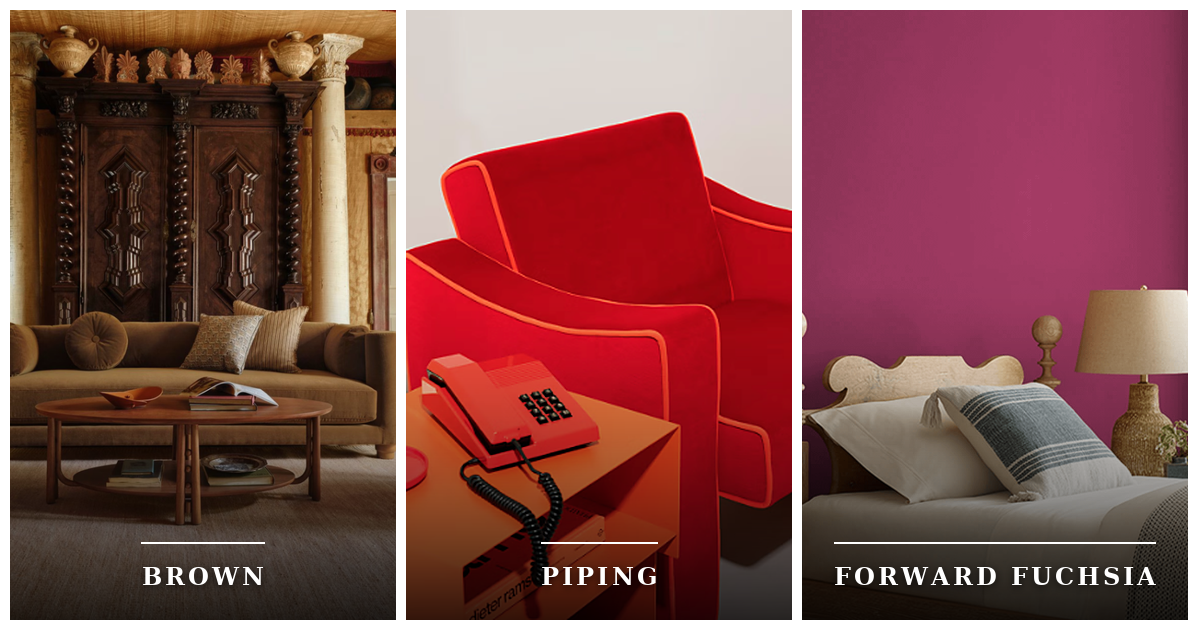
Veranda just put out its fall color forecast and it says designers are about to move on from years of caramel, burnt orange, and chocolate brown. They’re pointing to green-tinged neutrals, smoky purples, and softened marigolds. None of it is loud. Every shade has been dirtied up a little, which apparently is the only way we can cope with color now.
“Color never moves in a straight line—it’s always an evolution rather than a revolution.”
— Ruth Mottershead, creative director, Little Greene
This is good news for designers whose clients say they want color, then select Swiss Coffee. You can give them a wine red that reads almost brown, or a purple with enough gray to not offend. Personally, I still want the proper stuff—strong color, a little danger, a room that doesn’t look staged for resale. But if softened marigold is the gateway drug, I’ll take it. Let’s get the people hooked.
🏭 INDUSTRY

The human touch is the watermark
The EU’s new AI transparency rules took effect this month. The rules say providers must make “synthetic” output detectable, while deepfakes and certain text must be labeled “made by AI.” Standard editing and some B2B uses may be exempt, but fines can reach €15 million ($17.3 million) or 3% of worldwide turnover. Ha-ha-ha!
My textile company will now have to put a disclaimer on our website when we show a beautiful AI rendering of our fabric on a sofa. Seriously? I understand protecting people from deep-faked videos of politicians and celebrities, but this feels like an overreach.
The bureaucrats don’t understand the line between bad actors and good actors, so everybody gets lumped in. And where does it end? Do I have to confess every time a retoucher corrects the lighting, expands an edge, or upscales a photograph—all of that is AI. And anyway, what about McDonald’s? Their photo of a Big Mac looks nothing like the burger they serve you, and I don’t recall ever seeing a disclaimer under the golden arches.
“Published text that has undergone human review or editorial control does not need to be labelled.”
— European Commission, Article 50 guidance
Lonni Paul on winning work when the phone stops ringing
Business of Home asked five designers how they find projects when business slows. Lonni Paul gave the best advice: stay visible. She uses quiet periods to reconnect with past clients, architects, builders and trades, while improving her portfolio, updating her website, and pitching. You may not win a project tomorrow, but the right client might remember you.
Getting new business as an interior designer is nerve-racking. It’s feast or famine out there. You can spend months chasing leads and making calls and hear nothing back. Then the projects come. In this K-shaped economy, fewer designers are getting access to the clients with the big money. You have to fight harder to reach them. Lonni is right on this one. Just keep showing up, keep your relationships warm and make sure your best work is impossible to ignore.
“Rather than focusing on selling, I focus on consistently showing the quality of our work and the experience we provide.”
— Lonni Paul, Lonni Paul Design, via Business of Home
🧵LOOSE THREADS

COOKFOX has opened the Bruce Springsteen Center near the places that shaped his music. The Boss says the building feels like him.
ArchDaily rounded up some joyful ice-cream shops. Apparently the universal design language of dessert is color and childish fun. Correct.
Check out this design magic. Broadway’s “The Lost Boys” set becomes nearly 20 locations without a video backdrop. My wife and daughter tell me the house is the star.
In the surprise hit movie “Backrooms”, fluorescent big-box emptiness supplies the horror while old furniture supplies the soul. Frightening commentary on what happens when design is intentionally ripped out of architecture.
Summer Thornton turned a bland Cabo retreat into a kaleidoscope of Mexican craft. Twelve thousand color samples later. She went wild. I couldn’t help but dream of living in her brilliant design work.
Usher’s Architectural Digest house tour has the house “performing” by day and “confessing” at night. Somebody get that poor sofa a therapist.
I really want to eat at Graciela. It was designed by the super-smart team over at Home Studios from NY. Rustic interiors serving old-school Argentine steaks. Sounds like my happy place.
Here are some groovy eclipse glasses.
🎲 PLAYTIME
Guess the price: Salvador Dalí’-inspired sheep
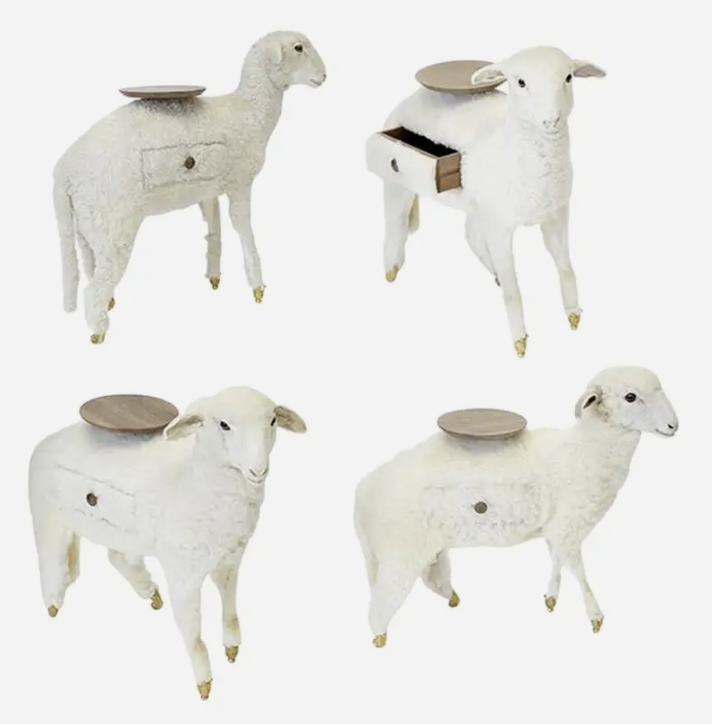
Check out our new weekly guessing game made just for our community of design fanatics. Let’s see how good you are at guessing prices of the objects we sell in our zany world.
Each week, we’ll share an image and clues about an item for sale. The person who guesses closest to its listed price wins!
Here are some clues:
✅ Set of 4 side tables
✅ Manufactured by BD Barcelona and Deyrolle
✅ Designed by Oscar Tusquets, inspired by Salvador Dalí
✅ Made from animal skin, metal and wood
✅ Approximate measurements: 34.3” W × 10.2” D × 28” H (head) and 23.2” H (back)
Playtime Instructions:
Guess the asking price (in U.S. dollars) for this rare set of four limited-edition Xai sheep tables.
Click the button below to submit your guess.
Honor system, please—no using Google to look up the answer! (If you do cheat, we still get the engagement, but you’ll have to live with yourself!)
The Stakes
Whoever gets the closest guess each week wins an entry into our grand prize drawing! We’ll be holding the final drawing on October 15th—the more weeks you win, the higher your chances! Our winning threader gets:
A featured spotlight for you/your firm in an upcoming issue of Mr. Thread.
Another special mystery gift from yours truly, Mr. Needle.
Stay sharp,
Mr. Needle
🎨 THIS WEEK’S ART
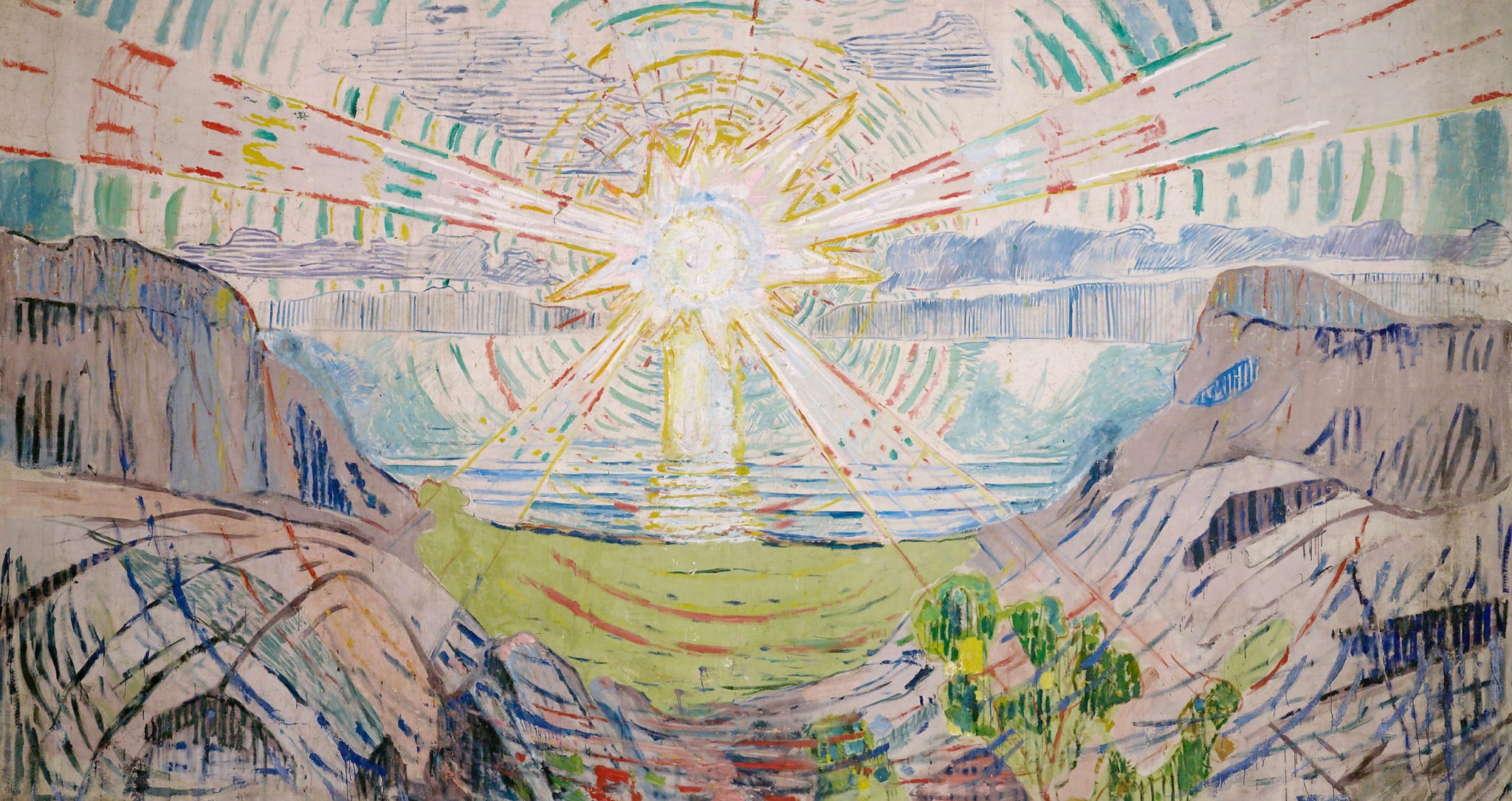
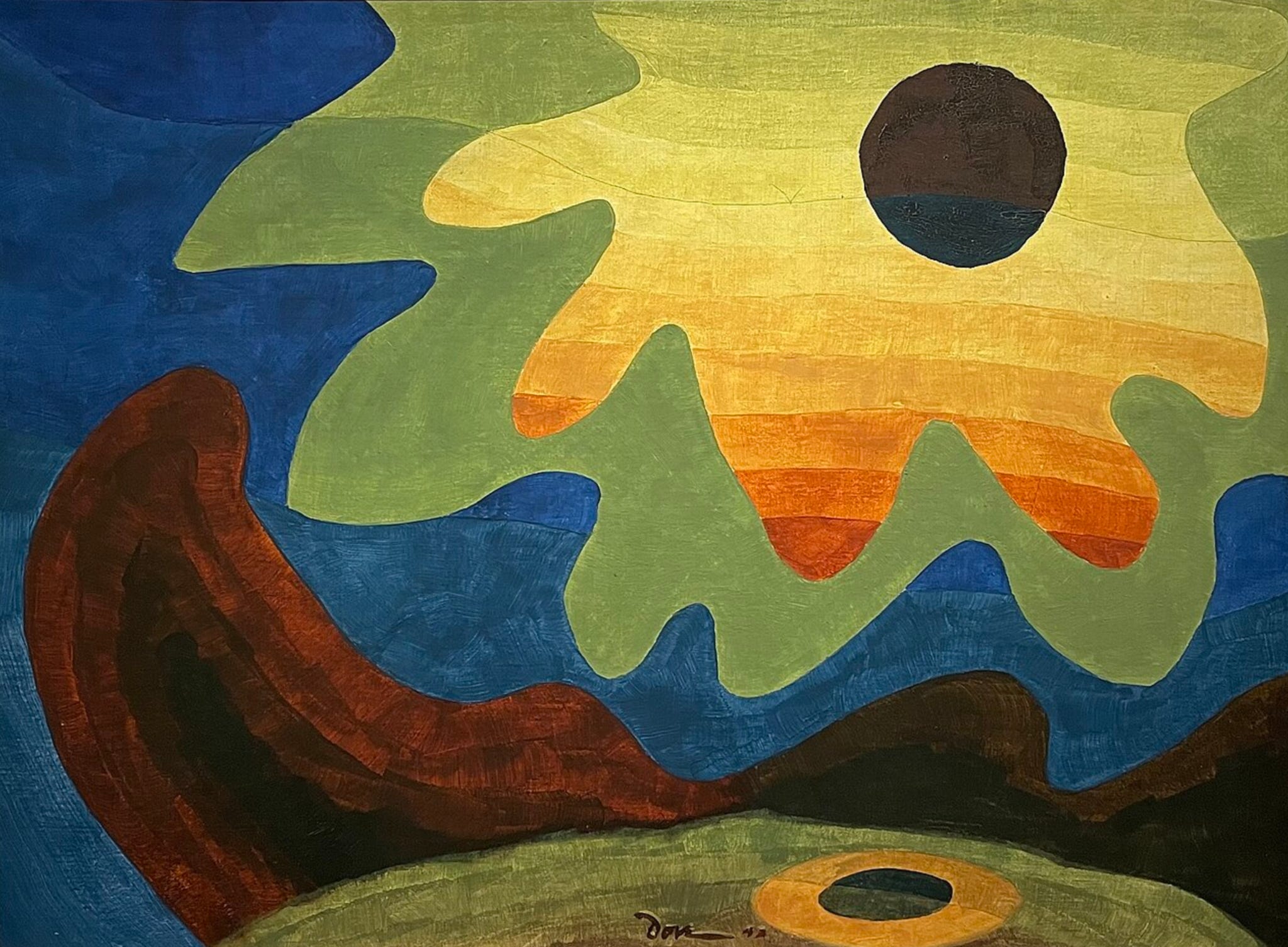
This one was super fun. I found so many incredible paintings across every style and period imaginable of the Sun. I ended up going with some more modern, abstract selections.
Enjoying Mr. Thread?
How can we make this better? We read every message and genuinely want to know what you think.
🕵🏼♀️ MR. THREAD INSIDER #00006
Welcome to Mr. Thread Insider, our members-only section.
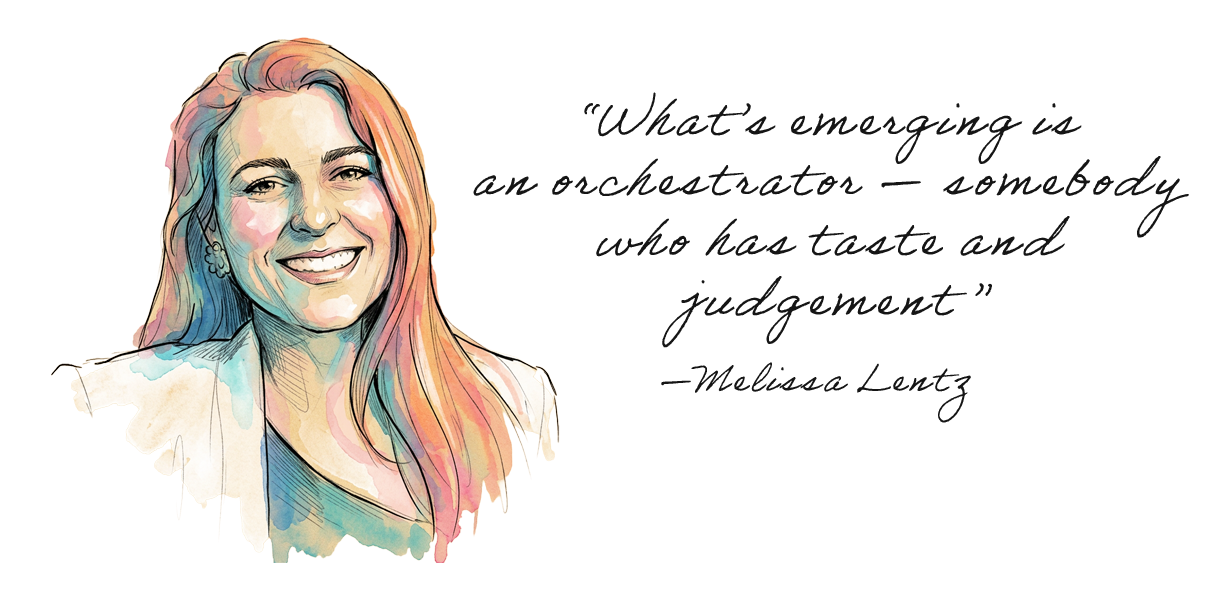
Melissa Lentz on the robots already sitting on the org chart
Melissa was my coach. She saved my ass after my beloved startup went belly up, and then COVID shut down my factory at my other company. Her advice on how to navigate change as an artistic heritage company was invaluable.
That’s why we’re talking to her. Before founding M. Hatter Consulting over a decade ago, Melissa worked at Ogilvy, Tribal DDB, and MRY. She has since advised many of the world’s biggest brands on change, and now rebuilds companies to operate in this faster-moving world, so change is something they drive instead of something that runs them over. She is also certified in Hogan, a psychometric assessment, which is where we started.
