

I’ve just driven from Charlotte to Auburn to drop my son off at university, then Auburn to Miami, then Miami back to Charlotte. The Tesla drove 98% of it. Look Ma, no hands. What an experience.
When I got home to North Carolina, I discovered Walmart drone delivery is now a thing in my area. Flying robots are airlifting my neighbors’ shopping into their backyards. I got out of my self-driving car and, for a moment, found myself having an existential moment. The robots are taking over. What will become of our beautiful businesses?
Then I remembered what time of year it is. Factories are reopening in Italy. The kids are back in high school. Everybody who wasn’t already working is getting back to work. It feels more like a fresh start than January 1st. I’ve actually thought about changing our fiscal year to begin September 1st, but that’s a story for another day.
Anyway, welcome to the Back to School issue. Monocle just ran an inspiring feature about a Catalonian kindergarten redesigned to aid learning, and it really gets to the heart of why design matters. A well-designed school can change how children learn, concentrate, and feel energized during the day. That’s a pretty good reminder for all of us that great design has value. It makes people’s lives better.
There’s good news elsewhere, too. Williams-Sonoma is reporting very strong numbers, and the size of the market opportunity is incredible. Cary Kravet, President and CEO of Kravet, sent a reply to last week’s article and we’re running it without changing a comma. We also look at the homes of Dolly Parton, from a one-bedroom mountain cabin to a private 63-acre retreat. What a woman, and what a life.
Behind the paywall, we took Architectural Digest’s long, hard-to-read piece on designer pay and made it accessible. Think of us as Architectural Digest-Digest. These numbers aren’t going to give you the warm and fuzzies, but you don’t subscribe to Mr. Thread for sunshine, rainbows, and unicorns. You want the truth.
And it’s almost time to start talking about color. With the 2027 collections now in production, the work on 2028 begins. We’re here to be your guide, starting next week, with a look at the trending colors everyone will be talking about.
School’s back. The factories are back. Collection launches are right around the corner. Let’s go.
See you next week!
Mr. Thread
🎲 P.S. Don’t just read—play. Try our new guessing game in our PLAYTIME segment. Congratulations to Martin R., who came closest without going over. Last week’s object was asking $175,000; Martin guessed $100,000. Let’s see who has the “eye” to claim the win this time and secure a spot for our grand prize draw. Scroll to the bottom to join the fun.
🏭INDUSTRY

A letter from Kravet
Last week I wrote about Kravet’s Pottery Barn collaboration. Cary Kravet sent a personal reply. Mr. Thread has opened up a conversation with one of the great men of our industry, and that is exactly what I want this newsletter to do. And it goes to show you the type of powerful readers on our mailing list.
Dear [Mr. Thread],
As always, it was a pleasure to catch up with you earlier this week. I love what you have created with Mr. Thread, but I do want to highlight some corrections to a segment that you published last week about my company going ‘whale hunting’.
First, I would like to start with our company’s vision statement- basically what is truly our whale. It is, “To be the design trade’s most trusted partner- carrying forward our legacy of beauty, craftsmanship and service while empowering the next generation of designers to create extraordinary spaces.”
Second, our relationship with Pottery Barn is as a licensor. My daughter, Sara, along with our licensing product development team, works closely with their talented and exceptionally professional team. Together, they curate the 35,000 items in our US archive to find designs to develop with our team. These products are completely exclusive to Pottery Barn. Every SKU we design in collaboration with Pottery Barn is unique to that partnership, with zero overlap with any SKU in our Kravet brand. The products and designs can ONLY be viewed or purchased through Pottery Barn, reserving the products we solely develop and produce on our own exclusively for designers.
“Our entire licensing strategy is predicated on supporting the trade and building recognition for our brands.”
— Cary Kravet
Third, our entire licensing strategy is predicated on supporting the trade and building recognition for our brands. In fact, it seeks to introduce an entirely new audience to the world of design. Our hope is that when they are ready to hire a designer, they already have our name in mind.
Finally, this is not a new strategy for us. It has nothing to do with my family inviting an outside investor into our company, as it well preceded that event. It has entirely to do with supporting our aforementioned vision.
Mr. Thread, thank you for the opportunity to speak to your audience.
Best wishes,
Cary
This is great. I’ve had my say; Cary has had his. Readers, what do you think?
Dolly Parton’s very Dolly homes
As you know, Dolly Parton died on Tuesday at 80. Realtor.com has gone through the homes she left behind, and the contrast is wild. She grew up as one of 12 children in a one-bedroom cabin in the Smoky Mountains with no electricity or running water. She ended up on a private 63-acre estate outside Nashville. She wrote a few hits in between. (I can’t get enough of this Islands in the Stream duet with Kenny Rogers).
“Dolly was a farmer, just like her daddy; he farmed the soil, she farmed songs and happiness.”
— Bryan Seaver, Dolly Parton’s nephew
In between, Dolly accumulated a secret Idyllwild cabin with a guitar-shaped toilet seat, a Solvang compound with a windmill and Dolly’s original wig room. Quite frankly, I don’t want to hear another word about restrained good taste. She lived a life as bright as rhinestones and left me wanting a wig room.
Dolly was so damned unapologetic and brave, and made a killing doing it. A valuable lesson for all of us in the creative industry.
📊ECONOMY
Williams-Sonoma hands us its AI playbook
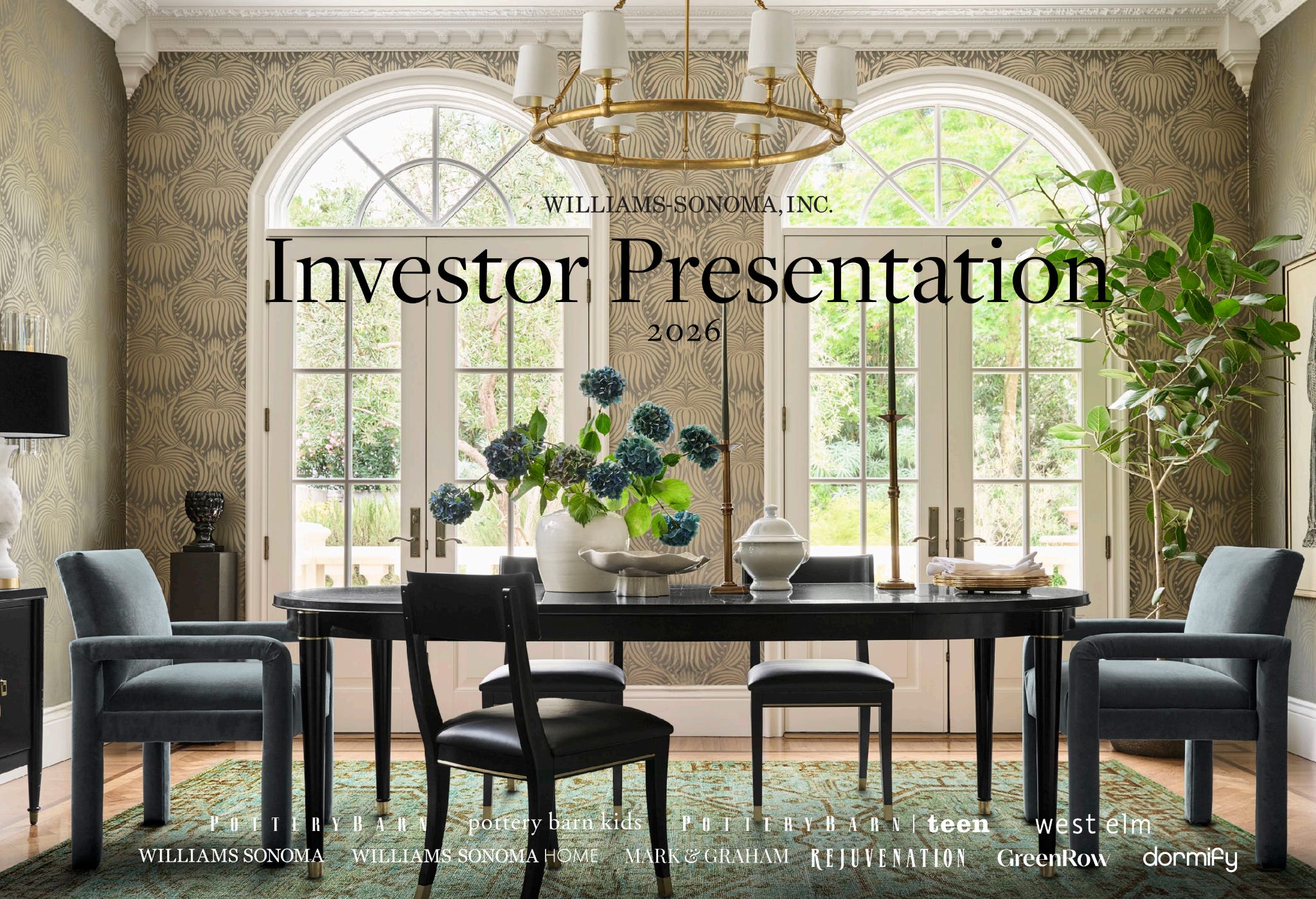
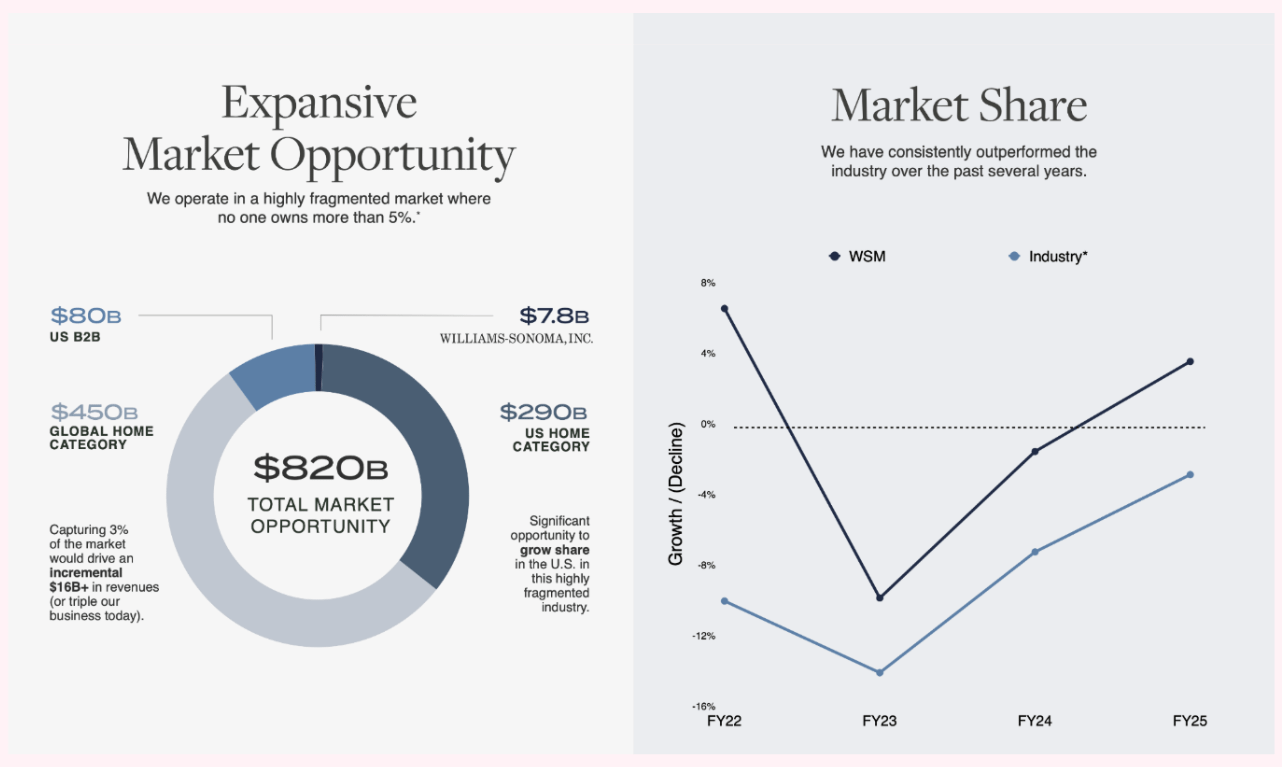
Quarterly earnings are always a great opportunity to understand things about our industry and the world as a whole. I geek out on these things, which is one of the reasons I started Mr. Thread. Williams-Sonoma always puts out an illuminating report (check it out here). WS is reporting very strong numbers that should make everyone pay attention: second-quarter comparable sales rose 6.2%, net revenue reached $1.96 billion and operating margin hit 17.3%.
“We gained market share, continued to outperform the industry, and raised our annual outlook on both the top and bottom lines.”
— Laura Alber, Williams-Sonoma
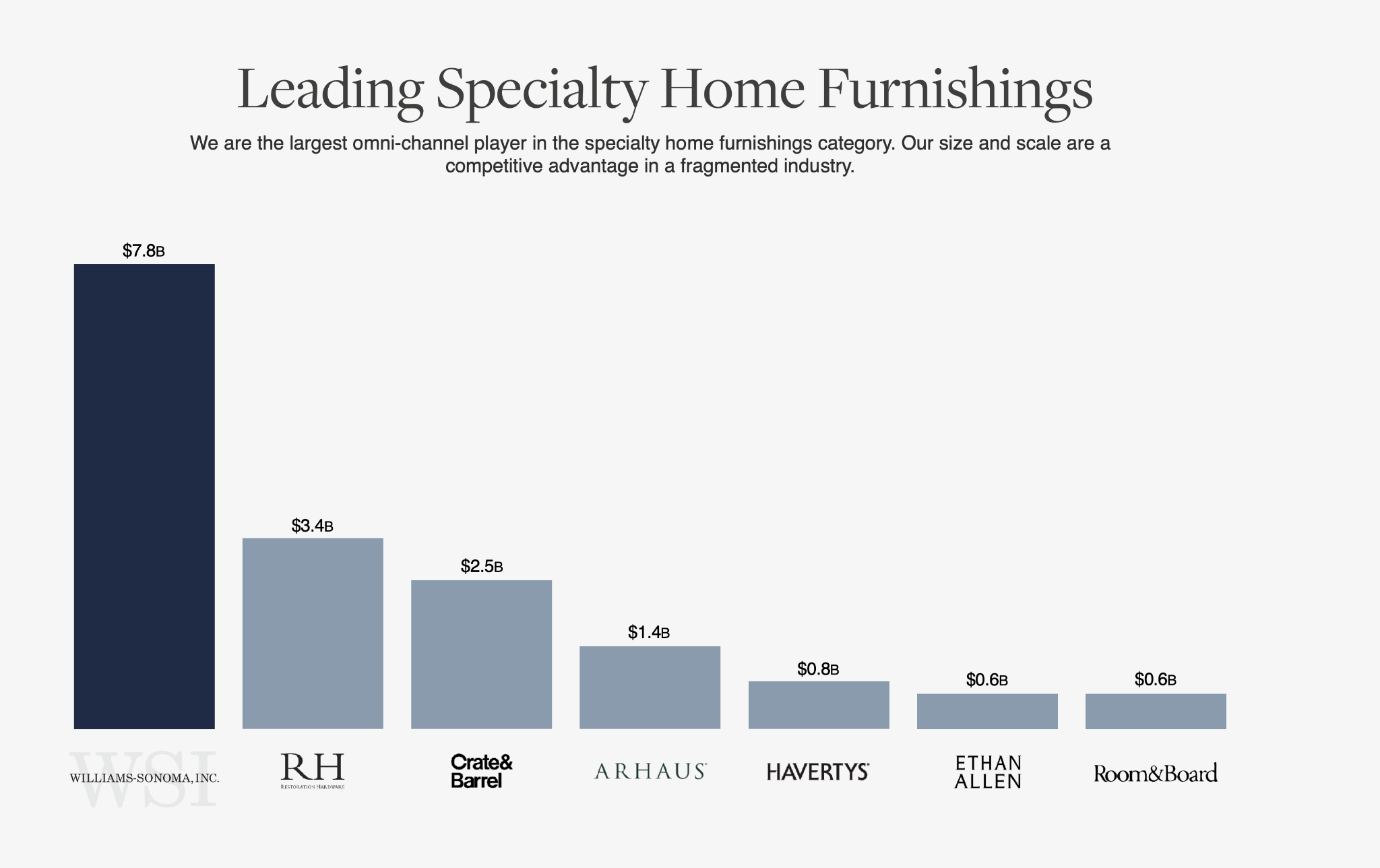
I mean, look how much bigger they are than RH. The investor deck puts Williams-Sonoma at $7.8 billion in 2025 revenue beside a $290 billion US home category. At face value, that is roughly 3%—and it shows just how fragmented the market is. This is a consolidator’s wet dream scenario…until they realize there’s a good reason why this fragmentation exists (see Journal #00041).
Next, WS provided a whole page on exactly how they’re using AI: digital design, customer service, product discovery and content. There’s their playbook. These companies are growing, so you’d better be using this stuff too. Open the deck and steal the lesson.
📈TRENDS

The GLP-1 home
When I saw the headline, I thought: come on, what a reach. What clickbait garbage. Then I started reading it. Well, wait a minute. Maybe Architectural Digest really is onto something here.
AD reports that one in eight American adults is currently using a GLP-1. In case you’re not paying attention, a GLP-1 is an injectable drug that staves off your appetite and makes you lose a lot of weight, super-fast. Designers are already being asked for smaller kitchens and pantries, bathroom fridges and hidden syringe storage. New fridges designed with syringe storage! Home design is changing because people are taking these medicines. Crazy.
“I think we’re going to be moving away from the big, big kitchens. The kitchen may transition to a secondary space rather than the social hub or heart of the home.”
— Elizabeth Valkovics, interior designer
Now, I’m not an expert in any way on these medicines, and this is all anecdotal. As AD points out, COVID changed the home office: open floor plans followed people’s desire for more connection in a digital age. So yes, a drug taken by millions of people could start changing the way homes are designed.
And although this all sounds quite dystopian, it represents an opportunity for our industry as we are uniquely qualified to provide clients with wellness benefits in their most intimate home lives. With great design we can help people live longer, healthier lives. You would think we would be rewarded handsomely for our services, but as you’ll read further below, we are not. But the more of us that speak up and prove our value, the more we can unlock this massive opportunity to grow.
A ticket to ride
Writing guru David Perell posted a very good piece on Twitter/X about tickets. The Guggenheim is one of the most iconic buildings in New York, and its ticket looks like the most economical thing somebody could make. How depressing! It’s also another clear example of ENSHITIFICATION. It’s time to bring back the golden era of ticket design!

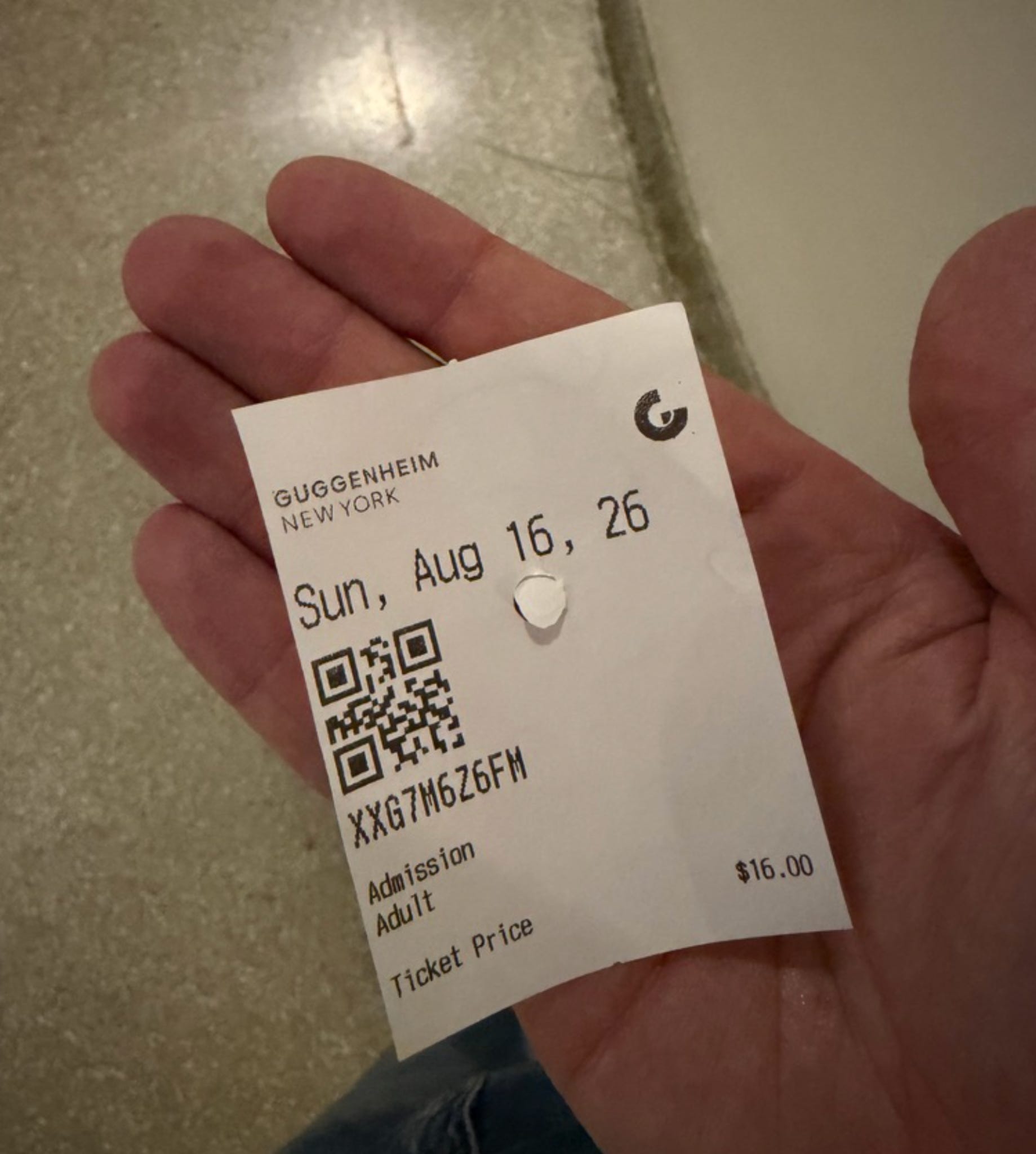
A museum ticket, an old Japanese train ticket, a circus ticket — you used to put these things in a drawer and collect them. They were part of the day. Now we’ve stripped the little bit of beauty out of everything and then wonder why the world feels so flat. No one can collect a QR code, or reminisce over a digital ticket in your phone’s Apple Wallet.
There’s a huge opportunity here to bring back good design. We can lead the way by showing the business value of creating emotional experiences, even right down to the ticket. FIFA—by no means a bastion of beauty—sold souvenir tickets to fans who attended World Cup matches, who wanted more than a QR code.
The masses are starting to wake up and ask for better design. Let’s be there to serve them.
A reader letter about Holly Hunt
Last week, I wrote about MillerKnoll and Holly Hunt, and worried that consolidation could be taking down another iconic trade brand. Reader H.E. wrote in:
“Regarding your snippet about MillerKnoll and the Holly Hunt problem... overall, your point is correct but the part about HH underperforming is a bit of MK quarterly earnings called ‘mis-direction.’
It is political from what I know, but what any smart analyst knows is that a division that is basically $100M-$300M revenue cannot affect a company that is $3.B. No matter how much their margin has fallen. They are being conveniently scapegoated IMO. Not saying their business wasn’t down, or that their margins weren’t lower than expected. I am just saying that a business that is approximately 5% of their overall business (if that) is not bringing down the ship.
MK doesn’t really chase [the trade] audience from what I see — they are focused more on the well-off retail customer, and contract business of course. They don’t really understand the High Point/D&D customer. They moved Maharam’s showroom out of the D&D, in fact. It was placed there strategically years ago.”
“When HH was under Knoll, they had the leadership that understood HH’s magic and what it could mean for the overall Knoll brand. At this point, I am not sure there is anyone there recognizing the importance of the HH ‘uber wealthy audience.’”
H.E. says Holly Hunt is a wonderful furniture and textiles business that could be much higher with the correct caretakers. I agree. These brands are more than just another line item on the org chart.
🧵LOOSE THREADS
Hermès’s London windows featured carrots dangling from a chandelier. Your furniture can provide calories now. Amazing.
Manhattan is building a 335-foot jail in Chinatown for 1,040 people. A literal jailscraper. Lovely.
1stDibs found some really incredible pictures of dogs. Go brighten up your day.
New-home sales ran at 607,000 in July, with 9.6 months of supply. Welcome to the eternal housing slump.
🎲 PLAYTIME

This week’s item is Andy Warhol’s “Dolly Parton”.
Here are some clues:
✅ It’s a synthetic polymer paint and silkscreen ink on canvas (1985)
✅ It measures 42 by 42 in.
What is the asking price? The person who guesses closest to its listed price wins!
Reply to this email or click the button below to submit your guess.
Honor system, please—no using Google to look up the answer! (If you do cheat, we still get the engagement, but you’ll have to live with yourself!)
The Stakes
Whoever gets the closest guess each week wins an entry into our grand prize drawing! We’ll be holding the final drawing on October 15th—the more weeks you win, the higher your chances! Our winning threader gets:
A featured spotlight for you/your firm in an upcoming issue of Mr. Thread.
Another special mystery gift from yours truly, Mr. Needle.
Stay sharp,
Mr. Needle
🕵🏼♀️ MR. THREAD INSIDER #00007
Welcome to Mr. Thread Insider, our members-only section.
WHAT INTERIOR DESIGNERS REALLY EARN
Architectural Digest published this enormous guide to interior-design jobs and pay. We did the digesting for them, rebuilt the graphics, and it’s still depressing as hell. Listen, I told you this was the dystopia edition! Read on to find out more…
