

Admin Note: Due to an error last week's newsletter only went out to paid subscribers. Here it is again in case you missed it.
“If you’re in the textile or interiors industry and you’re not reading Mr. Thread’s newsletter, you’re missing out. It’s the perfect blend of snark and industry insights.” — Laura Adams, Subscriber
Hello readers…
Welcome to the 50th edition of Mr. Thread! I’m very excited about this one. Thank you for reading, for sending us stories, and for taking the time to tell us what you think. Running a business in this industry can be a lonely affair. I love knowing there are people at the other end of this email who understand exactly what we’re talking about. We’ve got a redesign in the works, too. More on that soon.
Meanwhile, I bought a shirt at Zara in Florida. Beautiful fabric, lovely color, about $30. I was delighted. One wash later, the seam along the bottom wouldn’t hold its shape. This is my problem with Zara. They’re so good at design, fabric selections, and knowing what customers want, but they often cheap out on the production quality.
Now their 23-year-old home division is making a serious push to grow into our world. I admire their business model enormously, but will their furnishings last longer than my shirt? And will people want “fast furniture” in their living rooms, no matter how cheap and on trend it is?
The question of value for money runs through this week’s edition. The mega-rich are still buying houses, sometimes with cash (duh). People with perfectly respectable decorating budgets are getting sticker shock. And the luxury brands are turning down the volume on their advertising. It’s about time. From where I’m sitting, the chasm between the rich and poor feels wider and wider.
High Point was this week, and I barely even noticed it in my algorithm or during my maniacal research for issue fifty. Luckily, Kaitlin Petersen, top dog at Business of Home, provided an in-depth recap saving me the trip (spoiler alert, I didn’t miss much). More on that below — including some news that did come out of it.
Meanwhile, Freddy Victoria, one of our most interesting and engaged readers, gives an interview that spans his childhood in the Dakota to his family business today. And Mr. Weft has been letting AI do his shopping. The question is, will the robots take over sourcing for interior design projects?
See you next week!
Mr. Thread
🏭 INDUSTRY
The sticker shock with custom furniture
“Even Millionaires Can Barely Afford Custom Furniture These Days,” says the Wall Street Journal. This was a wild ride of a story, and I’m still in two minds over it. A Los Angeles couple, the Redmans, started with a $60,000 kitchen budget and spent roughly $180,000. But along the way they took on the dining area, laundry room and entryway, too. A real-estate agent had recommended IKEA cabinets; they chose custom plywood instead. Of course the bill changed—that’s called scope creep.
The Redmans expected to pay $5,000 for a custom banquette and dining-chair reupholstery that ended up costing $11,690. Now, you’ve got to hire a carpenter and a cushion maker, not to mention order the fabric. How did they expect to get all that for five grand? The couple love the finished kitchen. That gets a little lost in a headline about millionaires who can’t afford the furniture (or more likely, don’t feel it is worth it to pay).
It’s not just customers getting a price-related heart attack: Croft House co-founder Alex Segal tells the Journal that cabinet hinges cost his company 47% more than they did in 2019. Labor has made the biggest difference to his bottom line. Small makers can’t spread those increases out like IKEA can. Here’s Segal describing his business problem, in a no-shit-Sherlock moment:
“Our markups didn’t increase proportionally to the increase of our costs.”
— Alex Segal, co-founder of Croft House, speaking to The Wall Street Journal
The people in the ever-widening middle are the ones I keep thinking about. That’s me and my wife exactly. We need a strangely sized rug for our living room. I want it soft and beautiful under our feet, something we’ll keep for years and pass down. Much of the mass-market stuff is nowhere near what we want, but to make a custom rug with quality all-natural materials costs a fortune. Even the shipping is wild when something is thirteen and a half feet. This article is kind of all over the place, but that part I understand very well.
Paige Wassel, the Redmans’ designer, found an old Herman Miller table base, had it powder-coated and commissioned a new top. She also thrifted stools and had them reupholstered. That’s where a good designer earns the fee: working out which parts really need to be made from scratch. Seriously, the good designers getting referrals are ones who can work a little magic for the money.
Which leads to one of my favorite industry sayings: “You can’t afford to NOT hire a good designer!” or its close cousin: “You can’t afford to buy CHEAP furniture!”
Zara Home wants a piece of the action
Zara Home is getting very serious about the design business. Business of Fashion reports that its collaboration with Luca Guadagnino and architect Stefano Baisi spans more than 200 pieces, from furniture and homewares to ready-to-wear clothing. They showed it in the Milan exhibition space Hermès has used for its Salone installation. You can see what they’re aiming for.
Interestingly, Zara Home has been shrinking its store network: 374 stores early this year, compared with 603 in 2019. The average shop is almost a third bigger, according to Jefferies. Makes me think about how RH is opening new showrooms and restaurants like Gary Friedman’s life depended on it.
Anyway, Zara Home approached my company about a collection, so I’ve seen that ambition firsthand. And I’m a huge fan of their business model. The tight supply chain, the speed, the way they seem to predict what people want and get it into the store in double-quick time. They’re very good at choosing fabrics, but as my shirt demonstrated, the sewing can be another story. (While we were allured by the short-term gains we could have achieved by saying yes, ultimately we took the long road and felt their quality reputation would hurt our precious brand.)
BoF suggests that an impressive home collection might help Zara charge more for its clothes. Inditex doesn’t disclose Zara Home’s sales separately, so we can’t tell how well the move upmarket is paying off. Bernstein analyst Richard Trainor points out that people don’t replace a desk chair as often as they buy clothes. That’s the challenge I’m interested in. Are they going to use the same model for home? I’d love them to make the thing you want to keep forever.
“It’s very difficult to bring a brand up market through a collaboration.”
— Michael Prendergast, managing director at Alvarez & Marsal, speaking to Business of Fashion
High Point, from a safe distance
I couldn’t get myself to go this year, no matter how badly I wanted to escape my home office. The show is massive, and I find myself wading through a lot of uninspiring product to find something that excites me. The best reason for me to go is usually the people. Kaitlin Petersen did make the rounds for Business of Home, and her report has saved me getting sore feet:
The luxury end was busy. Designers told Petersen they had healthy project pipelines, while mid-market and value brands faced more cautious spending. Overall registration was up 3% from the spring market.
Some of the furniture never made it. Containers stuck at sea or in port, plus late fabric deliveries, left manufacturers struggling to get new pieces into their showrooms. Oof!
Retail brands are chasing designers. Bassett moved to a more accessible showroom and introduced a collection with Heather Chadduck Hillegas. Elsewhere, manufacturers added fabric-covered game tables, more discreet reclining chairs, and custom banquettes (don’t look now, Redman family from the Journal story above!)
Pooky and Samuel & Sons had a hit with their lampshades and lights dressed in colorful fabrics, tassels and trimmings. Kathy Kuo Home’s debut made a splash, too, with velvet sofas and a tented seating area designed to show off its custom upholstery.
Traditional rooms are loosening up. Petersen found mossy greens, brown marble, terracotta and burgundy, with crushed velvet and softer upholstery. Burl is still popular, walnut is coming back, and low seating leaves the view clear.
💰OPPORTUNITIES
Sell me the room, spare me the private jet
This week we were planning our Christmas advertising campaign when our Content Director pitched an animator. It was a hand-drawn style that seemed to fit with our brand’s handmade tradition, and plenty of the luxury fashion companies like Hermès are leaning into illustration and animation. But we said no and went with traditional photography. I wanted to show the product in somebody’s home, in an actual room, making something romantic. Subtle, elegant, human. Those are the words you’ll hear inside a pitch meeting at my company.
There are two ways for luxury and interior brands to stand out in the over-saturated world of social media: do something ridiculously audacious and loud, or put out beautifully authentic content, with no objective in mind, straight from an artist’s heart. I’m leaning heavily into the latter, because our sole purpose of existence as a company is to make the most beautiful products.
So I was very happy to read Business of Fashion’s account of luxury advertising becoming quieter. Burberry has been using the daily commute as inspiration. Dior has friends swanning around a Paris café. Prada’s “Simple Stories,” directed by Barry Jenkins, watches people in private moments. The clothes still cost a fortune, but I can imagine the pleasure of sitting in that café with a friend. I’d like to be there. That’s aspirational.
I think some of these companies got drunk on social media and AI marketing. It became ostentatious and obnoxious. Now they’re going back to their roots. One of the Italian designers in my network uses an old Italian phrase to describe ostentatious design. It translates roughly as “a slap in the face to the poor.” It’s a good description of that gaudy luxury that is putting off some buyers now.
I don’t imagine the brands would be losing much sleep over that insult if the bags were flying out of the stores. They’d keep slapping. My suspicion is that disappointing sales have helped them discover the virtues of restraint. Another way to look at it is that a wealthy customer may not want to flaunt her money. She still wants to splash the cash. She still wants to feel special. She hasn’t decided to become a monk.
When fashion sneezes, interiors eventually catch the cold. Sometimes we take a year to notice. If you haven’t started spending money on extravagant AI ads, I wouldn’t rush to catch up with that phase. I want our Christmas advertising to feel like a home you’d be happy to spend the holidays in. The bottom line is, quiet luxury is getting quieter. Get ready for silent luxury.
📊ECONOMY
The week in numbers
🔴 43% — The share of builders cutting home prices in October, according to NAHB and Wells Fargo. Their confidence index fell to 29, its lowest reading since June 2012. The average price cut was 6%, and 65% of builders offered sales incentives. Alarm bells are ringing, folks.
🔴 5% — LVMH’s fashion and leather-goods sales fell in the third quarter, as we reported last week. The calculation leaves out businesses bought or sold and strips out currency movements, so we can compare this year’s sales fairly with last year’s, apples to apples. LVMH managed 1% growth overall on that basis. Fashion and leather goods, its biggest division, are having a much rougher time.
🟢 $1.013 trillion — The National Retail Federation’s holiday sales forecast for November and December. If shoppers spend that much, it would be a record and the first holiday season over $1 trillion. The projected 4.2% rise includes higher prices, so it doesn’t mean shoppers will take home that much more stuff. I’d love to know the percentage of this amount that will be spent on credit cards or buy-now-pay-later schemes.
It’s a different world for cash buyers
The lower end of the housing market can’t afford a house, but the upper end is going ape-shit. That was my reaction to The Wall Street Journal’s account of a housing market divided by who needs a mortgage and who arrives at an open house with a truck full of Benjamins. Rates above 7% have pushed buyers to the sidelines. People who can pay cash, or make an enormous down payment, are having a field day.
In 33 of the country’s 50 largest metro areas, luxury-home prices are rising faster, or falling more slowly, than starter-home prices, according to First American’s data in the Journal. Around San Francisco, which is a real estate bubble in itself, luxury prices were up 4.6% from a year earlier. Starter homes fell 1.7%. At luxury builder Toll Brothers, a quarter of buyers were paying entirely in cash. Seriously, though. Who has a couple of million in cash lying around? What does the rest of their portfolio look like?
One Tampa couple paused their search because they would have needed another $40,000 down to keep the monthly payment they’d expected. Meanwhile, a family who sold in North Carolina could buy their next home outright in Maine. Existing owners can bring years of accumulated equity with them. A first-time buyer has to find the money the old-fashioned way, by saving, or making a withdrawal from the bank of mom-and-dad.
“So either the price of the house has to come down or we have to wait another year.”
— Travis Glenn-Rhodes, prospective homebuyer, speaking to The Wall Street Journal
🤖 TECH
Will AI assistants kill ecommerce?
A Mr. Weft dispatch from Los Angeles
On Monday, I woke up to a message from Kermit, my AI assistant. Kermit is the frog avatar of a ChatGPT “dot” that does my bookkeeping, manages my family’s calendar, and helps me search for things I need to buy. Kermit had found an incredible Disneyland deal. He knew I’d been looking at tickets, and, having access to my calendar and the ages of my children, he kept an eye on the Disneyland site and found an incredible offer: $475 for the four of us, including parking and Lightning Lane, saving more than 50%. I nearly gave myself whiplash racing to the checkout. Kermit didn’t just save me time and money; he saved me from having to slog through the Disneyland website, which is mired in blackout dates and other UX witchcraft designed to extract as much money from me as possible.
BoF Insights has put some numbers to this whole thing. Citing Adobe Analytics, it reports that 41% of US consumers used generative AI to shop in June 2026. Visitors referred by AI generated over 40% more revenue per visit than those arriving through traditional channels.
BoF followed 120 fashion brands across ChatGPT, Claude and Gemini from January to July 2026. It tested what the assistants knew about each brand, then looked at their recommendations: how often a brand came up, and how high it appeared in the answer. By July, 78% were being recommended more often. Yet the names at the top barely changed. On average, four of January’s top five were still there six months later. A frustrating read if you’re trying to dislodge a competitor.
As my revered boss Mr. Thread said earlier, when fashion sneezes, interiors catch a cold. And we may be approaching the end of ecommerce as we know it. The web store might soon be a thing of the past. The question is, if you’re running any kind of business, how seriously are you taking GEO and your attractiveness to search engines? An AI-powered frog named Kermit might just be the meteor that takes out the dinosaurs of our industry.
📈TRENDS
Who picked your taste?
For all the talk about having your own taste, people spend an awful lot of time telling you what to like. Which chair deserves your attention, which architect you ought to know. In Domus, Lucia Antista wonders whether we’ve become so used to this commentary that we need someone to explain a thing before we can enjoy it.
She remembers the pleasure of poking around the internet. A passing mention on a blog might send you off looking at a photographer’s work, then you fall down the rabbit hole. You had no idea what you’d find next. Open your feed now and somebody has done the finding for you, complete with instructions on how impressed you should be. Instead of individuality, the algorithms are turning us into one huge blob.
Antista also looks at books as part of a public image. Celebrity book clubs can introduce people to wonderful work, but the book beside the bed, or displayed on a beach lounger, also tells an audience what kind of person you want to be. (Also this week, I read Elle’s piece that asked why everyone seems to be reading the same book.)
I think there’s something in that for designers. Be careful about letting the algorithm pollute your mind, or asking clients for reference images just because they’re useful. If everybody arrives with the same algorithm-fed saved rooms, somebody has to introduce an unfamiliar idea or risk everything looking like the inside of a Starbucks.
“Because today, true cultural luxury is precisely this: not knowing immediately what you are supposed to think.”
— Lucia Antista, writing in Domus
💬Q&A

Interior Lives — Freddy Victoria
The third-generation furniture maker on growing up in the Dakota, learning the family business, and knowing when to let go.
Freddy Victoria joined the family business after a detour through Wall Street. But don’t mistake the third-generation member of Victoria & Son, the New York firm founded by his grandfather in 1933, for a custodian of dusty heirlooms. Here, Freddy talks fakes versus reproductions, clients who want handmade furniture yesterday, and why a Louis XVI chair might need room for a larger modern derrière. For someone with his pedigree, he’s surprisingly pleased to be out of the antiques business.
I’ve been in the industry for about 25 years. I’m still not sure if I’ve learned anything.
My family had three generations in the Dakota. My grandfather lived there, my father grew up there, and then my sister and I grew up there. It was its own special place. Growing up there wasn’t like growing up in New York City. There was an annual Christmas party in the courtyard. They’d set up round tables, have the fountains going and put up fairy lights, with all the kids running around. It was surreal.
Lauren Bacall was a close friend and client of my grandfather’s. My mother always liked to tell the story that when I was born, Lauren came and knocked on the door to congratulate her on the birth of her son.
I spent summers “working” at the shop. I just had my own son intern with us for the first time, and I realized how little I probably actually did. The first two floors were antiques, and upstairs we had furniture fabrication, finishing and upholstery. My sister and I loved to explore. But I never thought, “I’m going to be an antique dealer or a furniture maker when I grow up.”
I enjoyed Wall Street intellectually. I wasn’t thrilled about being in a corporate environment. One day my father asked if I was interested in joining the family business. He actually said, “Well, do you want to do it or not?” I knew I needed to give it a shot before I sold my soul to corporate America.
Growing up around antiques didn’t mean I knew enough about them. Part of the deal was that I’d go to Christie’s in London for a crash course in decorative arts. I spent the better part of a year there, then came back and started working with my father.
A reproduction is honest about what it is. If I tell you it’s a reproduction, it’s a reproduction. If I try to pass it off as an original, it’s a fake. As an antique dealer, you have to be trusted by your clients. You can’t be coy about it.
When I started, “reproduction” was almost a pejorative. I felt we had to stop calling our work reproductions because we were making custom furniture. We’d take an old design, change the dimensions or add something, and essentially redesign the piece. Today, a cabinet might evoke Louis XV, but it has to function as a modern piece of furniture. You’re going to put a television in it, LED lighting, automatic doors. Crazy things.
The skills we learned making reproductions are valuable. There’s handwork and a different attention to detail. A lot of upholstery today has a frame that gets completely covered in fabric. It hides everything. Being able to make a beautiful frame by hand is a pretty valuable skill.
My father and I have different tastes. He is perhaps more drawn to classical Louis XV and Louis XVI furniture. We both like Secessionist, Art Nouveau and Arts and Crafts pieces. I’ve tried to take some of those influences and combine them with different materials and new forms. Our Victoria & Daughter collection has a lacewood sideboard with almost Art Deco-inspired legs. People say they can’t tell whether it’s old or new. That’s exactly the reaction we want.
If we always made the same pieces, we’d become stagnant. You need to allow for innovation while holding on to the history that makes something special. We can’t say we’ll only make a chair in its original Louis XVI proportions when no one can actually sit on it anymore (people have grown bigger over the years). There’s a lot that modern furniture makers have probably forgotten that we need to revisit and learn from.
We very rarely work directly with the end client. The interior designer or architect commissions us. But at that level, the client’s expectations filter right down through the designer. They want something unique to them, something that helps define their home and how they’re going to live. They’re very exacting.
Timing is the hardest thing to explain to a client. I understand that you’re used to getting everything you want in an instant, but we’re making something new. If you’re making the same model, you already know which jigs and stains to use. With a new commission, you’re starting from scratch. You have to allow time for that.
This summer, we sent a young craftsman from our New Hampshire shop to France to learn carving. Our head carver is great, but he doesn’t have much time to teach. The young guy spent five or six weeks in an atelier doing carving and restoration work. He didn’t master it in that time, obviously, but he came back with a whole new skill set and exposure to processes he couldn’t have learned here.
I’m happy we’re not really in the antiques business anymore. It’s a very difficult business, given the internet and the state of the market. Around the financial crisis, we had a furniture range that was taking off. It showed me that if you have the right design, people will want it over and over again. We put more into making furniture, and now we have our own shop in New Hampshire. I feel we made the right transition at the right time.
There’s one vase I still think about. It was one of the first antiques I bought for our inventory, a modern Italian slumped-glass vase with these amazing ripples. I wish I’d kept it for myself.
See more at: Victoria & Son
🧵LOOSE THREADS
Limoges Town Hall was damaged by fire. Heartbreaking to see that craftsmanship lost. I’m staying away from politics here. But needless to say, I hope renovation starts soon.
A pair of robotic lamps folded a towel at High Point. Slowly, apparently. Real talk: How long before we get the robots to remove the plastic from our oceans instead of doing laundry?
The Grumpy Decorator, Substack’s second-best anonymous interior design blogger, just destroyed Julianne Moore’s house tour in this month’s AD. I sure hope no one finds out her identity.
🎨 THIS WEEK’S ART
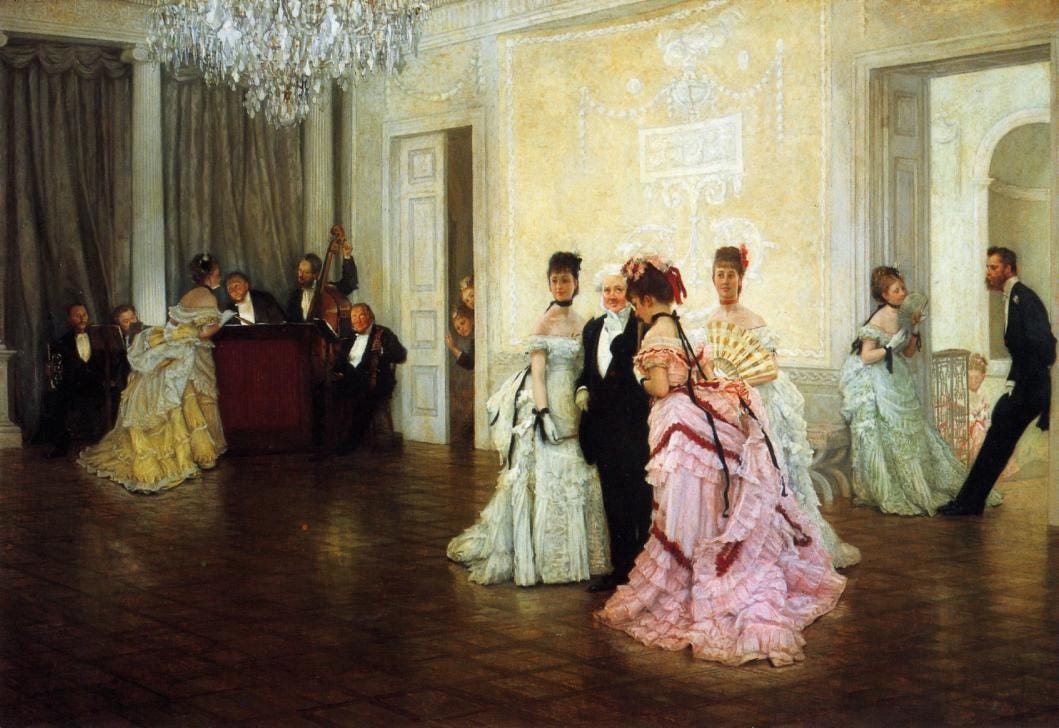
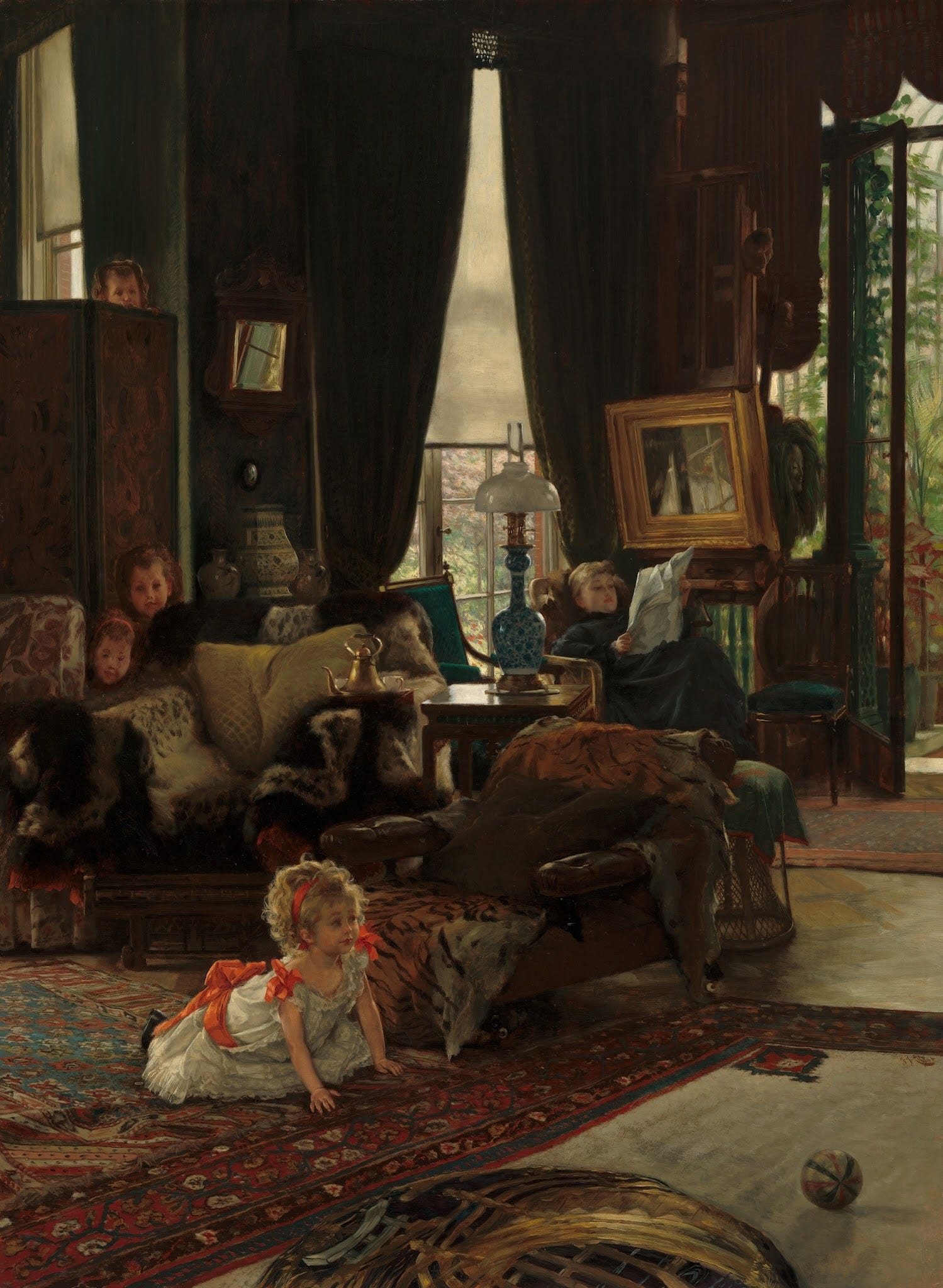
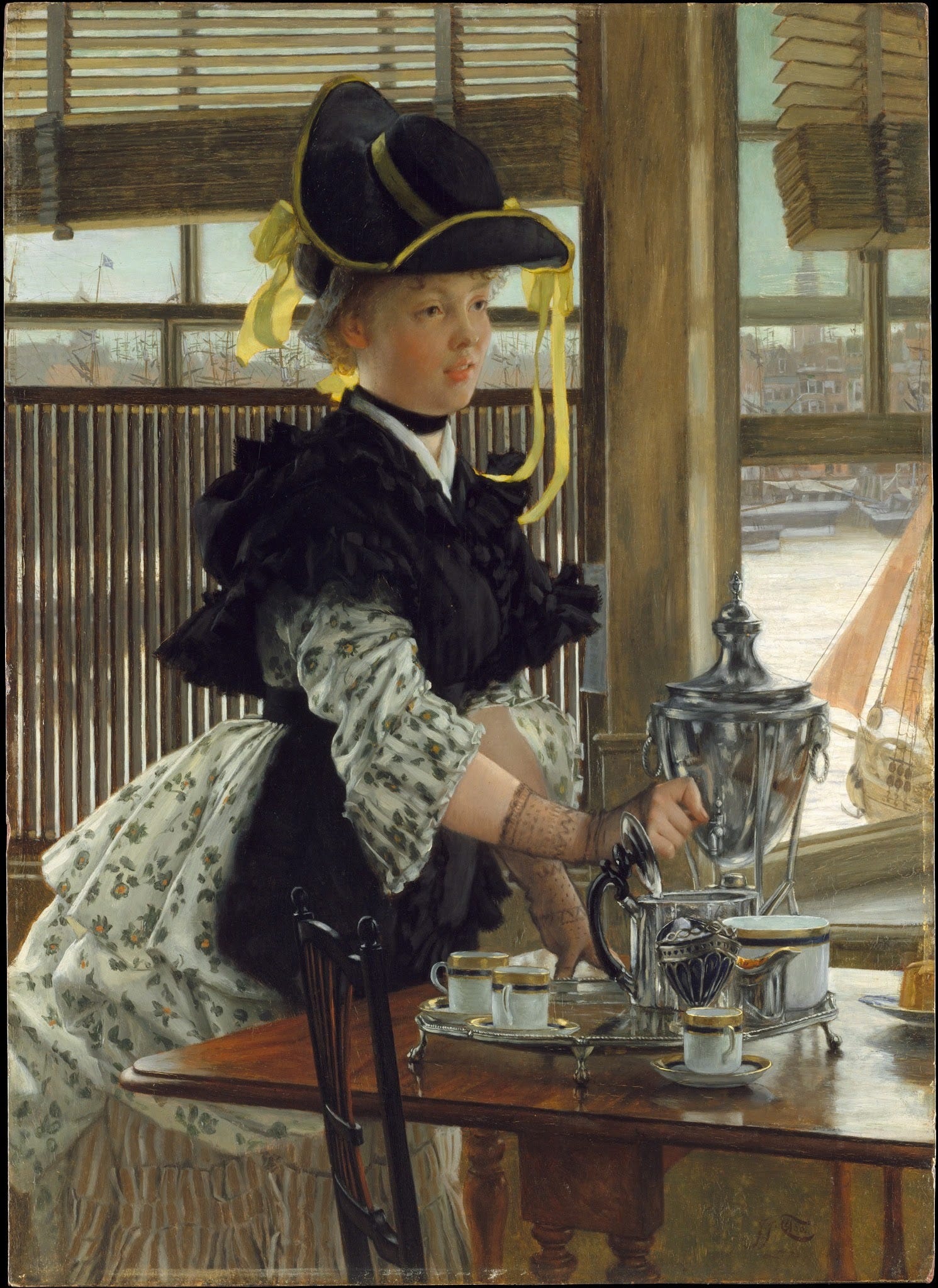
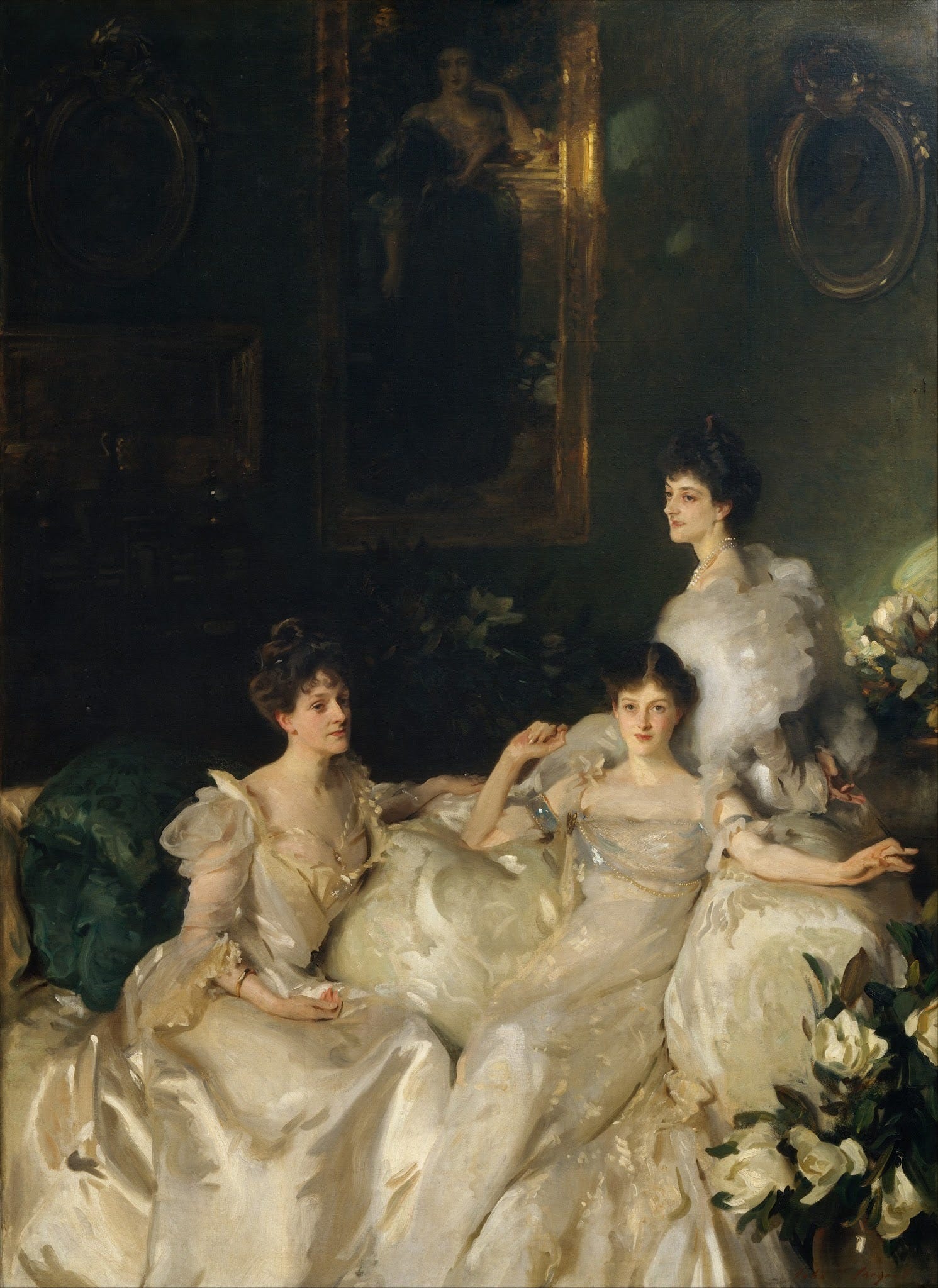
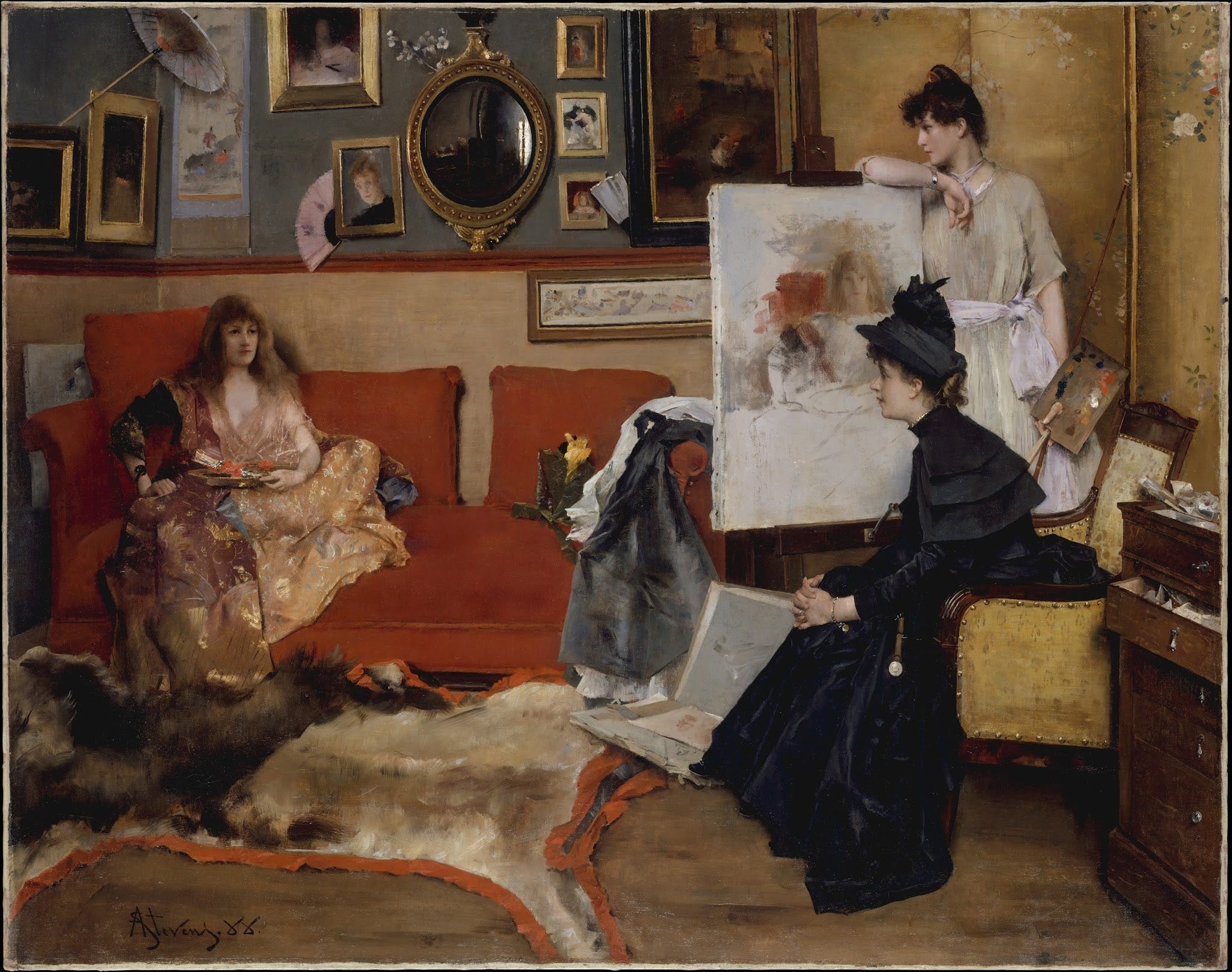
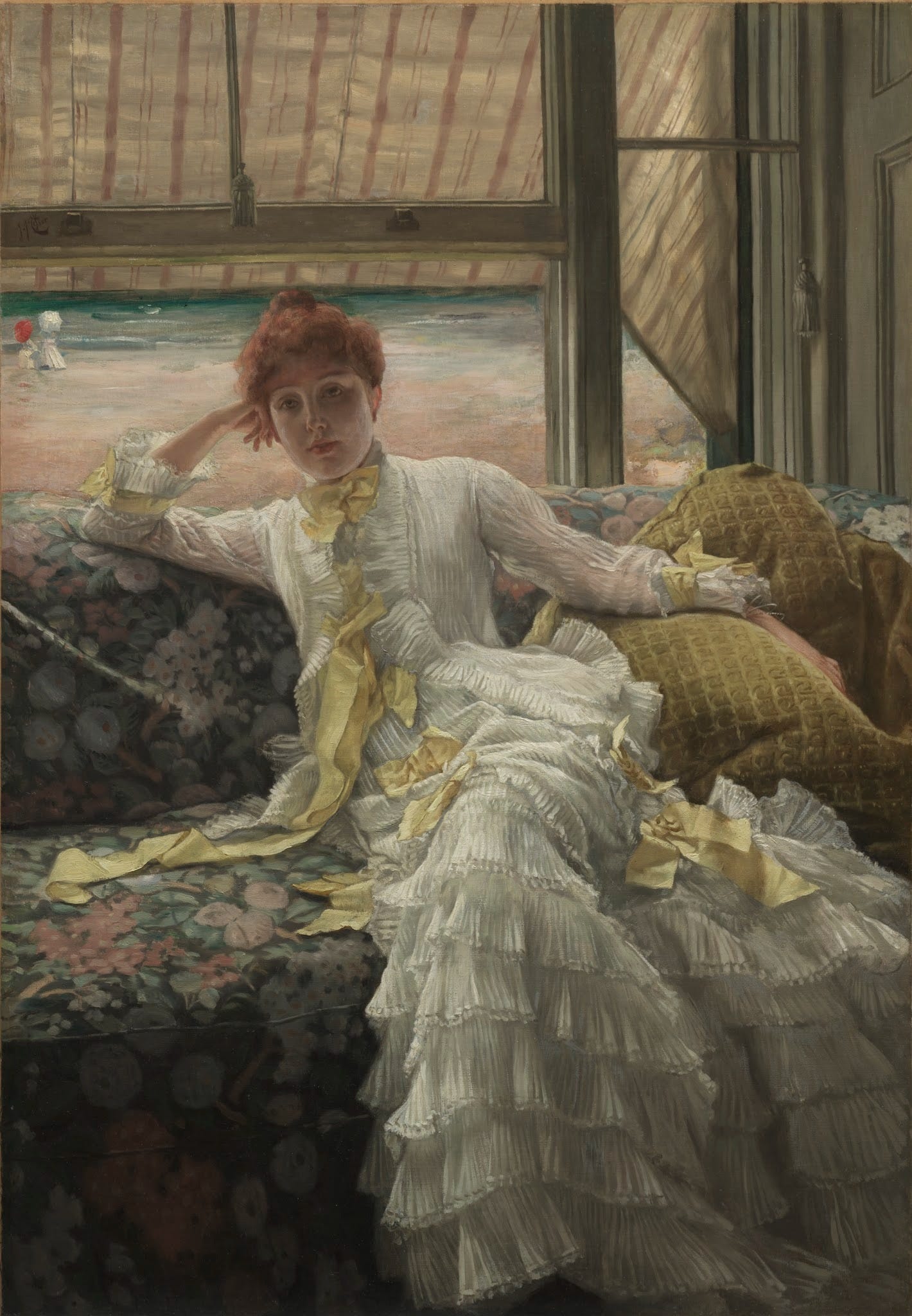
The people in this week’s paintings look remarkably untroubled by the furniture bill. Our images this week take us inside the homes of the rich, and show us how the other half lived. James Tissot, John Singer Sargent, and Alfred Stevens give us beautiful clothes and interiors that I could happily spend an afternoon nosing around. Look at the upholstery! Sargent painted the Wyndham sisters in their family’s drawing room. I love seeing that much care put into a room. That reminds me, I’m still looking for a rug.
Enjoying Mr. Thread?
How can we make this better? We read every message and genuinely want to know what you think.