

Hello readers…
Is it just me or is everything quiet? A little too quiet? I like to spend these rare moments of serenity in research and development. Like many people in our industry, I’ve been tooling around with AI rendering products. They say the photo shoot is over. Now we can just wave our hands and the perfect catalog images appear, as if they were shot by Douglas Friedman for Architectural Digest. I wanted to find out how much of this is true, so we gave four rendering tools the same job and asked Brenda Nusenovich, a brilliant NYC-based creative director, to tell us which ones are worth the money.
Personally, I’m thrilled about this new technology. A small company like mine can see a custom fabric on a wall or a sofa before anyone has spent three months making samples. We can put a colorway in front of a client, get a reaction, and make a decision in minutes. Big companies have done that with serious R&D budgets for years. Now the rest of us can get in the game.
Of course, there’s a catch. There’s always a catch. Now anybody can take a fabric, render it beautifully, collect orders and then fail to deliver what the picture promised. That person is an idiot. Remember, a photograph can flatter a product too. People were having this type of existential feeling when Photoshop came along. And product photographers have been doing this kind of witchcraft long before anyone called it “retouching.” You know the ice cubes in the Coke in McDonald’s adverts? They’re made of solid crystal.
We spoke to Michael Bashour from HookPic, one of the leading companies creating AI rendering solutions. With this type of product you can create any rendering you can imagine to show off your furniture. You want a dog to sit on the sofa? Bulldog? Chihuahua? Doberman? The choices are now infinite, and if you’d asked me five years ago, I’d have said this would be heaven. Now it sounds like hell. AI isn’t making R&D and marketing easier; it’s making people like Brenda more important than ever. She’s the one in control of the robots, and it’s down to her impeccable taste to make sure they don’t destroy your brand’s legacy. The human eye just got a whole lot more power.
Meanwhile, the rest of the industry feels as sluggish as I do. AD says rooms are getting weird. Monocle and Business of Home are hoping that interior design can make us feel well again. Housing remains endlessly stuck.
See you next week!
Mr. Thread
🎲 P.S. Don’t just read—play. Try our new guessing game in our PLAYTIME segment. Shout out to Freddy V., who gave the closest guess on last week’s item; Freddy guessed $850,000. Test your market eye this week—scroll to the bottom to join the game.
🏭INDUSTRY
Thibaut and the right way to consolidate
I just learned from BOH that Thibaut has acquired Pindler, the old-school California textile business founded in 1947. Terms were not disclosed. This is Thibaut’s third acquisition in four years, after it snapped up Coraggio and Rosemary Hallgarten. I really like this move and think Thibaut will do a great job continuing the Pindler legacy.
It seems like acquisitions are happening all over the place. Many of them are home runs where the acquiring brands truly understand the soul of the company they are buying. Some of my recent favorite pairings are Holland & Sherry acquiring Elizabeth Eakins, Schumacher buying Tillett Textiles, Kravet buying Brunschwig & Fils, and Fabricut buying Clarence House.
“Pindler has been built over 80 years on the foundations of extraordinary product and a relentless dedication to clients.”
— Rick Kilmer, CEO, Thibaut, via Business of Home
I think we are going to see this trend accelerate significantly. It’s the natural result of the K-shaped economy, applied at the macro level to the design industry. I’m praying for more of the right kind of acquisitions like those mentioned above. This is a good form of consolidation, where the acquisition feels less like a hostile takeover and more like a COLLABORATION with a natural respect for each other’s brands.
Sure, there are bad examples of consolidation. I won’t always trash Private Equity, but too much of it points to a scarier, murkier future for our industry. Same with publicly traded monstrosities like RH gobbling up heritage brand names.
The lesson for anyone trying to make money in this industry: build your company with an eye toward selling it someday. That means getting the fundamentals right: a repeatable model, assured growth, great operations, and a strong culture. Do that and you’ll have plenty of suitors, whether you’re a design firm or a wallpaper brand.
The best part is that setting up your company for acquisition doesn’t mean you have to sell. Running it that way gives you a fantastic business with real enterprise value as a byproduct.
📈TRENDS

Design is trending weirder
Architectural Digest says good taste is getting weirder. After years of the same low sofa, warm lighting, and algorithm-approved beigeness, people are bringing odd chairs, personal objects, and things with actual memories back into their homes. Thank God.
I’m here for five-legged Rococo chairs and a full-size polar bear in the living room. Bring it. Let’s have some fun. Put the strange object back in the middle of the room and let it cause a little trouble. Design should be about pure personal expression.
I think this is yet another human rebellion against artificial intelligence. AI-designed rooms skew normal and safe, because those programs, by their very nature, create a medium of what has come before. Anecdotally, I’m seeing a lot of hand-drawn art and risograph printing everywhere in marketing. This is great news for designers. Clients need bizarre and different design decisions, otherwise they’re just buying a wavy mirror and calling it a personality.
“The design that was dated the fastest is probably what was the safest at the moment.”
— Frances Merrill, Reath Design, via Architectural Digest
Neuro-architecture
What is Monocle? Can someone tell me? I pay for it, I love it, and it feels beautiful in my hands. But the writing has a lot of fancy words and no calories—to borrow a phrase from my British editor, Mr. Weft. I tried to enjoy its piece on neuro-architecture this week because it’s a topic that greatly interests me. Business of Home also did a very good job with its guide to wellness at home. Both pieces get at the same thing: a room should make you feel better when you walk into it—and there is now hard scientific evidence to support that. Today you should not be selling interior design services to your clients, but rather you should be selling them extra years of healthy life. It’s not an exaggeration for you to say that.
“The smallest things increase someone’s mental health and physical wellness.”
— Mike Quinn, principal, The Golden Design Group, via Business of Home
I’ll tell you why my office is the room in my house that makes me feel fantastic: On the wall I have the front pages commemorating the Knicks’ championship, Tiger’s Masters victory, and the Yankees’ 27th World Series. My wife put them up. I walk in and I feel great. That may be the least scientific definition of wellness ever written, but it is real.
The opportunity before us is clear. We as an industry literally sell products and services that make people live longer, healthier, happier lives. If you can communicate this to clients and deliver on the promise, there will be no limit to your success. What an exciting time to be alive!
📊ECONOMY
The home freeze continues
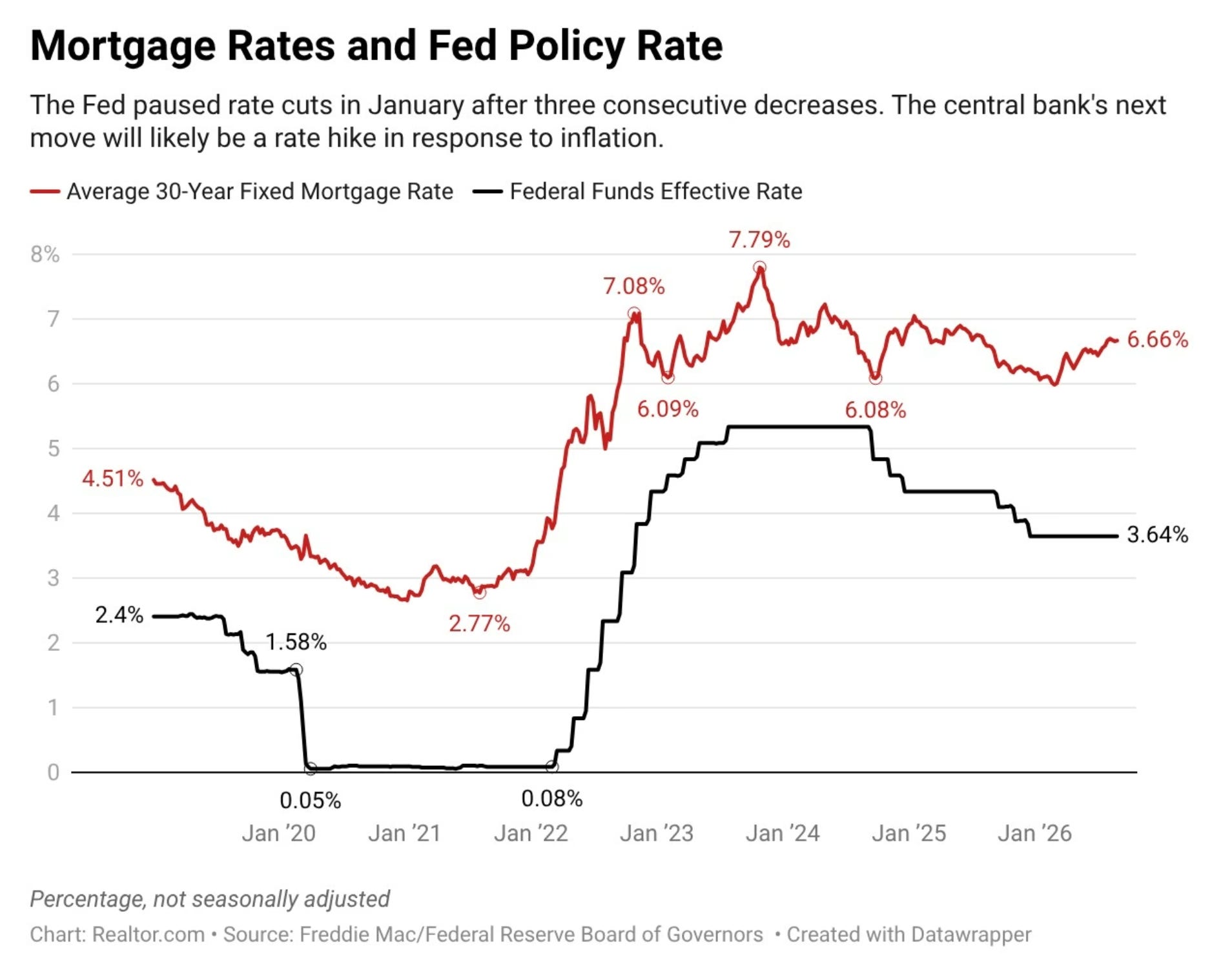
Mortgage rates remain above 6.6% and, no surprise, pending home sales fell again in July. The 10-year Treasury yield rose over the latest trading sessions, which is exactly the thing you do not want to see if you’re hoping people will start moving house again.
I’m sitting on a 2.75% 30-year fixed mortgage. I paid down points for it. There’s no world where I sell my house and buy another with a 7% mortgage. Friends of mine have had more kids, now their houses are too small, they need a yard, but they’re forced to stay put. Meanwhile, boomers are selling at outrageous prices, driving up supply. The younger generation cannot get into those houses at a price that makes sense. It feels eerily like a bubble ready to burst.
We also learned that boomers are complaining about paying property taxes. According to Reddit, boomers say that having paid off their homes and raised their children, they should not have to pay rising property taxes that are pricing them out on fixed incomes. Will no one think of the boomers!
RH catches a cold
RH stock tumbled 3.3% on September 1 to $144.48, nearly 7% in two weeks, and it’s drifting back toward its 52-week low ahead of Q2 earnings. Oof! People are asking whether opening those fancy overseas galleries was a good idea.
The affluent client is still spending. They just need a good reason. A beautiful piece with provenance and a proper story is easier to sell than another standardized luxury catalog item with a big retail markup. A fancy catalog can only do so much. (I want to know how many trees are sacrificed by RH for its catalog every year. Mine sails straight into the trash).
Q&A
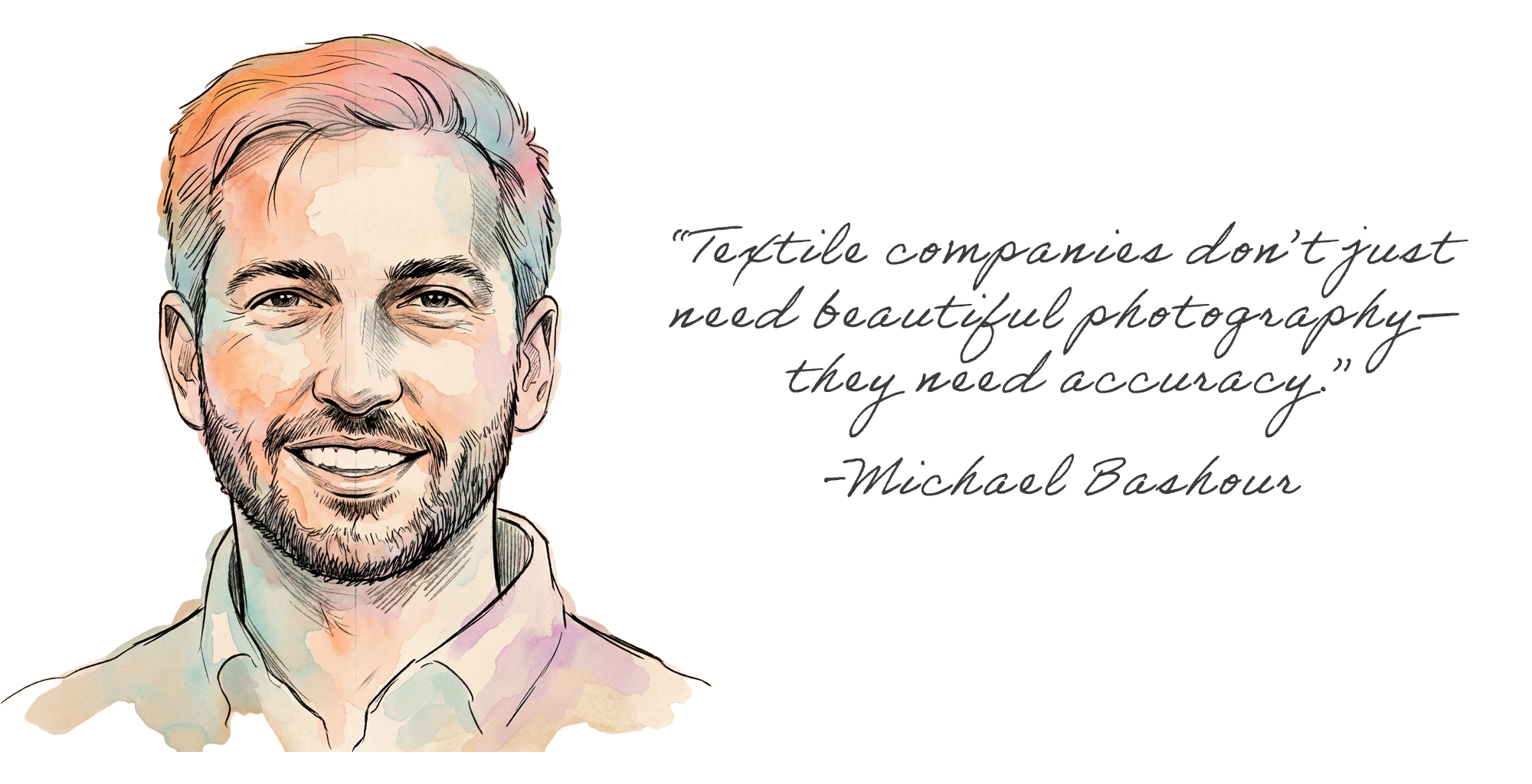
SITDOWN WITH MR. THREAD
Michael Bashour is the co-founder and CEO of HookPic, a company building AI-powered product visualization that is becoming popular among owners of furniture and home brands including Moore and Giles, He came to the business from the technology side, after founding and selling a fintech startup, and now works with his co-founder Chase Kerlin to turn accurate product information into sales-ready visual content.
What does HookPic do?
We turn product truth into sales-ready visual content, using AI. AI is the production engine, but the catalog always remains the source of truth. What we deliver is a controlled catalog-to-visual system.
For an interior-design company, a textile company, or a furniture manufacturer, our goal is to help them sell more products. That might mean complete catalog photography, social-media posts, or personalized last-mile imagery: here’s your product, and here’s the specific version someone is looking at, in a scene that looks like their home. We’re finding more and more ways to be helpful to these groups.
What’s your background, and how did HookPic begin?
I approach this purely from the tech side. About two years ago, I started learning about image-generation models. Before that, I’d done a few startups, including one in fintech that I was fortunate enough to start, run, sell, and exit. Then I began looking for the next thing and discovered this image-generation technology. I thought it was fascinating.
I tested early models—DALL·E and Midjourney—and learned about LoRAs, low-rank adapters that modify some of those early models. I thought there was an incredible opportunity, so I started building a proof of concept.
Through a friend of a friend, I met my co-founder, Chase Kerlin, who lives in Austin and owns a company. He had a photo shoot fail just before a product launch, so he had no photography. We applied the prototype to his specific need. The results were stunning: beautiful lifestyle photography that was also incredibly accurate. That accuracy was what was most compelling.
We learned that we enjoyed working together and thought there might be a bigger product there. That’s how we started building HookPic. We began talking to furniture companies, people started signing up, and then textile companies told us they didn’t just need beautiful photography—they needed accuracy. That’s been our north star the whole time.
AI is cool, but it hallucinates. It gets a lot of things wrong. We’re trying to build the exoskeleton around these AI models that produces truly accurate visuals as well as beautiful ones.
What technology does it use?
We use a lot, and we’re intentionally model-agnostic. In the year and a half we’ve been going, we’ve used OpenAI, Gemini, and a number of models from Black Forest Labs. We use Blender for some of our 3D work, plus homegrown tools that help with prompt engineering.
Our goal is to be decoupled from any one model and give customers the advantage of whatever is leading at that time.
Why wouldn’t a brand simply use Gemini, Midjourney, or Firefly itself?
Generative results can look plausible at first glance but still be commercially wrong. You can get a different profile, different sheen, motif drift, color drift. Scale drift is huge among AI models: you tell it a pattern has an eight-inch repeat and it gives you a 16-inch repeat. That really matters for textiles.
That accuracy issue becomes even more important at scale. HookPic can ingest a PBR map, original digital art plus photography, or basic scans. The better the input, the more we can do. Rather than simply telling a model to put a pattern on a chair or drapery, we’re building literal shaders from the data a customer gives us, and 3D models that can scale up and become the source for image generation. That preserves sheen, reflectiveness, scale, and color—the things that matter when you’re selling an actual product, not just making a cool picture.
What does HookPic replace from the old photography process?
Photography is still critical, especially for data ingestion. I don’t think that will go away anytime soon. We still need people with an expert eye, the hardware and technology that make that initial data ingestion possible, and the same artistic eye for photography. The best imagery from HookPic is generated by people with a photography background. We see that all the time.
Where HookPic gets interesting for brands is the accuracy-at-scale piece. They don’t have to ship materials to a studio, arrange them, hire the people, set the lighting, edit the images afterwards, and do it ad infinitum for every combination.
We’re working on solutions for hex-code transfers for furniture with two-tone options. If a piece comes in 30 materials and can be two-tone, there may be 900 possible combinations. With HookPic, that becomes commercially viable from a production standpoint. Before, you couldn’t bring most of that to market, and most of it probably would never get manufactured.
You mentioned “last-mile” visualization. What does that look like?
It’s an incredibly exciting part of the purchasing process where we can be extremely powerful. It’s highly personalized. Someone can say: these are the three or 10 fabrics I’m interested in, these are the scenes I’m most likely to use them in, and this is the style of my home.
It also provides a little leeway. Even with all the work we do to lock in accuracy—and I stand by that—there can still be some wiggle room. With a one-on-one client, there’s more room for error than when you put something on your website and say, “This is the product.”
For companies that are skeptical of AI—and even as a purveyor of this technology, I share that skepticism at times—you can bring it into the final part of the conversation: “Let us visualize this uniquely for you. Understand this is an AI rendering, but this is a stack of imagery we’ve made just for you.” That’s a compelling sales technique compared with handing someone 10 squares of material swatches.
How are creative directors responding?
In the beginning, we had more pushback from people who were skeptical, almost offended. There may have been some defensiveness, which I find completely relatable and understandable.
But people who engage with this technology find that the time between having an idea and seeing it realized is so shortened that they get really excited. There’s also a high level of control when it comes to editing an image: “I want to move this bowl from here to there.” That’s actually pretty doable.
Who is moving the bowl? Is this software as a service?
[Brands] do it themselves. We’re a product company. We offer services with onboarding and configuring large amounts of textiles, which can be a bold process, and we do a lot to simplify it. We’ll often lend a helping hand in pursuit of accuracy. But people log in and have their catalog, materials, and images.
Our approach to AI imagery is like a barbell. In the middle is AI image generation. On the left is the catalog of product truth: the SKUs, materials, variants, perhaps pricing. On the right are the visualization surfaces: raw image output, Shopify visualizers, digital lookbooks, and other surfaces we’re exploring. The connective tissue is image generation. Our goal is to provide a complete ecosystem that takes a brand from product truth to commercially viable, useful visuals.
That middle part—the image-generation connective tissue—may commoditize very rapidly. If it does, I still think we’re in a fabulous position. AI makes it possible to create a lot of imagery, and if you have a lot of imagery, you need a way to organize it logically, collaborate around it, and publish it. HookPic doesn’t just create imagery. We provide tooling and support around the specific act of creating it.
What’s your view on disclosing that an image is AI-generated?
It’s highly context-dependent, but I’m generally in favor of disclosure. It shouldn’t be hidden or treated as something to be ashamed of. It’s an emerging technology. It shouldn’t be used to deceive or oversell anything.
The raw purpose of a visual is to communicate an idea, whether that’s a product, real estate, or something else. I don’t necessarily think disclosure needs to be mandated, but I like that there are invisible watermarks. Some customers literally write on their visualizer, “Hey, by the way, this is AI-generated,” and I don’t think it affects their sales at all.
Will photo shoots still exist in five years?
There will still be photo shoots. They’ll probably have a different meaning and significance. You’ll always need the raw input, and the photo shoot as an artistic act won’t go away. Will it be needed in the same commercial volume? No.
What’s the one item in your home that you couldn’t live without?
I have a print of Thomas Eakins’s “The Biglin Brothers Turning the Stake” that my dad gave me. It’s just a print, but it’s very special to me because of the stories he told me about it when I was a kid. The original is an old hand-painted oil-on-canvas painting at the Cleveland Museum of Art, and it holds so much meaning for me.
My father died about two and a half years ago. I’d be devastated to lose it. It would be the first thing I’d rescue in an emergency.
It shows two rowers. My dad used to say, “That’s you in the front, that’s me in the back.” Now I say the same thing to my son. It still means the world to me.
Find out more at HookPic.com
*This interview has been lightly condensed for readability.
🧵LOOSE THREADS
George Lucas’s Lucas Museum of Narrative Art opens in Los Angeles on September 22. It looks like a spaceship. Natch.
In Los Angeles, Save Iconic Architecture is helping people rebuild after the fires and avoid turning their homes into quick, cheap, soulless boxes. Keep fighting the good fight.
Norway’s Whale Museum opens next year with a roof that rises from the water like a whale’s tail.
Puig CEO José Manuel Albesa has a brass box from the 1970s, a
Japanese screen bought for $20, and a serious sleep kit. I loved this FT piece and saw it all over Twitter/X this weekend.
A Venetian textile company is partnering with an addiction-recovery community on a handmade wallpaper collection.
🎲 PLAYTIME
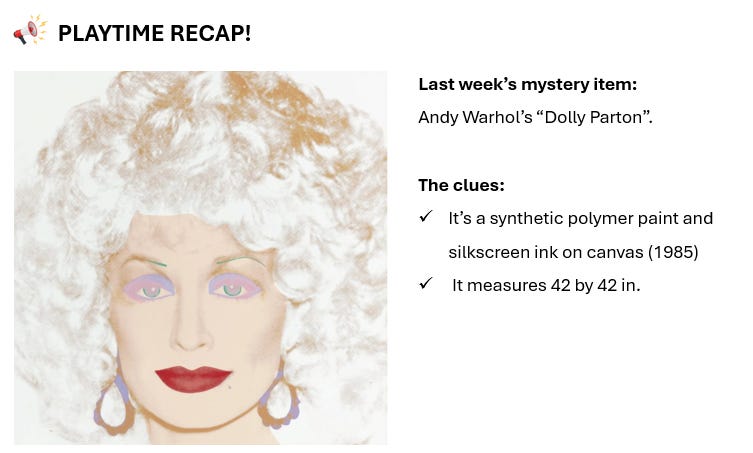
In our last issue, we challenged you to put a price tag on Andy Warhol’s vibrant 1985 "Dolly Parton" canvas. Turns out everyone's financial optimism was running high, as every single guess overshot the mark. Even so, massive congratulations to Freddy V. for taking the crown as our closest contender with a bid of $850,000, earning a well-deserved win against the actual $604,000 hammer price!
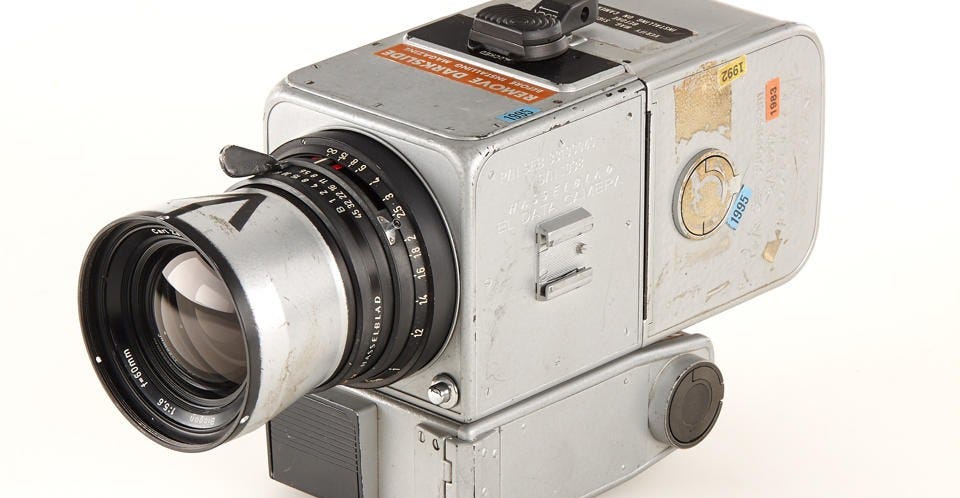
This week’s item is the Apollo 15 Hasselblad Lunar Data Camera.
Here are some clues:
✅ Used by Astronaut Jim Irwin during the historic 1971 Apollo 15 mission.
✅ One of the exceedingly rare cameras brought back to Earth from the lunar surface.
✅ Sold at auction in 2014 following a furious bidding war. Japanese retail titan Terukazu Fujisawa secured the winning bid.
What was the final HAMMER price? The person who guesses closest to its final price wins!
Reply to this email or click the button below to submit your guess.
Honor system, please—no using Google to look up the answer! (If you do cheat, we still get the engagement, but you’ll have to live with yourself!)
The Stakes
Whoever gets the closest guess each week wins an entry into our grand prize drawing! We’ll be holding the final drawing on October 15th—the more weeks you win, the higher your chances! Our winning threader gets:
A featured spotlight for you/your firm in an upcoming issue of Mr. Thread.
Another special mystery gift from yours truly, Mr. Needle.
Stay sharp,
Mr. Needle
🎨 THIS WEEK’S ART
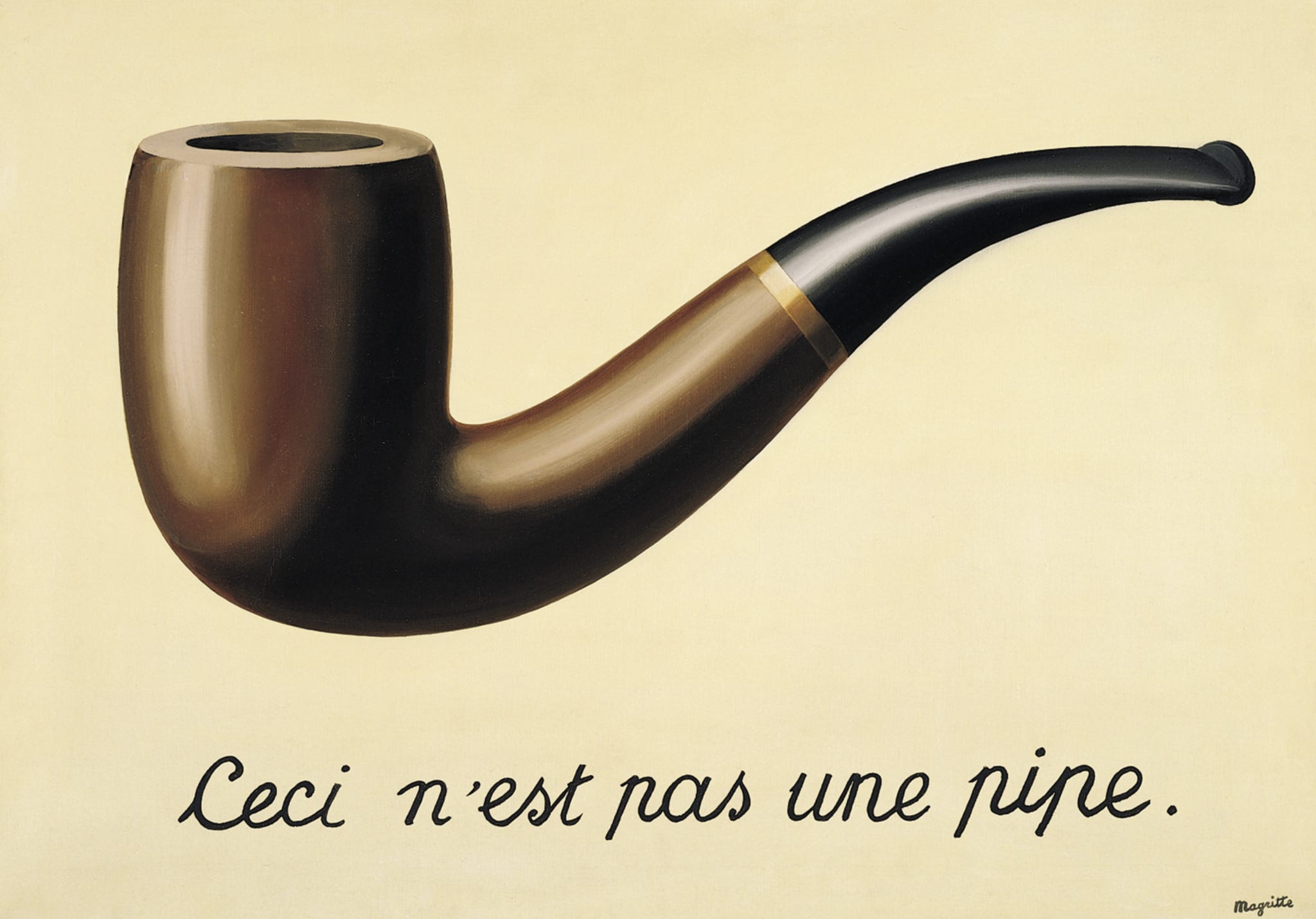
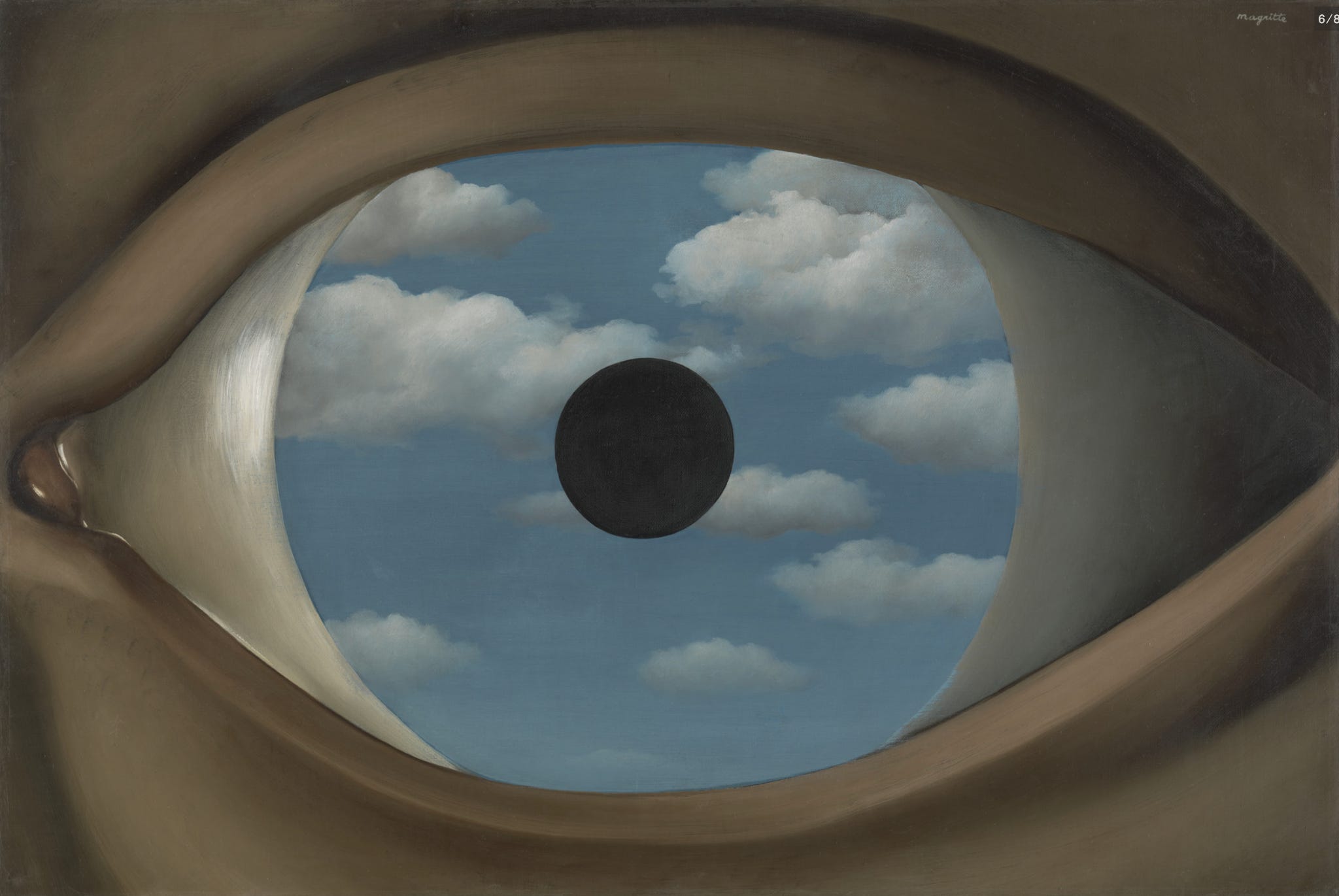
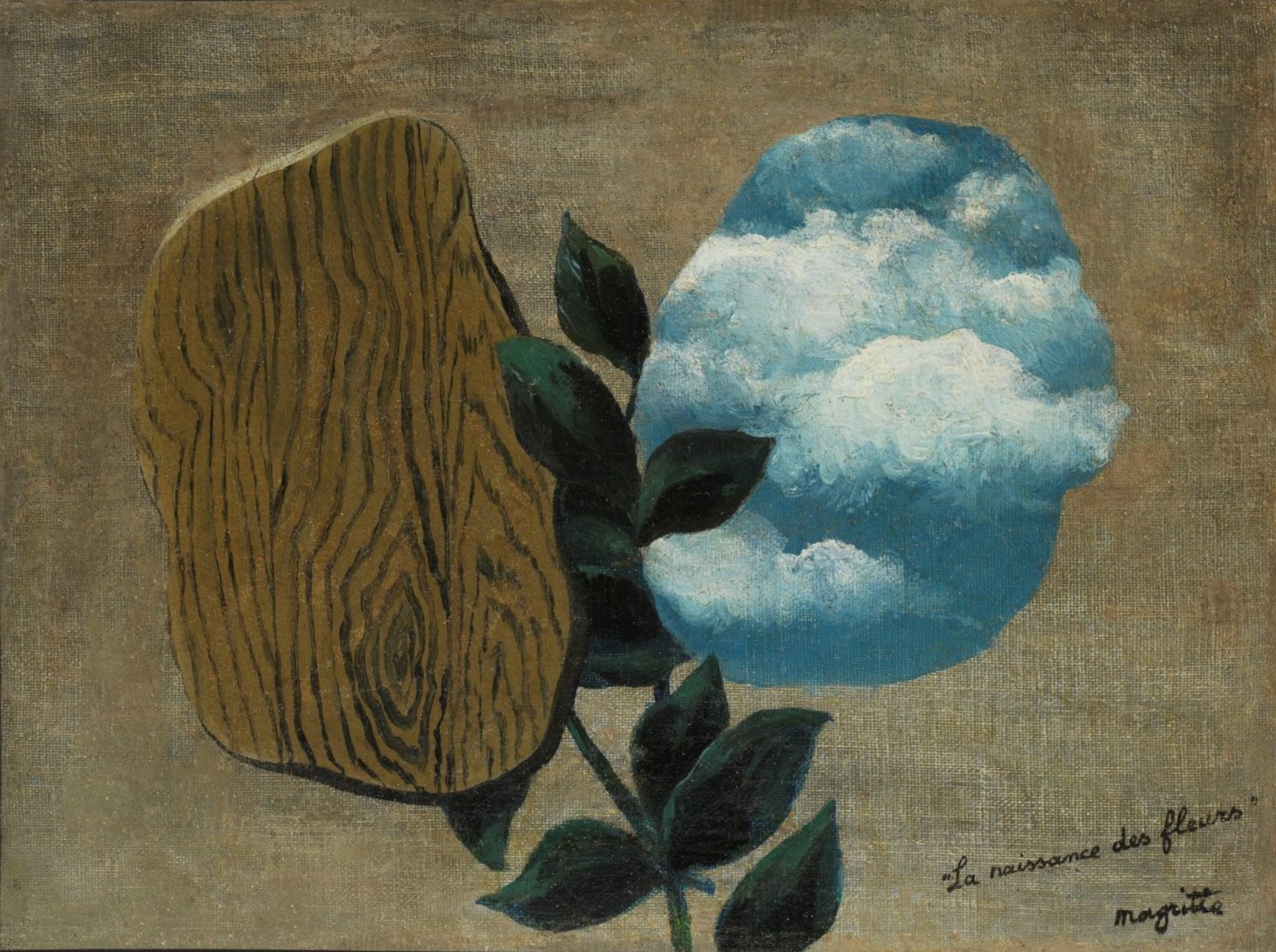
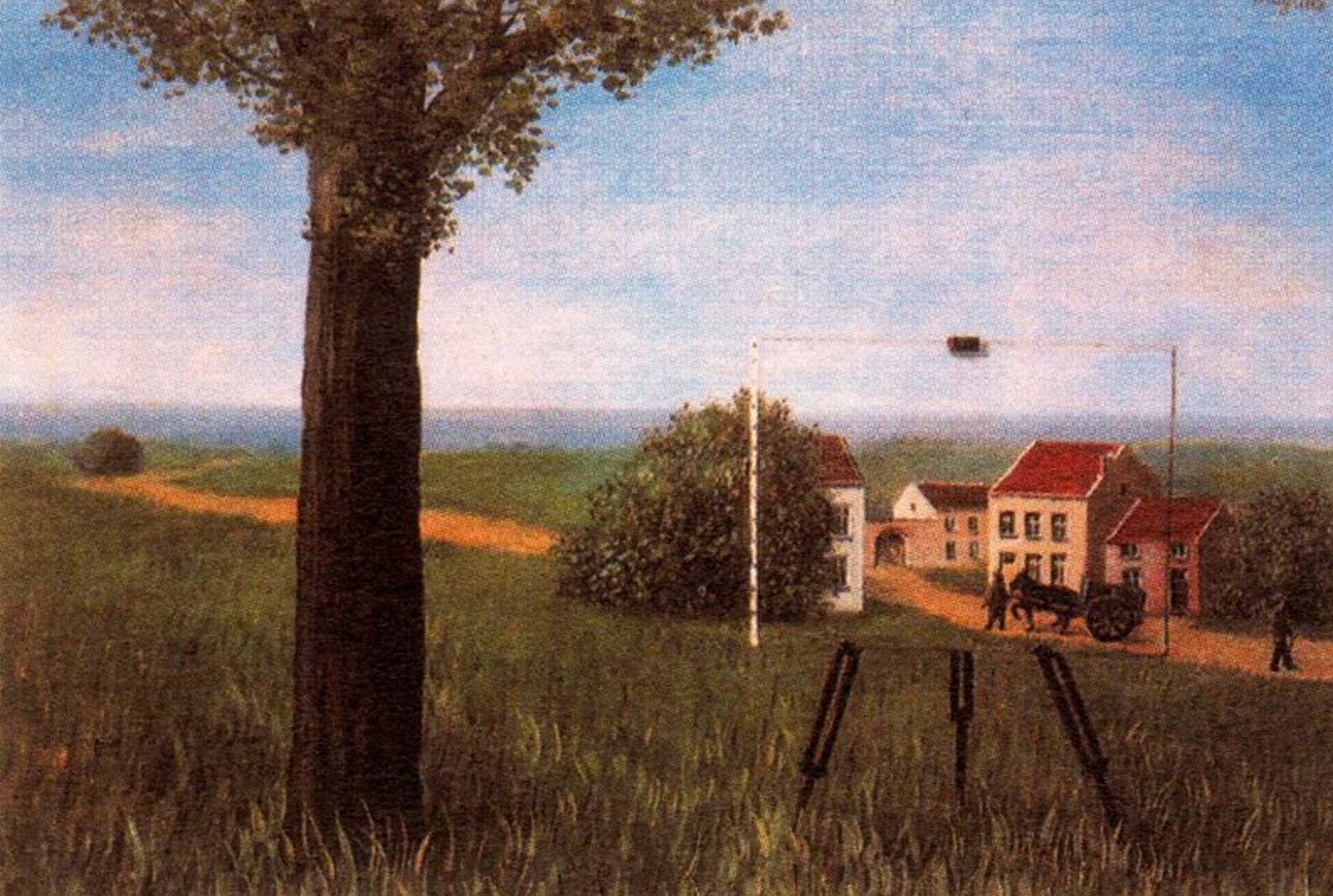
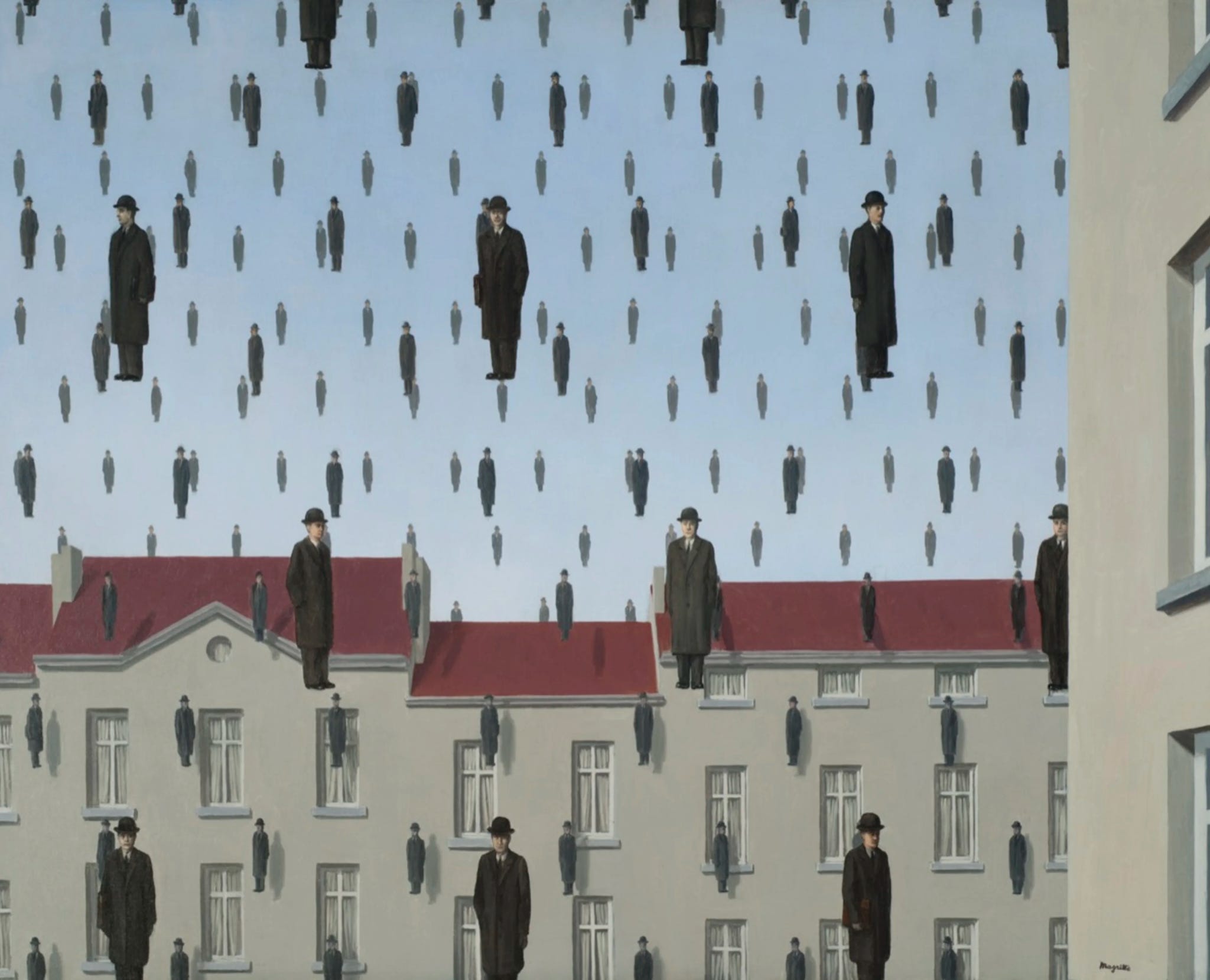
I found René Magritte’s art perfect for the renderings topic. His most famous work, “The Treachery of Images,” is a painting of a pipe with the caption “Ceci n’est pas une pipe” (This is not a pipe)—it’s literally about the gap between representation and reality. Maybe it’s too perfect for a renderings conversation?
Enjoying Mr. Thread?
How can we make this better? We read every message and genuinely want to know what you think.
🕵🏼♀️ MR. THREAD INSIDER #00008
Welcome to Mr. Thread Insider, our members-only section.
THE MR. THREAD RENDERING CHALLENGE
We gave the latest AI tools the same fabric sample and a prompt to render it in the same scene. Pretty pictures are easy. The question is whether a textile company, furniture maker, or designer can show an actual product without embarrassing themselves.
