

Hello readers…
One day, when I was 21 and still learning the ropes, wearing a suit my mother had bought me at Bloomingdale’s, I received a check from Arnold Schwarzenegger. I still remember thinking, oh, this is something pretty special, this world of design. You make something beautiful, and sometimes you get to see it in a home you’ve only ever imagined. It’s not every day you deliver 90 yards to the Terminator.
I loved watching MTV’s “Cribs.” Remember Shaquille O’Neal’s basketball court? This is where the magic happens! The audacity of some of those houses left me breathless. Thanks to MTV, you could finally get inside and have a good look around. Architectural Digest’s “Open Door” and various copycat YouTube channels have picked up where Cribs left off, and if you work in our industry, you know what happens when you tune in. You start looking for your fabrics and your furniture. There’s a little celebration when you spot something you helped put there.
One of my companies had fabric on a sofa in Lenny Kravitz’s living room, underneath an Andy Warhol painting. The room made a magazine cover. The amount of business we got off that moment was tremendous. When somebody incredible chooses your work and loves living with it, that kind of exposure can be amazing.
But I always come away from watching these videos wanting more. Capturing the feeling of an interior on camera is incredibly difficult. Actually walking into a beautiful home is a hundred times better. So few of us actually get to walk into the homes of the rich and famous, and I guess that’s why TV’s celebrity home tours are so successful. Maybe somebody will solve that with virtual reality one day. For now, I enjoy stargazing.
This week we’ve been looking at AD’s Open Door films. I hadn’t realized some of the homes were on the market or would be listed soon after the cameras left. Suddenly it makes sense. Our Insider report follows five celebrity homes featured on the show through their listings and sales and checks in on Tan France’s still-listed house.
Keep reading for a group of independent showrooms sharing the work of running a business and a loyalty program that got me thinking about the things I’d want to offer my own clients. I dictated this week’s edition at the airport, on my way to visit my mother in Florida. All those boarding zones got me thinking about customer service. Read more on that below too.
See you next week!
Mr. Thread
🏭 INDUSTRY
The right kind of consolidation
Eight independent luxury showrooms have just formed the Trade Showroom Collective to share experience in sales, marketing, logistics and the other things that eat up a business owner’s week. They serve different markets, and each keeps its independence. Phil Miller is the group’s spokesperson. The aim includes a stronger conversation with the manufacturers they represent. What’s strange is that not one of the names on the list is from the greats of the genre, like Jerry Pair, Sloan Miyasato or John Roselli.
I think this type of “consolidation” could be incredibly powerful. So many businesses in our industry are small and family-owned. You can feel very alone making decisions. Get a group of people together who understand the same problems, give it a leader and a purpose, and you can start helping one another in practical ways. Sharing a useful piece of software or a better way to train a salesperson could save somebody months. We’re not all competitors, remember.
The geographical distance between the members doesn’t worry me. In fact, it’s a feature, not a bug. Getting together a few times a year takes commitment, and you hear what’s happening in other parts of the country. I’ve been considered for a similar alliance myself, and I’m hoping to join it. There’s nothing I’d want more than that sense of community. I’d love Mr. Thread to help create it, too. Some of the messages I get from readers already feel like the beginning of something.
“As the independent design channel continues to grow, stronger collaboration between leading manufacturers and independent showrooms has never been more important.”
— Emilio Sadez, owner of International Design Source, quoted in Home Accents Today.
Please keep the photographer
Six weeks ago, many of you enjoyed Mr. Thread’s special edition on AI-generated interior design imagery (#00043 - The end of photo shoots?) and our interview with HookPic CEO Michael Bashour. Gasping and wheezing, Business of Home has finally followed up with its own article on the trend.
BoH’s Fred Nicolaus found that not all companies are rushing to close their studios. Rebecca Atwood uses AI for wallpaper colorways while investing more in traditional photography; Four Hands says the technology still falls short of its standards.
I use AI imagery in my business, too, but at the point where our salespeople are helping a client make a decision. But we will always still employ photographers. If anything, I’m interested in going further back toward analog photography. A photographer has to go out and find the moment, light it, work with the people in the room. I can feel that human spark in the result.
My mother recently fell in love with a picture of a hand-carved wooden table she’d found online. My wife looked at the site and thought something was off. Why were such beautiful hand carved tables so cheap? Why did all the pictures look so similar? We came away convinced we were looking at AI-generated images. It turn out we were right. Unfortunately for my mother, she had already picked a table and told her designer she wanted it. Her heart was broken by an AI dupe.
That’s where I draw the line (don’t mess with my mama). A customer needs to know whether the beautiful object in the picture exists. Show them a real product photograph and tell them when you’re showing a visualization. And for business owners, pay the photographer who can make the actual table incredible. Investing in that authenticity will always lead to better results.
“And I think when it comes to real photography, you can taste the love.”
— Kristy Greene, vice president of creative services at Four Hands, speaking to Business of Home.
Sanderson’s biggest investor wants answers
There’s trouble brewing at Sanderson. Its largest investor, LBV Asset Management, wants to remove chair Dame Dianne Thompson and appoint Stephen Brooke. The shareholder vote is scheduled for October 29. LBV’s main beef is that they’re paying executives too much, while numbers have been weak since 2022. Sanderson’s board opposes the move, pointing to improved recent results and a “Succession”-style search planned for January.
I don’t know Sanderson well enough to referee this boardroom punch-up. But if you’re increasing the boss’s pay while sales and margins are falling, you need to explain it. Everyone’s entitled to a fair wage, including big bad CEOs. Shareholders are entitled to ask what they’re getting for their money.
💰OPPORTUNITIES
Perigold wants your loyalty. What would you offer?
Perigold’s new consumer membership costs $175 a year and renews automatically. Members earn 10% back in rewards toward future purchases and get benefits including priority customer service. (By the way, the consumer program excludes Perigold Trade business accounts.)
I’m surprised it’s taken them this long. They have the range of products and the distribution to make it work. Who doesn’t love a bargain? Watching your points accumulate is the oldest psychological trick in the book. I’d expect people who already buy from Perigold regularly to take a serious look.
Still, it feels very strange seeing luxury interiors tied to a paid rewards club. I wouldn’t feel comfortable putting one of my brands into that arrangement. We’ve been thinking about a loyalty program ourselves. Maybe we offer time with artisans, access to parts of Venice you wouldn’t normally see, or the chance to design your own fabric. That’s some real value.
You have to figure out what makes your business special before you invent the loyalty card. This is interior design, not a car wash. You might organize a visit to a maker’s workshop, or a fabric company could give its special clients an early look at a collection or some time with the maker who created it.
To be honest, the priority-service part makes me uncomfortable. When a client needs help to fix a disaster, stepping in and helping them is some of the most important work we do. Would they pay for faster, more personal support? Probably. I just can’t imagine charging them for it.
Being at the airport also reminded me that priority-service could alienate everyone else. Zone one, zone two, zone three. Imagine how the person in zone nine feels, sitting there wondering whether their bag will even make it onto the plane. I’d hate a client to feel that way when they call us for help.
📊ECONOMY
The week in numbers
⬆️ 3.7% Top-line inflation for September rose from a year ago, sadly shocking economists’ expectations. Core consumer price index (removes food and energy) also exceeded forecasts, climbing 2.6% on an annual basis. The fastest US inflation in five months rocked markets with tech stocks facing heavy losses. Egads! This is not good news.
⬆️ 1% — LVMH’s organic revenue growth in the third quarter. “Organic” strips out changes in exchange rates and the businesses included in the comparison. Fashion and leather goods fell 5% on that basis in the quarter. The group reported growth in the US, Europe and Japan, with China less buoyant. I’d be careful about treating a luxury label as a guarantee that its customers are still buying everything.
October 22 — Kering’s next revenue update. That’s next Thursday, after the market closes. We’ll get another look at how much people are spending on luxury. Until then, I wouldn’t build a sales plan around the recovery the luxury industry has been promising.
🤖 TECH
Is your next client bringing an AI negotiator?
A special report from Mr. Weft in Los Angeles
Dwell reports that some home buyers and sellers are using AI to price homes, make offers, and interpret inspection reports. The agents interviewed say they are already dealing with AI-written offers and pushback on repair estimates. It’s no surprise to me that chatbots are giving buyers confidence. I use it to negotiate with the Land Rover dealership, the caterer for my kid’s birthday party, and sometimes even relatives planning a get-together.
My realtor in California has her own magazine. It arrives every quarter with recipes and tips, and I suspect quite a bit of it is AI-generated. Some agents are putting enormous effort into marketing themselves and becoming Instagram personalities, thanks to ChatGPT and now Meta’s new Muse agent. Now their customers have access to the same tools.
I think interior designers should expect clients to use AI to question proposals and negotiate fees, too. You might even use your own AI agent to respond. We’re heading to the moment when both sides can let their AI bots fight over the numbers, and we can all go for cocktails.
“I’ve seen AI talk about cracks in foundations that aren’t there.”
— Shantih Moriarty, a Redfin real estate agent in the Bay Area, speaking to Dwell.
🧵LOOSE THREADS
Naleye’s New York City debut: quietly layered paintings. Thanks to our brilliant reader Rachel van der Brug for sharing this amazing exhibit.
Ashtrays are back as decorative objects, even in nonsmokers’ homes. Finally, somewhere glamorous to put your keys.
London is making more room for pedestrians. More places to sit and talk sounds like a very good use of a street.
Friars are using AI to help restore the Basilica of Saint Francis. A truly inspiring use of AI to help our world recover our precious patrimony. Worth a watch!
🎲 PLAYTIME SEASON 2 WINNERS!
Congratulations to Hillary E., our PLAYTIME Season 2 grand winner! Silver medals and bragging rights go to Avner L. and Jeffrey W. Thank you to everyone who took a guess.
Over nine weeks, we asked you to price items including the following:
✅ The Dalí-inspired Xai sheep tables.
✅ Andy Warhol’s Dolly Parton.
✅ An original La Dolce Vita movie poster.
✅ Trey the Triceratops.
✅ Verner Panton’s prototype UFO lamp.
✅ Sylvia Hyman’s Remembering Dianne, the ceramic mahjong set and alligator case.
And the answer to that last one was $4,608, including the buyer’s premium.
Hillary’s prize is a featured spotlight in Mr. Thread and a mystery gift from yours truly. Congratulations!
Put those calculators down. Season 3 begins Thursday, November 5, with a brand-new game. You’ll have to wait to see what I’ve got for you.
Stay sharp,
Mr. Needle
🎨 THIS WEEK’S ART
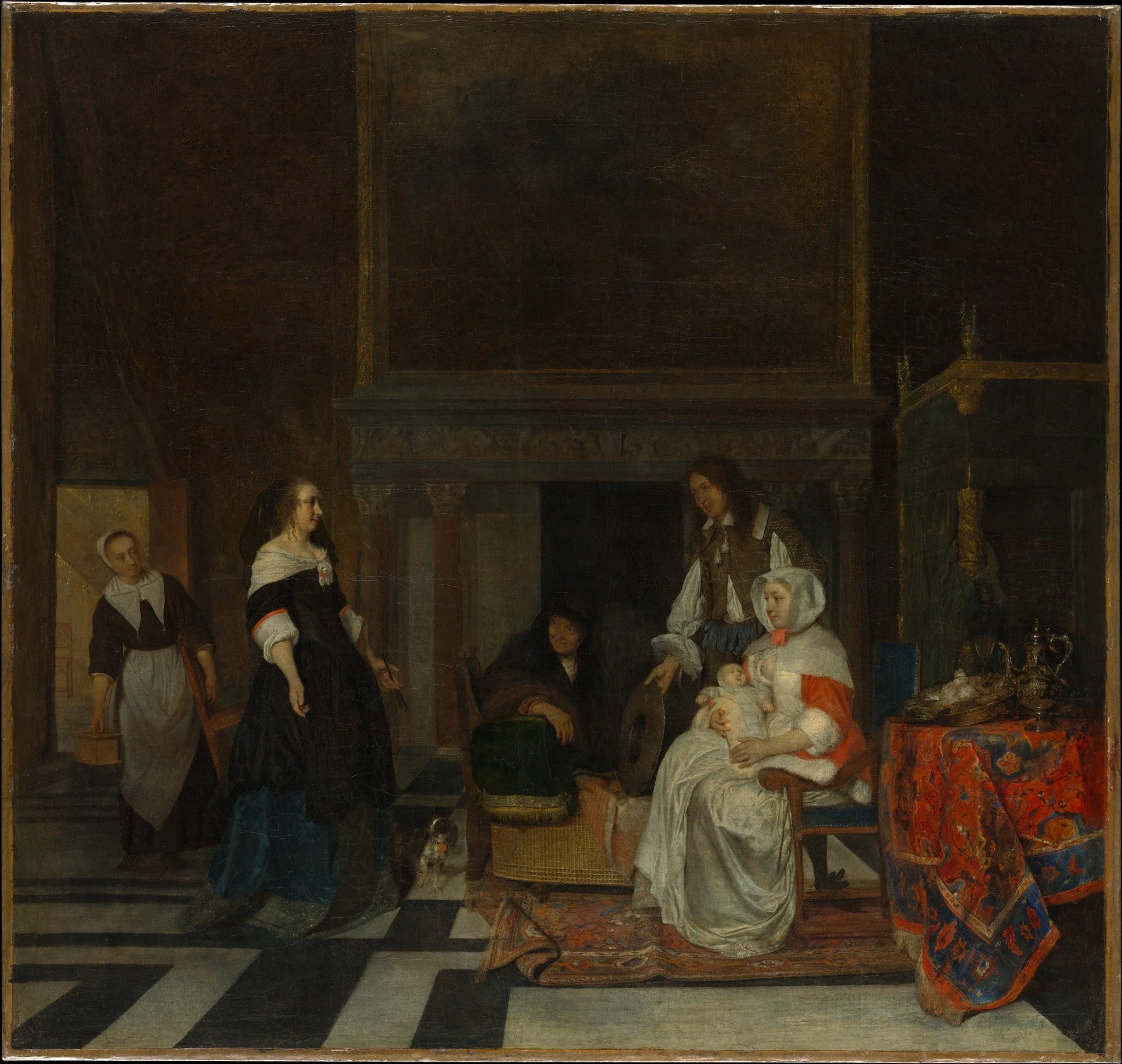
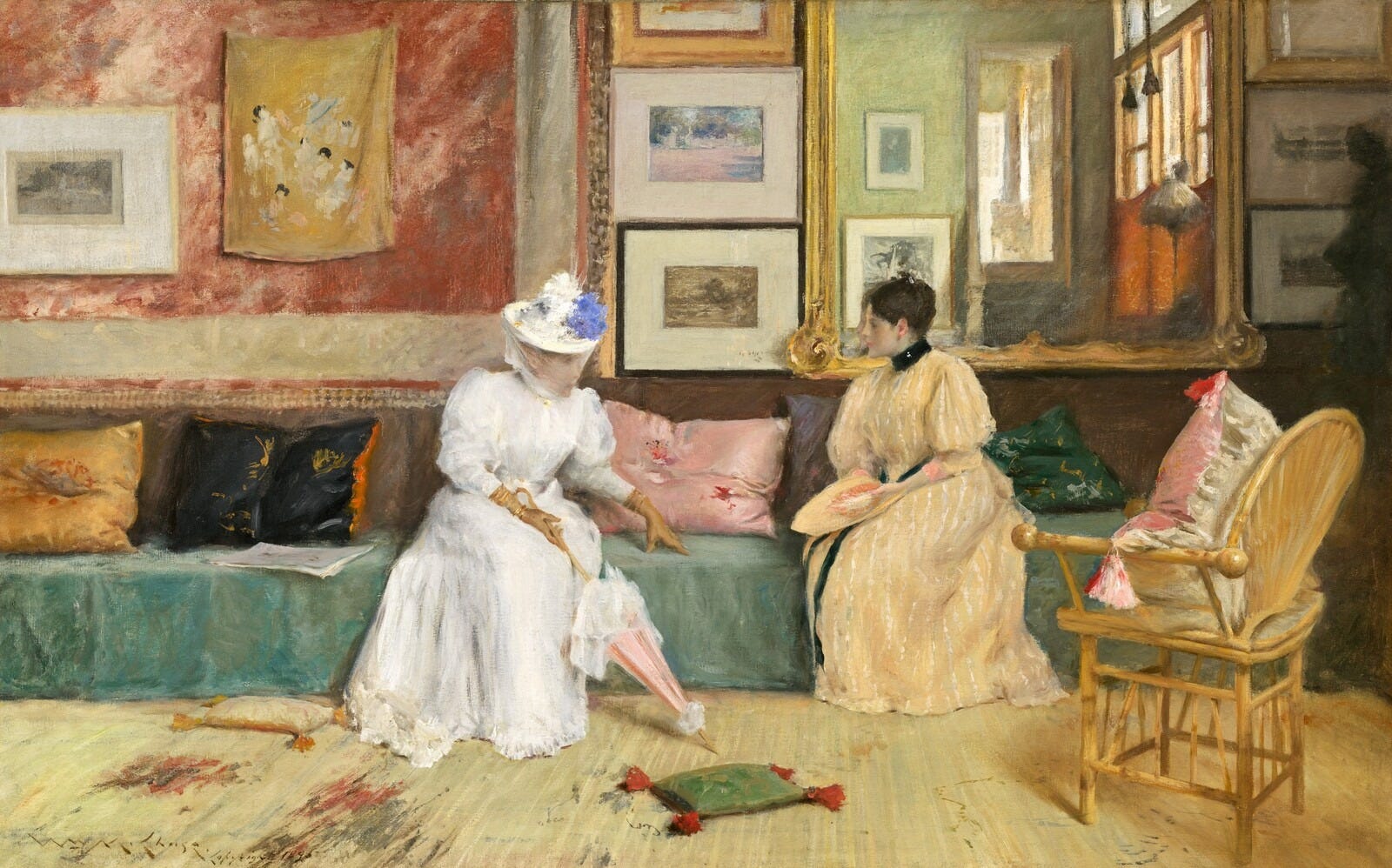
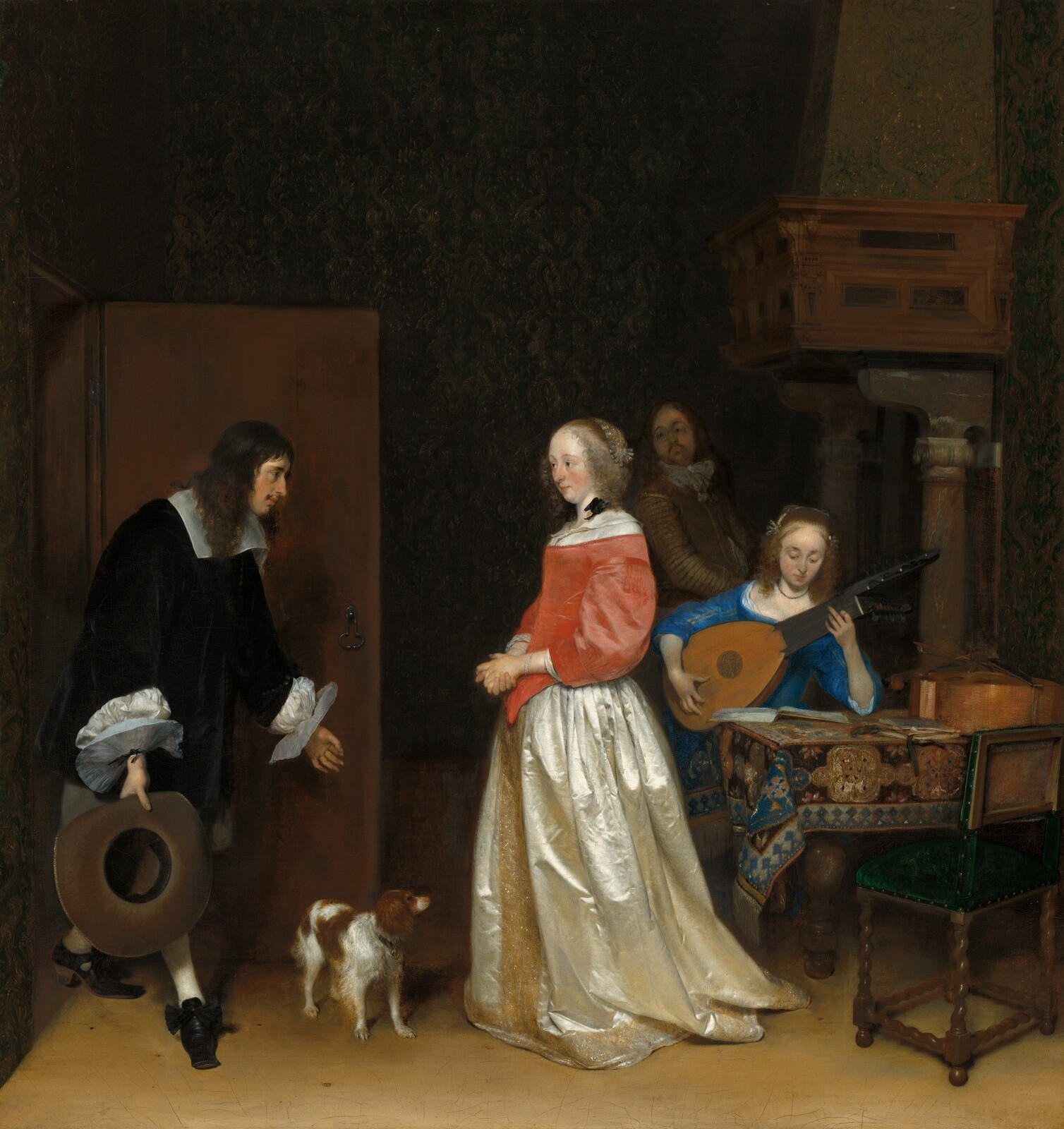
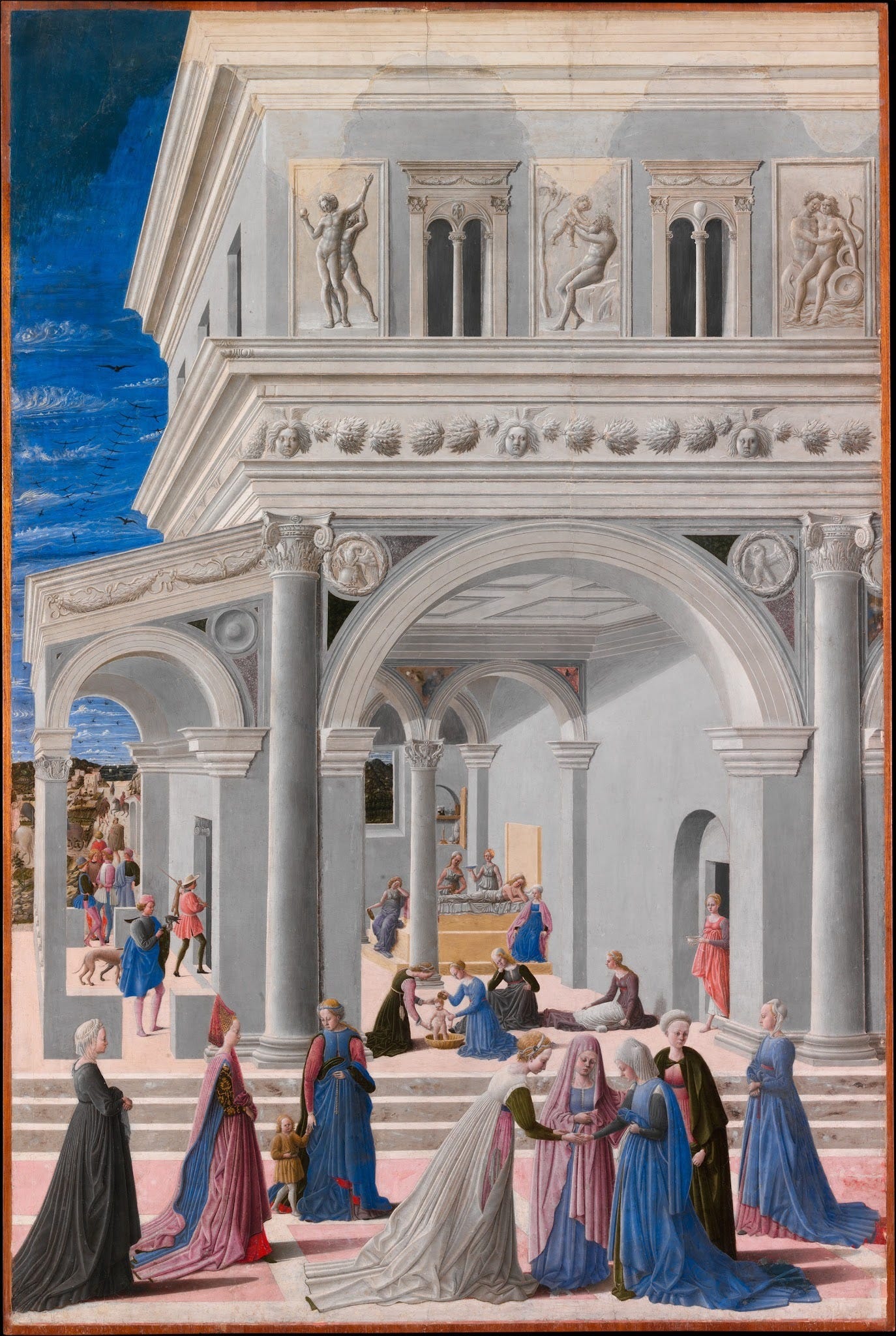
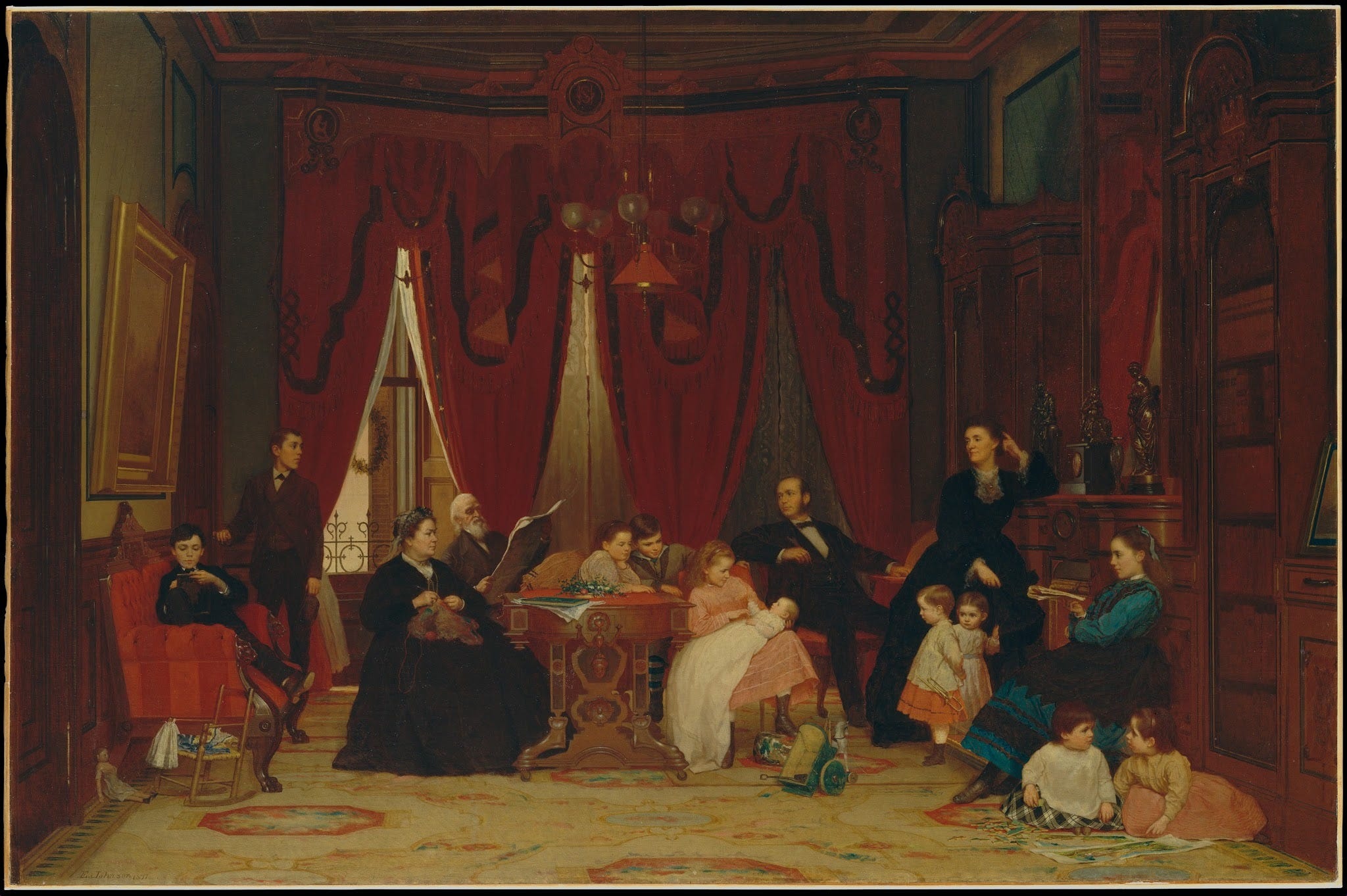
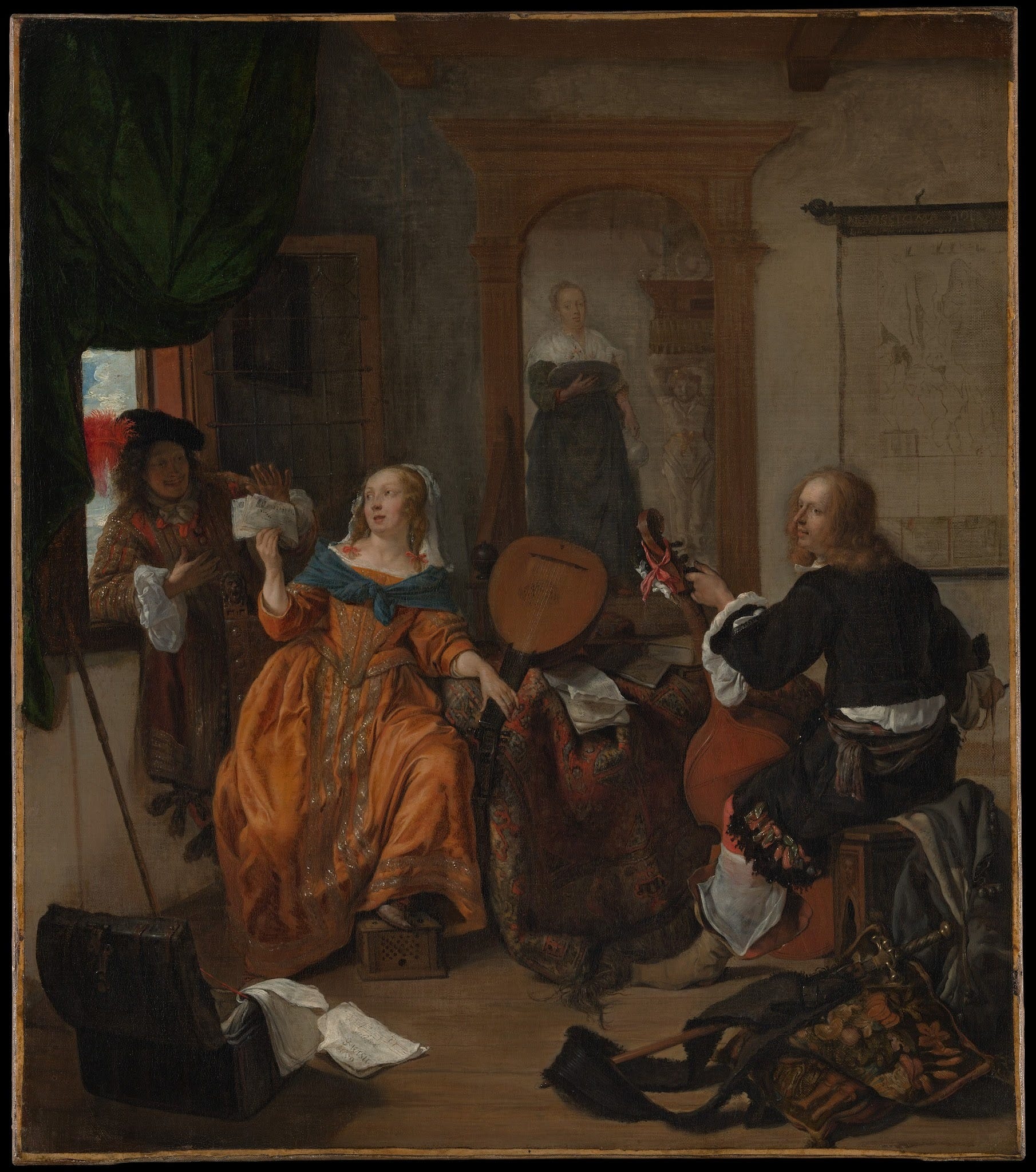
This week’s paintings let us nose around other people’s rooms. Look at the fabrics! In Metsu’s The Visit to the Nursery, the grand interior was modeled on a chamber in Amsterdam’s Town Hall. These paintings were the MTV Cribs of their time, and not a pinball machine or home theater in sight!
Enjoying Mr. Thread?
How can we make this better? We read every message and genuinely want to know what you think.
🕵🏼♀️MR. THREAD INSIDER #00013 - Is Architectural Digest’s “Open Door” Just a Glorified Real Estate Listing Service for Celebrities?
Welcome to Mr. Thread Insider, our members-only section.

Just before Architectural Digest’s cameras arrived at Ashley Tisdale’s Hollywood Hills home in March of 2022, the former Disney actor had a major problem: Her bookshelves were empty. Her husband suggested they build a collection over time, but she had a deadline. “No, no, no, no. Not when AD comes!” she recalled telling him. Tisdale had a solution. She quickly purchased 400 random books—books she had never read. And she probably never did.
Her Open Door episode appeared on March 29, 2022, and by September 15, AD was reporting that Madison Beer had bought the Hollywood Hills house for $5.9 million in an off-market deal. Tisdale isn’t the only celeb to hoist their property onto the market not long after showing it off on screen. Then there was Dakota Johnson, telling us how much she loved the limes in her kitchen. She later admitted they were set dressing and that she’s mildly allergic to them. Good grief. Even the fruit was putting on a performance. (That house recently sold too, limes not included.)
In 2021, VICE’s Bobby Finger found roughly one-third of 45 Open Door episodes coincided with or preceded active property listings. Picking up from where Finger left off, Mr. Thread investigated six homes that appeared on Open Door from 2023 onward. One was put on the market just before the show went live. Another was listed about three months after the film. The other five have all changed hands since the launch date. Coincidence?
Cade Hiser, who worked on AD’s programming and production in 2020–22, gives a sense of the audience in his portfolio. He reports a 50-million-view increase for AD in 2020 and 1.8 million new subscribers, followed by another 1.1 million in 2021. His account puts Open Door at more than 90 episodes and 800 million lifetime YouTube views. That’s an extraordinary shop window for a homeowner thinking of selling. The footage can do the work of a lavishly produced property film, whether or not that was the plan. So what happened to these houses once AD cameras left?
