

Hello, readers…
I pulled the trigger. I told my team to cancel the AI imaging software we’d been using to show customers what our wallpapers would look like in a room. Even though it worked incredibly well, and was supported by an excellent team, we just didn’t feel like it helped support our art. I then texted my friend who manages growth for the company and told him I was having an existential crisis. He’s someone who has worked on all sides of this industry for three decades plus. His insights help shape mine.
He admitted he’s been thinking about this too. He believes AI will take the monotony out of our jobs and give everyday people more room to be creative. He said he’d be happy to debate it, but to be honest I’d already made up my mind. I’ll tell you why.
Say I ask an AI model to show my fabric on a sofa in a contemporary house on the ocean in Malibu, and it comes back with the perfect image. I know whose wallpaper it is. What I don’t know is whose photographs helped train the model, whether anybody asked those photographers, or whether they got paid, and that bothers me.
Now let me be clear: I think the AI debate is much more nuanced than AI evil or AI good. Using AI for operations, for helping manipulate your OWN creative assets or designs, or for research and planning, that to me is its own separate debate. The real AI issue we should focus on is when we use AI to create art. When we know that AI works by ripping off other artists’ work.
“It isn’t just the sum total of our excellence and craft. It is just as much a result of our flaws. As much as anything, our music is a reflection of our imperfections, our self-doubt and self-loathing…It’s the endless hours. It’s our shitty, fucked up, striving, stumbling, needy, petty, hopeful, heartfelt fucking humanness.”
— Tim Minchin, in an unforgettable speech about AI, via Variety
To me, this goes for all creative fields, not just interior design: writing, music, graphic design, architecture. If the artists who helped form that intelligence aren’t getting paid while the overlords are getting filthy rich (see Anthropic’s IPO today), then we should boycott these tools and be fundamentally against them. I may get blackballed for saying this, but who cares. The fight to save our arts and crafts is the defining mission of my career. We can’t just sit back and watch this happen, even if it means that my dream of $50 styled images is no more, and I have to pay $5,000.
I’m not alone. In last week’s poll, 56% of you said AI is “destroying everything I love.” Another 9% said, “Send the meteor.” I’d love to ask those same people if they’re still doing their own purchase orders or if they’ve asked ChatGPT to help them phrase a tricky email. This is not an easy topic.
I especially want to hear from people who think I’ve got this wrong. There’s got to be another side to this and I want to hear it.
I’d like our community to join forces and write an AI constitution for the design industry. I’ve started writing it on Insider this week. It is important we get together and find ways to pressure the AI overlords so the creators of the work get paid. Perhaps an industry-wide boycott is the only way to apply pressure to make it happen. We are happy to play a big part in that, as Mr. Thread’s mission will always be to help creators make more money!
On to the week’s news….
Subscribe to Mr. Thread Insider →
See you next week.
Mr. Thread
P.S. Don’t just read, play! This week’s PLAYTIME: two-truths-and-a-lie quiz is interesting. Scroll down to join the game!
Industry
We need more humans
After last week’s $3 million sofa rant, S.B. shot me a message on Mr. Thread’s Instagram. “We just closed our furniture manufacturing facility in September. We made $6,000 dining chairs and it was still rough. Trying to make a sub $2k sofa in the US is insane.” I felt exactly the same.
If the economics are rough at $6,000, what would bring more of this work back to America? Furniture Today asked two people who actually make upholstery in North Carolina. Both got onto the same subject pretty quickly. It all comes down to labor.
At Universal Furniture, Sean O’Connor moved his upholstery operation to Hildebran, North Carolina, kept the whole workforce and says he saved nearly a million dollars in overhead. He put in better break areas and a health suite where employees can get care twice a week. Over at Wesley Hall, Zack Taylor spends time explaining to customers what they’re paying for in a benchmade sofa. I’d love to see more of that on the showroom floor.
At one of my companies we’re increasing apprentice pay. We’re improving the facilities and putting a school in place so a young person can come in, learn a skill and see where they can go with it. Your most experienced craftsperson needs time to teach.
A few weeks ago we featured a story about a robot learning to sew. What worries me is the day you walk into Target and see a robot-carved table that looks like handcrafted furniture from Polynesia, but it only costs a hundred bucks. Then a customer goes to the person who spent 30 years learning how to carve it and wonders why theirs costs so much. I want that customer to meet the carver.
AI and robotics are threatening every aspect of our crafts. We must spread the word and be united if we want to stave off this lunacy!
This furniture website is almost NSFW
I’ve lost a few hours this week poring over designer coffee tables on Invisible Collection. I found one that would look awesome in our living room, I thought. Then I looked at the price. I decided against showing it to my wife.
I’m head over heels in love with the Invisible Collection. Isabelle Dubern-Mallevays was a journalist and a creative director at Dior Maison. Her cofounder, Lily Froehlicher, worked in client strategy for luxury brands. Ten years ago they started this business together. They found furniture designers doing incredible work and created a place for people to buy it. Now they work with some 300 ateliers, and they’ve furnished penthouses in New York’s Steinway Tower.
The founders told WWD they expect $35 million in sales this year. That’s sales through the business, not profit. We don’t know what they keep. When a business is booming, while most of the industry is in a prolonged post-Covid housing slump, you have to pay attention. You have to listen to them and learn from them.
And it’s clear what makes them so special. Incredible curation, impeccable website, clear brand messaging, and a strong omnichannel approach. The website boasts a huge assortment and dreamy galleries in key global cities. It’s breathtaking how beautifully they are executing. I have to be honest, it makes me a little jealous. But it also gives me many ideas…
Opportunities
Who’s doing the curtains for your prefab?
This is probably the most beautiful prefab I’ve ever seen. Look at the Commonplace M Bungalow in Vancouver. Gauzy curtains, blond floors, soft white seating. Perfecto. The draperies are what did it for me. Then you find out that four people put the walls and roof together in under two days. Two days!
Prefab has come a long way from the little plywood mountain hut you could extend by adding another unit. Here, the panels arrived finished.
If I were a fabric house looking to get into this, I’d want to set up a meeting with the builder before their next model goes into production. Offer them a curtain package cut to fit those windows? What about wallpaper? You could offer it at the design stage.
Lots of opportunities in this wide-open space for brands or designers to capitalize on.
The teacher who charged $1,000 to decorate a tree
I was blown away by this Newsweek article on Amanda Ware from back in 2022. The former Arkansas schoolteacher was decorating at least a hundred Christmas trees a season. A tree took her two to five hours and she charged an average of $1,000. November was her busiest month. By the time her old colleagues went back to school in January, she’d earned her income for the year.
“I may not be teaching in a classroom. I am still teaching people how to elevate their living spaces to invite others over with confidence.”
— Amanda Ware, speaking to Newsweek
Ware had a shop, too, selling trees just like hers. You could buy everything on it, right down to the last sprig. Ribbons, bows, the works. I suspect every designer reading this has equally strong feelings about being paid to decorate somebody’s Christmas tree. But I think it’s genius.
Fancy a holiday decorating business in a box? I’ve made the business plan for you in this week’s Insider.
Are we headed to a post-work world?
A year ago, Elon Musk reckoned work could be optional in ten or twenty years. You’d do it for pleasure, the way some people grow vegetables they could just as easily buy. I keep trying to picture my life in that world. I love golf. You play for years, and there’s still something wrong with your swing that you want to go out tomorrow and fix. Do I want to play it all day? No. The only thing I love more than golf is work.
I want to give people jobs. I want to make something beautiful that makes people happy in their homes. I think that’s the human condition. We want to be useful. And anyway, how much gardening can one person do?
What part of your working week would you still do for free? Hit reply. I’d love to know.
Economy
Tech
Designers are vibe-coding their own software
New York designer Morgan Baker asked artists on TikTok to show her their work. The response gave her an idea for a directory where designers could find artists who might have all of 50 followers. A developer quoted her $2,000. Her cousin suggested she try building them herself. And off she went.
“I sat down and built it in a weekend.”
— Morgan Baker, speaking to Business of Home
Fred Nicolaus found designers doing this all over the trade. All sounds great, but I’ve built project management software for designers. In Insider I’ll tell you what it cost me, and what I’d want a developer to show me before I trusted their app with my business.
Christmas in North Malibu, Anyone?
A special dispatch from Mr. Thread’s West Coast editor
This week I signed up for HomeExchange. Have you heard about it? You basically swap homes with another family on the other side of the country—or the world—and go on a free vacation (flights not included). My family wants to spend Christmas in New York, and we don’t really want to spend $25,000 on a shoebox-sized hotel, just so we can see a bit of Broadway and eat some proper pizza.
A few people we know have done it and had fantastic experiences. Here’s how HomeExchange works, apparently. You can swap homes with another family, or use GuestPoints to stay with someone who doesn’t want to come to yours. I paid for the standard U.S. membership ($235 a year) but there’s no nightly rent. To me it sounds better than Airbnb. You get to stay somewhere exciting and live in someone else’s shoes for two weeks.
The hard part has been finding a suitable home. It’s made me very aware of my own home’s limitations. We live in the suburbs of Los Angeles, not exactly on Hollywood Boulevard. Okay, we live in Ventura County. Try as I might to describe it as “Malibu North,” our home is not getting as much attention as I’d like. It’s a little disappointing to be honest.
I’ve learned that you can’t swap a suburban home for a penthouse pad on the Upper East Side. It’s like for like. Which leaves us looking at the Catskills, which are rather far removed from the aforementioned Broadway and pizza. Of course the HomeExchange people have been emailing me about upgrading to a fancier tier, but I’m having a hard enough time finding a home exchange as it is, without paying even more.
I still think there’s something in it, and I’m going to persist in reaching out to families with posh pads in Manhattan. You never know which one of them might be dreaming of California suburbia. Actually, I found a really good place in Austin, Texas. Then I discovered we’d have to look after their Chihuahua as well. I asked my wife if they were expecting us to swap wives as well. It didn’t go over very well.
Trends
How to get the kids to come home
My son called me last week. He told me he can graduate early, in December. He’s thinking of coming home for the semester, getting a job and doing a little traveling before graduate school. I was thrilled. It was like Christmas. I wasn’t even thinking about his career. I was selfishly thinking about getting my son back for six more months.
So I understood every parent in this Wall Street Journal article spending a fortune on a bowling alley or a wellness spa to get the kids to hang out at home. Some people can’t wait for theirs to leave. I had mine because I love them. They’re my best friends. Mini-mes, all of them. Why wouldn’t I want them around?
Don’t be surprised if your clients start talking about pickleball courts and movie theaters. Personally, I’m delighted that my son’s considering coming home without making me put in a bowling alley.
Loose Threads
Touchscreen fabric. A touchscreen sofa? I have no idea what I’d do with that. But as a fabric guy, I’m intrigued.
The Dior detective work continues. I think I’ve spent longer watching people take that holiday film apart than I did watching the film. The AI rebellion is picking up steam.
Two New York apartments to swoon over. I’ll take Madison Avenue. You can have the West 84th Street penthouse.
Check out Dennis Scully on High Point’s “Interior Design Idol.” Someone wants to be on TV! If you know Dennis, you know how much he devotes his life to protecting the future of our industry. Would love to see him succeed in this!
Another journalist has made the jump. On Instagram, Morrigan McCarthy says she left The Wall Street Journal in June after more than a decade in journalism. She’s going into interior design.
Did you leave another profession to become a designer? Write and tell me what you used to do and how you landed your first design job. I’d love to hear from you.
Playtime
Last week’s lie was the Booker Prize. Congrats Melissa M. and Adrienne L. This week, imagine you’ve opened the old job book at the Eames Office. Charles and Ray did a fair bit more than design chairs, don’t you know.
SPOT THE LIE
Two of these are real Eames projects. Which one did we make up?
A. Make a splint out of molded plywood for the U.S. Navy.
B. Design a row of sling seats for the new TWA terminal at JFK, at Eero Saarinen’s request.
C. Make a film that zooms out from a picnic in Chicago, then back into an atom in a man’s hand.
Reply A, B or C to this email. We’ll open the job book next week.
No Googling. Forensic detectives will audit every winner’s search history. We’ll reveal the lie next week.
Every correct answer earns one entry in the season-end draw for a life-changing prize.
Stay sharp,
Mr. Needle
This Week’s Art

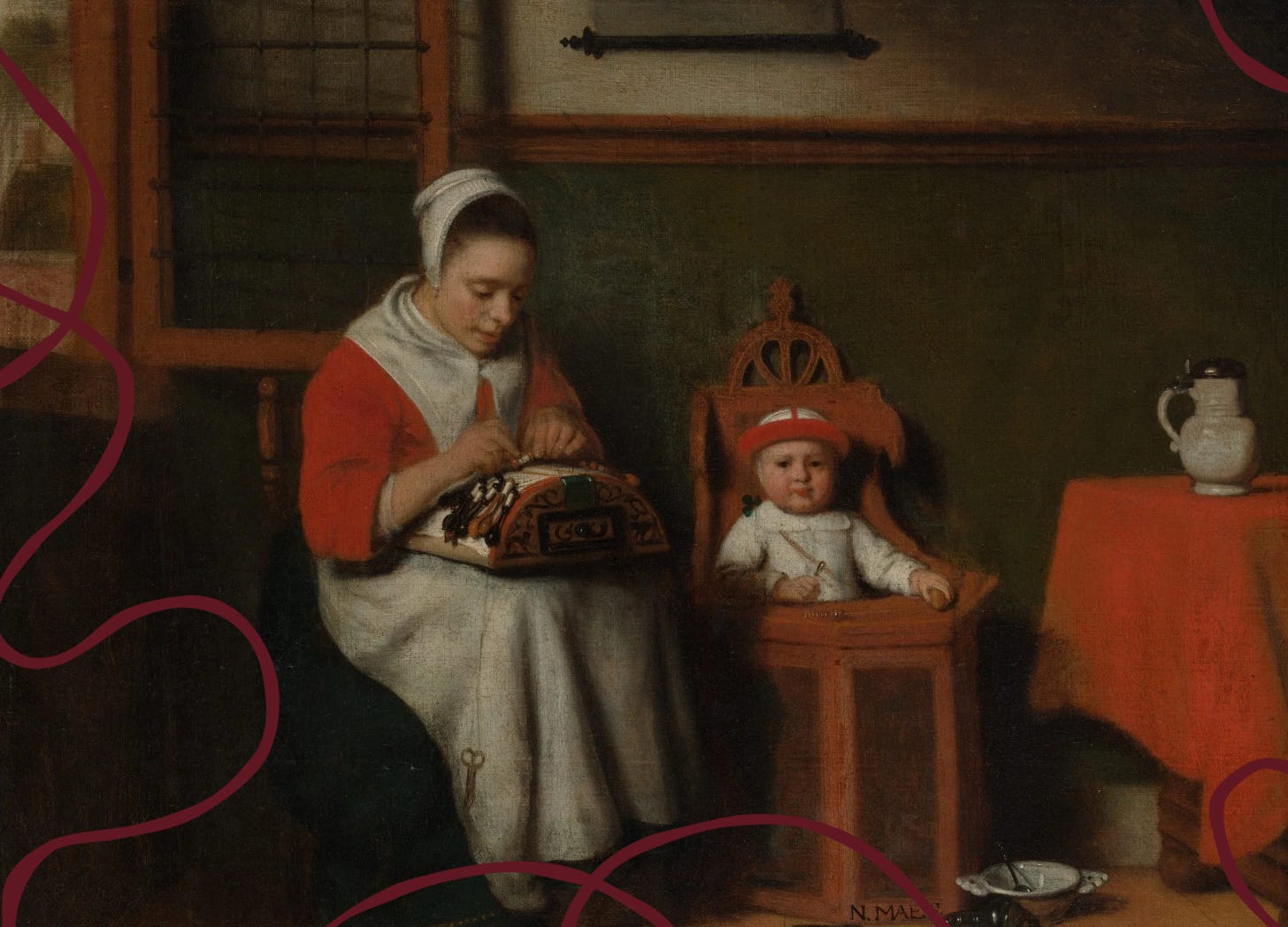
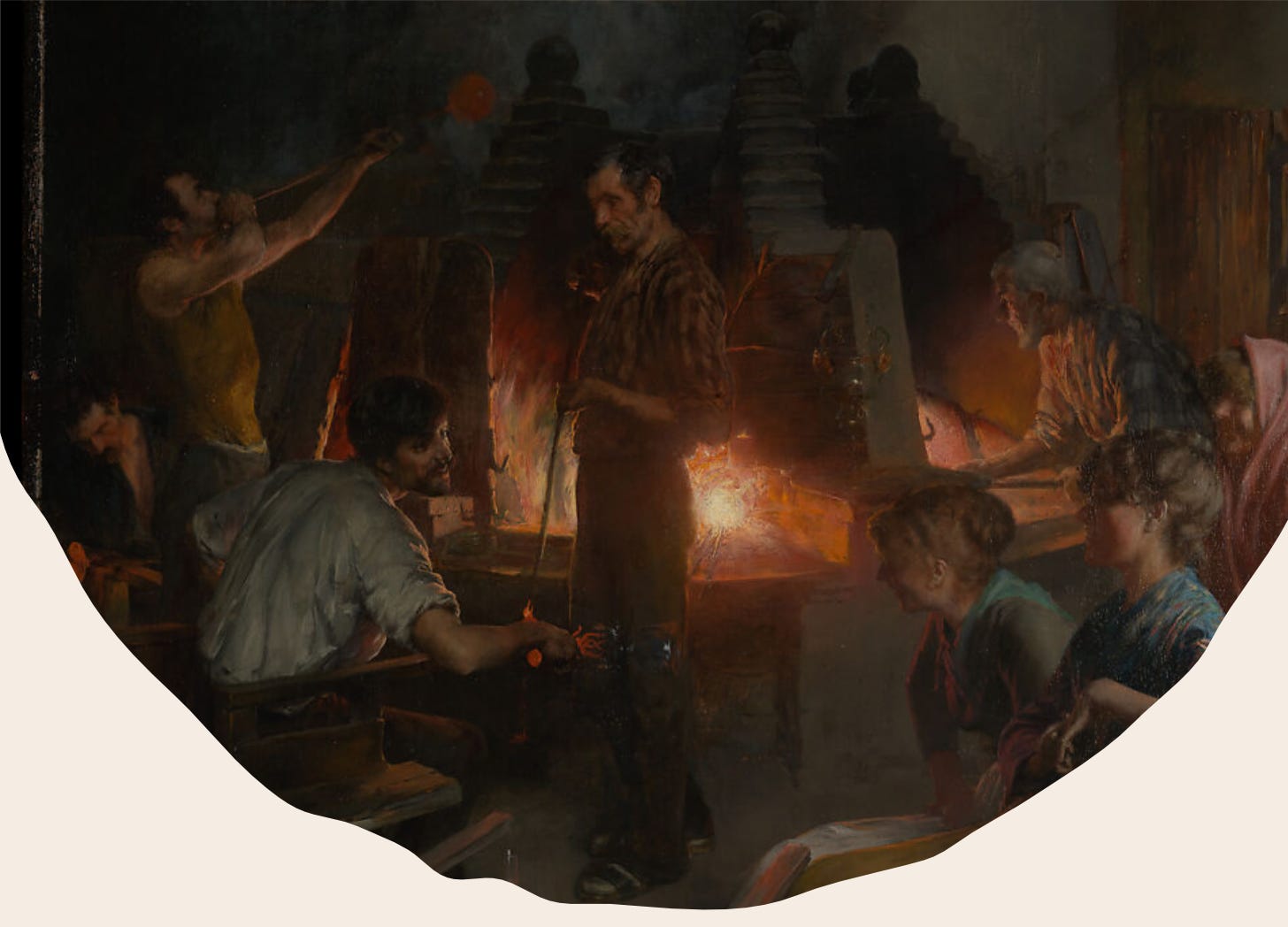
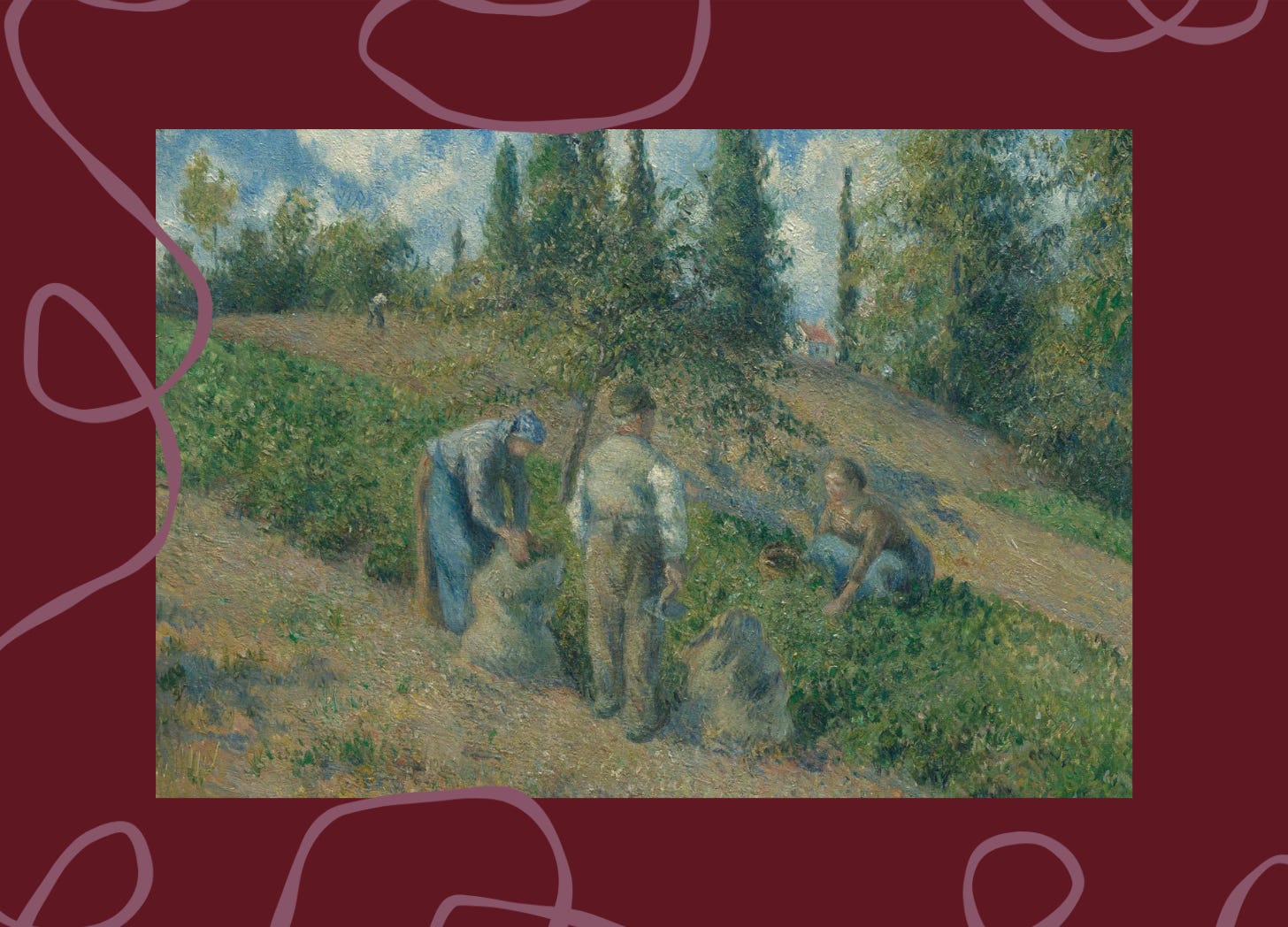
This week’s art is all about work. Glassblowing. Hard labor in the fields. Needlework at home. Admit it, you’d miss it if work went away.
Enjoying Mr. Thread?
Who taught you the hardest thing you know how to do? I’d love to hear about them. Reply to this email.