
Hello, readers…
My daughter called me out this week.
I totally forgot the kids were off school for Veterans Day, and I work from home, so they were buzzing around the office while I worked. It had been a crazy day, nonstop calls, and I had my Mr. Thread draft open on my screen. Lila, my daughter, looked over my shoulderd and asked:
“What’s that picture?”
I bragged that it was a CEO I’d interviewed the day before, and that we were running a feature on him.
“You’re gonna publish that picture?” she asked.
“Yeah.”
“It’s AI.”
I explained that we sometimes use generative AI to create artsy headshots of interviewees. No big deal—we’re a small team, it’s 2026.
She looked at me, and said nothing.
She didn’t have to.
I realized at that moment that we’re promoting and preaching the value of human creativity, and here we are illustrating it with a picture made by a machine. You’re right, young lady. You’re right.
I’m having a real crisis about this. At work, we’ve invested a lot in a tool that could show our handmade wallpapers installed in beautiful rooms. We were thrilled. No massive investments in sets and studios, no flower bill, no lighting headaches. A customer could look at the product page and see what our wallpaper might look like on a wall.
We weren’t planning a big advertising campaign around it. It would be an extra image on a product page, clearly identified as a computer-generated visualization. I’ve always taken the position that if you’re trying to trick people, it’s wrong. If you’re very clear about what you’re doing, it’s okay. Disclose, disclose, disclose.
But now I’m wondering whether that’s enough. Does using AI cheapen these beautiful handmade arts? Do I want the words “AI-generated” sitting on a website explaining how much care goes into making something by hand?
One of my colleagues, a brilliant content creator who used to embrace AI, was practically crying this week. “I am hating the way AI content is made,” he told me. “I don’t want to do it anymore.” I’m shocked at how quickly the rebellion is happening. A week ago this guy was an AI evangelist.
Then there’s the question of whose work helped train the thing. A label might tell users how an image was made, but not whose work it was trained on, or if they were paid. That part is starting to freak me out.
I’m tossing and turning in bed at night. Am I being too much of a purist? Am I being a luddite by turning away from a new technology? Should a business that champions handmade work touch AI, even with a ten-foot pole? I don’t have an answer yet. Reply and tell me where you’d draw the line.
Over the coming weeks you’ll start to see some changes in Mr. Thread. You’ll always get the weekly news, but we’re starting to put more deep dives, sitdowns, and some longer, more ambitious pieces in Mr. Thread Insider, for paid subscribers. This week, that includes a very candid conversation with the man about to take over 1stDibs. Come on in.
See you next week.
Mr. Thread
P.S. Don’t just read, play! Scroll down to join the game!
🏭 INDUSTRY
A terror is about to unfold
News for furnishings and textiles importers just keeps getting worse. A new U.S. customs rule is coming on January 5 and it has the potential to cause chaos. Home Textiles Today reports that foreign companies acting as importers of record will need to pass U.S. Customs’ security checks—or hire a customs broker who already has. Simply having a U.S. address won’t make a company American under the new rules.
Small overseas makers could face a scramble to keep shipping. I’ve already asked my team to check our position. If you buy from abroad, ask your supplier who’ll clear the goods.
There are so many of these types of companies, many of them owned by my colleagues, that could get impacted by this. Go deeper on it here on Mr. Thread Insider: Who should be sweating about the new customs rule →
📊ECONOMY
The week in numbers
80% — The share of Wayfair’s third-quarter orders placed by repeat customers. CEO Niraj Shah is a genius at getting customers to come back time and again. The way he so succinctly summarized Wayfair’s strategy that even a third-grader could understand it is a masterclass in shareholder communications. Impossible not to be bullish on Wayfair. The biggest question for our industry is, how big a role will Perigold play in the high end’s value chain?
UP 70% — Combined sales at Christie’s, Sotheby’s, and Phillips, totaling $6.8 billion in the first half of 2026, according to Morning Brew. My fears about the economy are going, going, gone.
DOWN TO $129.6M — Ethan Allen’s quarterly net sales, from $147 million a year earlier. No surprise that CEO Farooq Kathwari is toast.
DOWN 2.62% — October furniture and home-furnishings sales versus a year earlier in the CNBC/NRF Retail Monitor. Almost every other retail category grew. Sucks to suck.
UP 7.5 POINTS — The Conference Board’s Consumer Confidence Index rose to 91.7 in October. People felt better about the economy, just in time for the holidays.
UP 6.2% — Mortgage application volume in the week ending November 6, seasonally adjusted, according to the MBA. These are applications, not moving vans. Still, I’ll take it.
The $3 million sofa lesson
I was gripped by this story in the Wall Street Journal about a furniture maker named Bruce Krinsky, who built a furniture business doing more than $100 million a year around a $900 sofa. The story is a real rollercoaster, as Krinsky moves his manufacturing around the world trying to sidestep America’s latest tariffs.
Stu Woo’s report follows TOV Furniture’s journey from China to Vietnam, because the company he founded with his wife, Chaya, had found its customer: somebody wanting something nicer than IKEA without paying Crate & Barrel prices.
When threatened tariffs on Vietnam looked likely to push his sofa toward $2,000, he needed another plan.
“At $2,000, there’s no reason for us to exist,” Krinsky said. “There are plenty of companies like Crate & Barrel that already do a great job selling those products.”
So he went looking for an American factory on LinkedIn. He tried making sofas in North Carolina. Ten months later, he had to shut the factory, cut roughly 45 jobs and, he says, lost $3 million. “It was the worst period of my life,” he said. “It was like being constantly punched in the gut.”
I was rooting for this factory. But I’m struggling with how much of this was apparently a surprise. I’m digging into the numbers and why this putz lost so much money in Mr. Thread Insider: This guy’s business plan makes me want to scream→
🤖 TECH
IKEA x Brokers is a surprise collab
For years users have begged Zillow to add a comments section to their listings. Instead they’re adding IKEA furniture to the images. Furniture Today reports a partnership with Germany’s ImmoScout24, an AI tool that will show living rooms and bedrooms in property listings furnished with real IKEA products you can buy. The one-year pilot is meant to help people imagine living there and introduce IKEA earlier in the process.
I think this is a massive play for data for IKEA, although sales are certainly part of it. Let’s say I’m shopping for a home. I don’t really know what it could look like. I press a button—boom! Show me this room in IKEA. It helps me visualize it. The real estate company benefits because they could sell a home faster, and IKEA benefits because hopefully I like what I see and buy it. I wonder how long it will take for other brands to want in on this.
Inside fashion’s AI witch hunt
Dior just launched a holiday animation that imagines Christian Dior dreaming up a dress for Marlene Dietrich on a winter night in Paris. I thought it was marvelous. Then viewers spotted missing fingers, odd movements, and a misspelled dog tag. The accusations of AI were soon flying.
But the filmmakers say they used real human animators and creators, without generative AI. Dior even promoted the months of hand illustration behind the spot, complete with pictures of animator Sylvain Chomet working away in his studio.
“We used an automated interpolation system for a very small part of the process, but the film itself is traditional 2D animation.”
—Producer Aton Soumache via Variety
Business of Fashion’s Haley Crawford reported the backlash; the filmmakers later denied using generative AI in an interview with Variety. Aton Soumache fiercely denied using generative AI. They said 20 artists worked on the film over seven months, although they acknowledge using automated interpolation for a small part of the process. I don’t know what interpolation is, but I believe them. The creators have the receipts! But you know what they say, no publicity is bad publicity.
In related news, other brands are spending a lot of time and effort showing behind-the-scenes content of their artwork being created, like this example from Prada.
📈TRENDS
Purple. As predicted.
“I’ll bet in 18 months purple is going to be everywhere,” I said last week. The New York Times is already asking why purple is everywhere. Called it! Apart from the inconvenient detail that the Times piece ran November 2, three days before mine. I didn’t see it, I promise! Anyway, Vanessa Friedman is talking fashion; I’m still waiting to see “Constitutional Aubergine” on the Farrow & Ball website.
Wallpaper is coming out
Finally, some material trends. We’re always talking about colors and styles; Sophie Sobol’s Metropolis report gets into what things are made of, and what they do in a room. I’m talking curved acoustic surfaces, light-filtering textiles, and painterly patterns, with examples from felt structures to curtains. I liked this one. Texture is becoming a big conversation, and it makes so much sense alongside the maximalist mood. Half our new wallpaper collection is intensely textural. Even the wallpaper is coming out: woven surfaces, velvet cutouts, the suggestion of wood or printed leather. You want to get your hands on it.
I see this trend picking up steam as we enter the anti-AI age.
The house that makes you feel better
I spoke to journalist Sofia Celeste at WWD for a piece the other day. She really does the work. She always talks to fascinating people for her stories, and this piece on wellness homes is a good example. A chorus of developers and property specialists told Sofia that buyers want better air, better sleep, and space to recover from the shit-show that is modern life. It’s not just about fashionable equipment, she says, but daylight, privacy, and a sensible layout. I think the opportunity for designers is enormous, especially when we can explain (and more critically, measure) what a well-designed room does for the human living and breathing inside it.
“Buyers want to understand the quality of the water they are drinking, the air they are breathing, and how restorative practices can become part of their everyday routine. There is a greater expectation that wellness should be incorporated into the residence itself and become part of everyday living, rather than something experienced only within designated amenity spaces.”
— Phil Gutman, president of Continuum Realty via WWD
🧵LOOSE THREADS
The U.S. Pavilion is $1 million short of dismantling Alma Allen’s show and bringing the sculptures home from Venice. Can we all throw in $100?
The 2026 words of the year have arrived. Collins chose “mogging”; Dictionary.com chose “maxxing.” One means outshining; the other, optimizing. Keep up with the kids.
Aya Moug makes a case for furniture made from papyrus. Egypt had the material all along.
Come for the clothes, leave with the flowers. Six Rings brings fashion, art and books into an Athens house.
🪑 SITDOWN WITH MR. THREAD
Bradford Shellhammer is going to change a few things
I’ve got a big one for you this week: a long sit-down with Bradford Shellhammer, the incoming CEO of 1stDibs, one of the biggest names in online furniture and design. Bradford takes over on January 1, and he has plenty to say about what he’s going to fix.
As you know, I’ve spent 30 years in the design and luxury textile business, and I’ve been obsessed with the 1stDibs brand since the Michael Bruno days. Michael once turned down one of my companies for the platform, which started a fun rivalry (entirely in my own head.)
But I care about this company. 1stDibs allows dealers to put an extraordinary object in front of buyers around the world. It can introduce a designer to a talented maker on the other side of the world. That’s enormously valuable to our industry, and I’m desperate for 1stDibs to win.
By the way, I’ve met David Rosenblatt [the outgoing CEO who is transitioning to Executive Chair]. I admire a lot of what he’s accomplished, although I think there have been serious missteps in the relationship with dealers. After meeting Bradford, I feel pretty good about the direction he’s going. He comes from our world, helped build Fab.com, and got experience at much bigger marketplaces at eBay. This feels like someone coming home.
And Bradford was remarkably candid. On the search experience he inherited, he said:
“We had search that was, I would say, a V1 version of search—an old, outdated type of search.”
We also get into the friction between technology people and merchants, why so many potential customers think 1stDibs products are too expensive for them, and what it costs the business to acquire customers for a small dealer. On the AI front, he explains how his team attracts shoppers searching through ChatGPT, and why sellers don’t always understand what they’re paying 1stDibs to do.
Then we get to something I loved: how you sell an object on a screen when so much of its appeal is physical. He said:
“The stuff we sell is alive. The lights come on and off. The fabrics have a hand. The leathers have a patina. The diamonds sparkle in a way. The necklace clinks.”
He has ideas about that, too. We talk about putting sellers in front of the camera, inviting a younger generation into collecting, and how he’s thinking about curation. This was entirely different to the chat he gave Business of Home, because it was two design people talking shop, not a journalist trying to score points or get a gotcha moment. That said, I’m always flattered when someone says “that’s a great question!”
There are also two Dutch taxidermists and the possibility of selling actual dinosaurs. I told you this was a good get.
Read the full conversation with Bradford Shellhammer →
🎲 PLAYTIME
The snails have it
Many of you were fooled by last week’s quiz. We received a lot of entries saying that Tyrian purple came from boiled bugs. Actually, it comes from sea snails, and congratulations go to Freddy V., Caroline P., Martin R. and Saana B.—each of you earns an entry in our season-end prize draw.
SPOT THE LIE
Two of these happened. One is bullshit.
An AI-generated portrait sold at Christie’s for $432,500.
An artist won a photography award with an AI-generated image—then refused the prize.
An entirely AI-written novel won the Booker Prize, with its creator revealing the truth during the acceptance speech.
No Googling. Forensic detectives will audit every winner’s search history. We’ll reveal the lie next week.
Every correct answer earns one entry in the season-end draw for a life-changing prize.
Stay sharp,
Mr. Needle
🎨 THIS WEEK’S ART

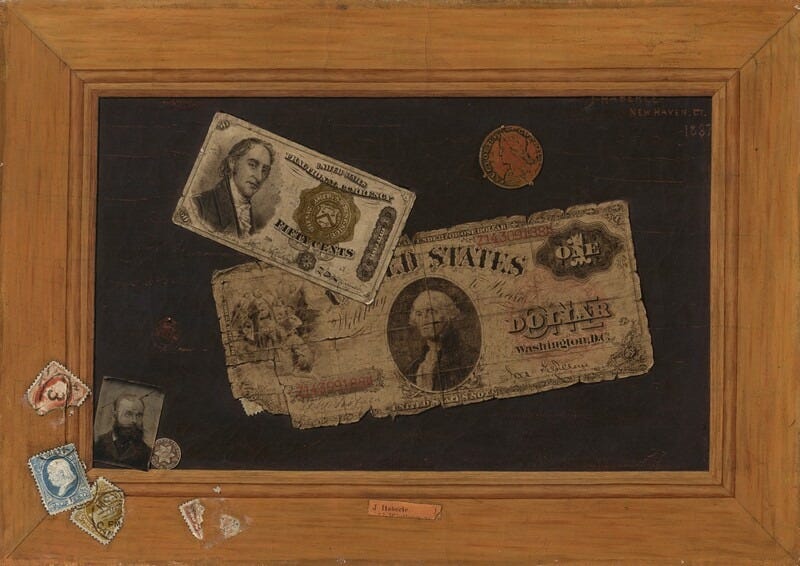
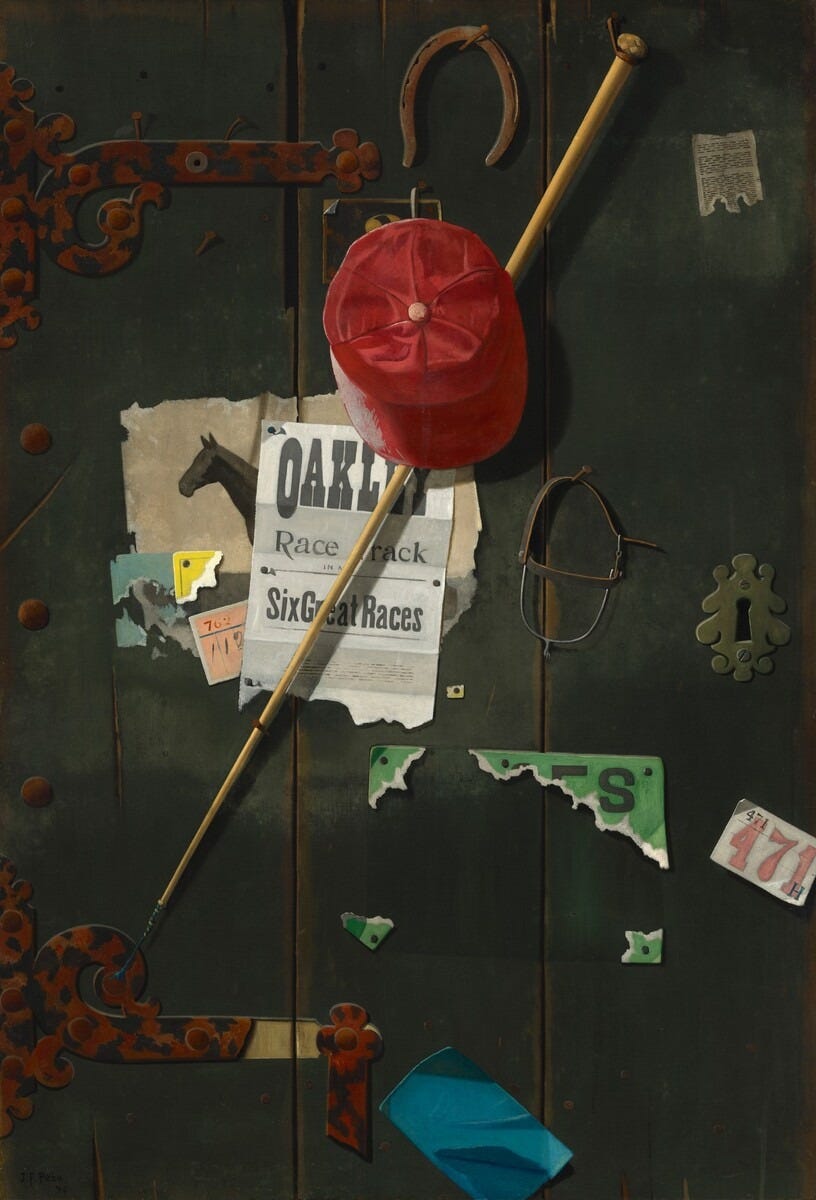
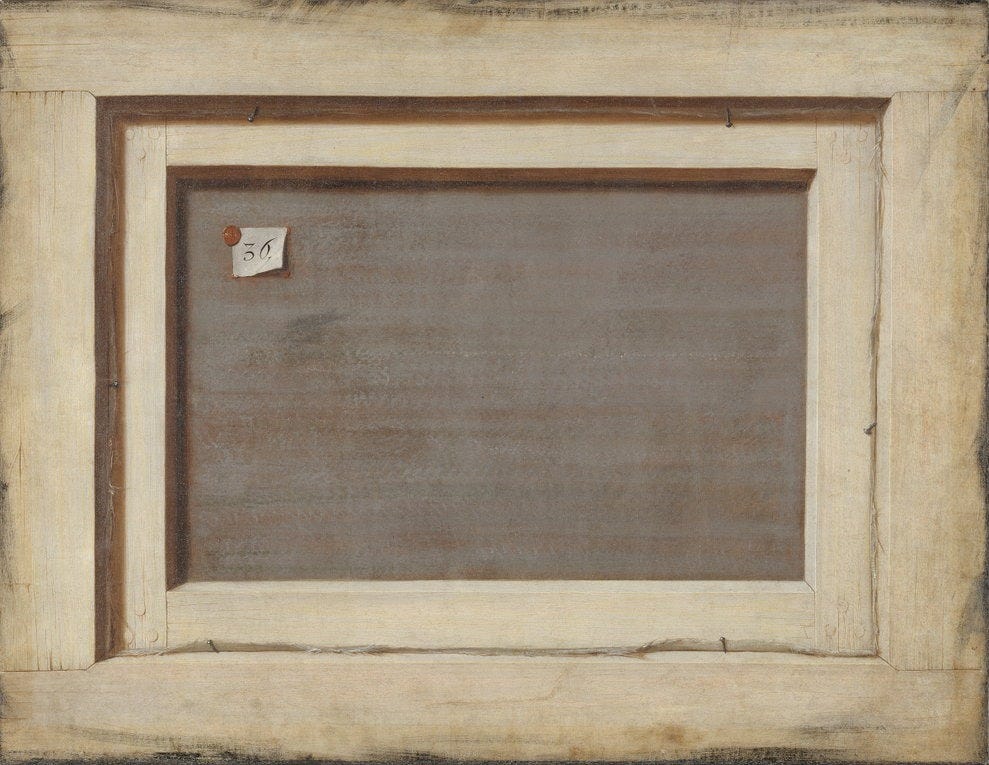
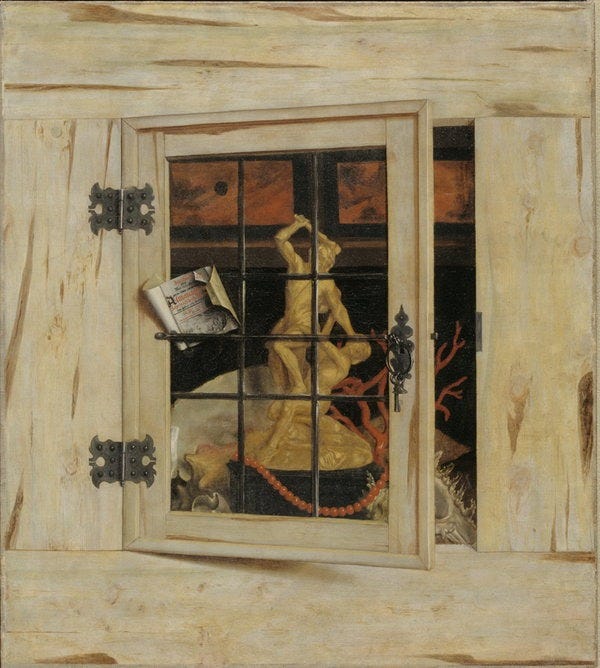
For this week’s theme of handmade deception, we present a bunch of trompe-l’œil paintings: pictures made to fool your eye. The illusion is the pleasure, and that feels like a useful place to leave this week’s argument on AI.
Enjoying Mr. Thread?
How can we make this better? We read every message and genuinely want to know what you think.
Loved this! Insider info, essential news, and a guiding hand through a world in the weeds right now. Thanks for the good posts and for the recommendation!